Southern Cinnabar Polypore Care (Trametes coccinea)

Southern Cinnabar Polypore

About Southern Cinnabar Polypore

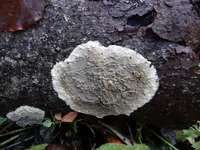
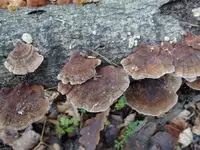
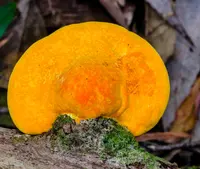
Southern cinnabar polypore (Trametes coccinea) is a bracket fungus, not a true plant, that grows on dead or decaying hardwood. It forms thin, fan-shaped shelves with bright red to orange upper surfaces and pale undersides.

This species appears in overlapping tiers on logs and stumps, contributing to wood decomposition in forests and woodlands. It is mainly found in warm and subtropical regions, often in humid habitats.

Because it relies on rotting wood rather than soil, gardeners cannot easily control its growth. For anyone who wants to learn how to care for Southern Cinnabar Polypore in a garden setting, it is usually more about preserving suitable deadwood and stable moisture than active cultivation.

Main Plant Requirements

Care Difficulty

Moderate Care

Light Preference

Partial Shade

Water Requirements

Keep Soil Moist

Temperature Preference

Cool Climate

Hardiness Zone

Unknown

Soil Texture

Organic-rich, Loamy

Soil pH

Strongly acidic (4.5–5.5), Acidic (5.5–6.5)

Soil Drainage

Moist but well-drained

Fertilization

Minimal (feed rarely)

Get Personalized Care Plan

Scan your plant to receive care tips personalized for your specific plant

Available on iOS and Android

How to Care for the Southern Cinnabar Polypore

This bracket fungus prefers low to moderate light that mimics shaded woodland conditions.

  • Provide dappled or filtered light, similar to light under trees, with no more than 2–3 hours of weak morning sun and no harsh afternoon sun exposure.
  • Site Southern Cinnabar Polypore on the shaded side of logs or stumps; constant deep shade slows growth, while strong direct sun dries the wood substrate and can halt fruiting.
  • In summer, protect from hot, reflective light; in winter, reduced day length is acceptable as long as the woody host does not dry out completely.

This wood-decaying fungus depends on consistently moist, but not waterlogged, woody substrate.

  • Ensure the host log or stump stays evenly moist; if surface wood dries and lightens in color by 2–5 mm depth, lightly re-wet with a gentle soak rather than a quick splash.
  • In warm, dry, or windy weather, check moisture every few days; in cool, humid seasons, reduce interventions and allow natural rainfall to dominate for Trametes coccinea.
  • Avoid standing water or saturated soil around the wood, which encourages anaerobic conditions and mold; slimy, foul-smelling wood signals overwatering, while cracking and separation of bark indicate underwatering.

This species thrives in mild to warm conditions but tolerates a fair range typical of temperate forests.

  • Aim for an active growth range of 60–80°F (16–27°C), where mycelium activity and fruiting bodies develop most reliably on hardwood logs or stumps.
  • Allow cool periods down to about 40°F (4°C); short dips near 32°F (0°C) are usually tolerated, but prolonged hard frost can damage exposed fruiting surfaces.
  • In hot spells above 86°F (30°C), shade and higher humidity become important, since combined heat and dryness can desiccate the wood and cause fruiting bodies to become brittle or abort.

This bracket fungus prefers consistently moist, high-humidity environments around 70–90%.

  • Tolerates brief dips to 50–60% humidity but dries and hardens if air stays much drier.
  • Low humidity causes pale, shrunken, brittle fruiting bodies and stalled edge growth.
  • Increase humidity outdoors by retaining decaying wood moisture with partial shade, wind protection, and avoiding exposed, sun-baked sites.

This wood-decaying fungus does not grow in conventional soil but in or on moist, decomposing wood substrates.

  • Provide well-rotted hardwood logs or chips with a loose, airy structure that holds moisture yet drains freely from the surface.
  • Avoid compacted soil, pure garden dirt, or waterlogged substrates, which limit oxygen and suppress mycelium spread.
  • Maintain a slightly acidic to neutral environment, roughly pH 5.5–7, by using mostly untreated hardwood rather than alkaline concrete rubble or ash.
  • Mix hardwood sawdust, chipped branches, and a small amount of leaf mold to improve aeration while keeping organic matter available for Trametes coccinea.

This species is suitable for container growing only when the container is used to hold colonized wood rather than soil.

  • Choose a wide, shallow, rigid container that stabilizes horizontal logs and prevents them from rolling or tipping in wind.
  • Drill side ventilation holes above the moisture line so oxygen reaches the wood while excess water can still escape from the base.
  • Raise the container slightly off the ground so drainage holes stay clear and the underside of the wood does not remain in standing water.

This wood-decaying fungus grows on nutrient-rich logs and normally does not need supplemental fertilizer, even when used for Southern Cinnabar Polypore indoor care.

Pruning is not part of normal care for Trametes coccinea, since it is a bracket fungus forming fruiting shelves on wood rather than a leafy plant.

This species naturally colonizes dead or dying wood and is not suited to conventional repotting or transplanting in pots or garden soil.

  • If cultivation is attempted, establish it on fresh hardwood logs or cut branches with intact bark, not in standard potting mix.
  • Introduce the fungus to the log by placing colonized dowels or plug spawn into drilled holes, then sealing with wax to limit moisture loss.
  • Position the inoculated log in a shaded, humid site and avoid moving it once colonization starts to reduce disturbance of the developing mycelium.
  • Replace logs only when they are largely decomposed, since the fungus declines naturally as the wood resource is exhausted.

Propagation of this bracket fungus is usually carried out by mycologists or advanced hobbyists rather than typical home plant owners.

  • Trametes coccinea is commonly propagated using plug spawn or small pieces of colonized wood rather than by seeds, since fungi produce spores, not true seeds.
  • Best establishment occurs in mild, moist seasons such as spring or fall, when temperature and humidity support rapid mycelium growth.
  • Drill shallow holes into sound hardwood, insert colonized plugs, tap them flush, and seal to keep the wood interior humid and protected.
  • Maintain consistent shade and moderate moisture around the inoculated wood so the mycelium can spread before significant drying occurs.

Outdoor colonies on wood are generally cold hardy and usually need no special winter care beyond normal habitat conditions.

  • In temperate climates, the mycelium inside wood often survives well below freezing, even if fruiting bodies dry or weather on the surface.
  • Container logs can be kept in a sheltered, unheated area such as a garage or cold frame to limit repeated freeze–thaw cycling.
  • Avoid waterlogging frozen logs; ensure drainage so ice expansion does not excessively crack the wood and disrupt internal mycelium.

Care Tips

Use Fresh Logs

Inoculate recently cut, healthy hardwood logs within 2–4 weeks of felling to give the fungus a competitive advantage over wild microbes and improve colonization success when growing Southern Cinnabar Polypore.

Optimize Log Size

Select logs roughly 8–15 cm in diameter and 60–90 cm long, as this size balances moisture retention with oxygen access and makes drilling, handling, and stacking more manageable.

Strategic Log Stacking

Stack inoculated logs in a shaded, sheltered crib or lean-to style that keeps bark surfaces off the ground while allowing airflow, which reduces rot and contamination from soil-borne fungi.

Monitor Bark Integrity

Check logs every few months and remove any with large bark losses, deep cracks, or heavy competing fungi, because compromised bark greatly reduces yield and can spread unwanted species to nearby logs.

Seasonal Moisture Management

During hot, dry periods, soak logs in clean water for 4–8 hours or use a slow sprinkler over the stack, then allow excess water to drain fully to maintain internal moisture without creating stagnant, anaerobic conditions.

Common Pests and Diseases

Mycophagous beetles

These insects feed on the fruiting bodies, tunneling through the red caps and pore layer and leaving small holes and frass. Damage weakens the structure and accelerates drying and decay of the brackets.

Solution

Remove and discard heavily tunneled brackets to reduce breeding sites, and avoid stacking freshly cut, fungus‑bearing wood in shaded, damp piles where beetle populations build up. For collection or display pieces, keep them dry indoors with good airflow and inspect regularly, brushing off beetles or larvae before they establish.

Fungal hypocrealean parasites

This disease is caused by specialized parasitic fungi (often Hypocreales) that colonize the basidiocarps, leading to discolored patches, distortion, or overgrowth of the brackets. Symptoms include pale, powdery, or gelatinous coatings on the surface of the fruiting body and loss of the typical bright red color.

Solution

Cut away and discard parasitized brackets along with a thin slice of underlying wood to remove the infection focus. Improve airflow and reduce excessive moisture around logs or stumps supporting the fungus so that new fruiting bodies form in less favorable conditions for the parasite, which is a key part of Trametes coccinea care instructions.

Dipteran larvae (fly maggots)

These insects lay eggs on soft tissue; the larvae burrow into the pores and flesh of the brackets, causing soft spots, internal cavities, and rapid decomposition. Symptoms include sagging or collapsing tissue and small entry wounds that ooze moisture.

Solution

Harvest or remove young, firm brackets promptly if they are being maintained for study or decorative use, before fly populations peak in warm, humid periods. Store collected material in insect‑proof containers with good ventilation and low humidity, and discard any pieces showing active maggot activity to break the life cycle.

Competitive wood-decay fungi

This disease pressure comes from other lignicolous fungi that colonize the same log or stump, outcompeting and replacing the existing mycelium. Symptoms include a decline in new Trametes coccinea brackets, replacement by different fungal fruiting bodies, and progressive changes in wood texture and color.

Solution

When cultivating or encouraging this species on cut wood, start with freshly cut, uncolonized hardwood and limit contact with soil and old, fungus‑rich debris that introduce competitors. If unwanted species dominate a piece of wood, remove and dispose of that substrate and use new logs placed on well‑drained, ventilated supports to favor re‑establishment.

Interesting Facts

Striking cinnabar pigments

The vivid red to orange bands of its brackets are caused by specific fungal pigments that remain bright even when dried, making this species one of the more visually distinctive polypores in its range.

Prefers fallen hardwoods

This fungus is most often found on dead or fallen hardwood branches and logs rather than living trees, where it helps break down lignin and cellulose in the wood and speeds up forest nutrient cycling.

Layered annual growth

Its thin brackets typically develop in overlapping shelves during a single growing season, and older fruiting bodies often fade from red to pale orange or whitish as spores are released and tissues age.

Botan icon

Did you know?

This species has a mainly tropical to subtropical distribution and in North America is largely confined to the warmer Southeast, where its bright red brackets can be one of the few strongly colored wood-decay fungi present on fallen hardwood after summer storms.

FAQs about Southern Cinnabar Polypore

This bracket fungus spreads steadily but not explosively, colonizing dead or dying hardwood through spores and mycelium. It does not jump rapidly between healthy trees, but can slowly occupy large sections of suitable fallen or decaying wood over time.

Grow Healthy Plants with Botan Care

Keep your plants happy and healthy with plant identification, disease detection, and easy care guidance.

Botan plant care app — identify plants on mobile

Explore More Plants