Host tree selection
Establish this mycorrhizal fungus only near suitable hosts such as oaks, beeches, or other broadleaf hardwoods, since it relies on their roots for nutrition and will not persist in open lawn or container conditions.

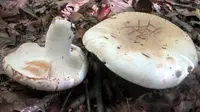
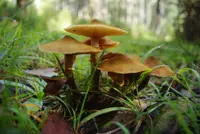
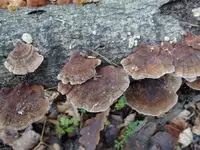
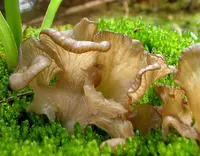
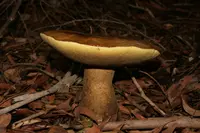
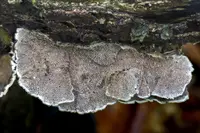
Fishbiscuit Russula, Russula compacta, is a gilled mushroom rather than a leafy plant. It forms sturdy, compact fruiting bodies with pale to grayish caps and thick, brittle white stalks. The gills are closely spaced and often cream to yellowish.
This species typically appears in mixed or coniferous woodlands, often growing on the forest floor among leaf litter. It is considered inedible due to its poor texture and sometimes unpleasant taste, which affects how appealing it is to foragers rather than how to care for Fishbiscuit Russula.
Russula compacta develops best in undisturbed, moist woodland soils with good organic matter and natural shade, reflecting its role in forest ecosystems rather than as a cultivated garden species.

Care Difficulty
Moderate Care

Light Preference
Partial Shade

Water Requirements
Regular Water

Temperature Preference
Cool Climate

Hardiness Zone
Unknown

Soil Texture
Loamy, Sandy, Organic-rich

Soil pH
Strongly acidic (4.5–5.5), Acidic (5.5–6.5)

Soil Drainage
Moist but well-drained

Fertilization
Minimal (feed rarely)
Scan your plant to receive care tips personalized for your specific plant
Available on iOS and Android
This woodland fungus prefers dappled forest light rather than open, direct sun.
This mycorrhizal fungus depends on evenly moist, well-drained forest soil rather than direct surface watering.
This species develops best in cool to mild woodland conditions with moderate seasonal change.
Humidity is not a major factor for Russula compacta, which naturally grows in outdoor woodland conditions.
Russula compacta grows best in moist, well-aerated forest-type soil with moderate organic content.
This species is not well suited to container growing, as it forms complex mycorrhizal associations with tree roots that are difficult to maintain in pots.
Russula compacta is a wild ectomycorrhizal mushroom that does not need routine fertilization in natural or garden soils.
Russula compacta does not require pruning, as the visible mushroom is a short-lived fruiting body rather than a woody plant.
This fungus forms symbiotic associations with tree roots and is not suited to normal repotting or transplanting like a potted plant.
Russula compacta is not practically propagated by home growers, because it relies on complex mycorrhizal relationships with trees.
This woodland mushroom is naturally cold hardy in its native range and does not require specific winter care.

Plant Health Check
Not sure what's wrong with your plant? Check your plant's health inside the app.
The cap of this species is unusually thick, firm, and often slightly depressed in the center, giving it a compact, almost cushion-like appearance compared with many other brittle-gills.
Its initially white to cream gills can develop gray to blackish spots or patches with age or handling, a feature that helps distinguish it from similar white or pale russulas in mixed oak and conifer woods.
This fungus forms ectomycorrhizal partnerships with trees, especially oaks and other hardwoods, exchanging mineral nutrients from the soil for sugars from the host and contributing to overall forest soil health.

The flesh of this mushroom is notably hard and resistant to crumbling for a russula, so mycologists often recognize it in the field by the unusually compact, almost corky texture when the cap is cut or broken.
This species is generally considered inedible or of very poor culinary value due to its hard, compact flesh and often unpleasant taste. Some individuals may experience gastrointestinal upset, so it is best left unconsumed and observed only.
Keep your plants happy and healthy with plant identification, disease detection, and easy care guidance.