

Select proper substrate
Use fresh, fully colonized hardwood logs or densely packed hardwood sawdust blocks, as this species performs poorly on softwoods and nutrient-poor substrates.

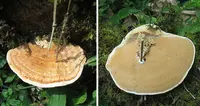
Trametes cubensis is a wood-decay bracket fungus, not a leafy houseplant. It forms thin, shelf-like fruiting bodies on dead or dying wood, often in layered clusters. Colors range from creamy white to tan or ochre, sometimes with subtle zoning on the cap surface.
This species occurs mainly in tropical and subtropical regions, especially in the Americas, where it plays an important role in decomposing fallen logs. It is generally not grown as an ornamental species, and how to care for Trametes cubensis is mostly relevant to those cultivating fungi for research or specialty projects.
In culture, it prefers consistently moist, woody substrates and stable, sheltered conditions rather than typical potting soil or bright indoor light.

Care Difficulty
Moderate Care

Light Preference
Shade

Water Requirements
Keep Soil Moist

Temperature Preference
Warm Climate

Hardiness Zone
Unknown

Soil Texture
Loamy, Organic-rich

Soil pH
Acidic (5.5–6.5)

Soil Drainage
Moist but well-drained

Fertilization
Minimal (feed rarely)
Scan your plant to receive care tips personalized for your specific plant
Available on iOS and Android
This wood-decay fungus prefers low to moderate light that mimics a shaded forest environment.
Moisture management focuses on keeping the colonized wood or substrate evenly damp, not saturated.
This species performs best in mild to warm conditions without strong temperature extremes.
Humidity is not a significant factor for Trametes cubensis, which naturally tolerates a wide range of outdoor moisture conditions.
This species grows best on woody substrate rather than conventional garden soil, so conditions must mimic decaying wood.
This fungus is only loosely suitable for container growing when provided with wood-based substrate rather than potting soil.
This wood-decay fungus is usually grown on nutrient-rich logs or sterilized substrates and rarely needs additional fertilizer.
Pruning is not a routine practice for this bracket fungus, which naturally forms tiered shelves on dead wood.
Cultivation focuses on establishing fresh substrate rather than classic repotting, since this species colonizes wood or prepared blocks.
Propagation of Trametes cubensis is typically done through controlled culture work rather than home methods.
Outdoor colonies on logs are generally hardy where they are naturally grown and need no specific winter care beyond stable habitat.

Plant Health Check
Not sure what's wrong with your plant? Check your plant's health inside the app.
This species is a white‑rot basidiomycete that efficiently degrades lignin in dead hardwoods, leaving the remaining wood pale and fibrous as it recycles complex plant polymers back into forest nutrient cycles.
It is primarily recorded from tropical and subtropical regions of the Americas, especially the Caribbean and parts of Central and South America, where warm, humid forests support its year‑round fruiting on fallen logs and branches.
Its fruiting bodies form thin, shelf‑like brackets with a cream to pale yellow pore surface and often slightly zoned upper surfaces, features that help mycologists distinguish it from more vividly banded turkey tail relatives in the same genus.
This bracket fungus is considered inedible. The fruiting bodies are tough, woody, and lack culinary value. It is used mainly for ecological study or potential medicinal research, not for regular human consumption or cooking.
Keep your plants happy and healthy with plant identification, disease detection, and easy care guidance.

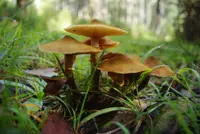
Australian honey fungus
Armillaria luteobubalina
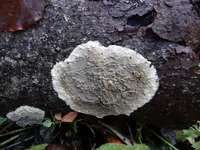
Phlebiopsis gigantea
Phlebiopsis gigantea
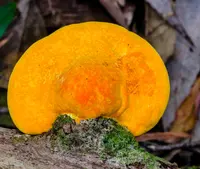
Southern Cinnabar Polypore
Trametes coccinea
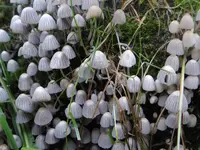
Trooping Crumble Cap
Coprinellus disseminatus
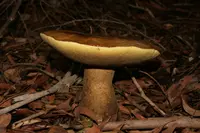
salmon gum mushroom
Phlebopus marginatus
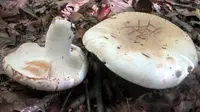
Fishbiscuit Russula
Russula compacta
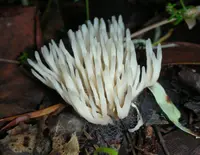
ashen coral
Tremellodendropsis tuberosa
oak pin
Cudoniella acicularis