Humpback Brittlegill Care (Russula caerulea)

Humpback Brittlegill

About Humpback Brittlegill

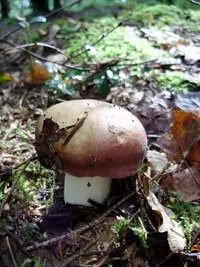
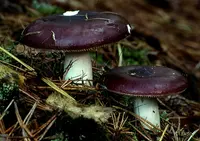
Humpback brittlegill (Russula caerulea) is a woodland mushroom, not a typical houseplant. It forms fleshy caps with bluish to purple tones and a pale, brittle stem. The gills are crowded and easily break, which is typical for many Russula species.

This species usually appears in coniferous forests, especially under pine, where it grows on the ground in late summer to autumn. It lives in symbiosis with tree roots, so it cannot be maintained as a normal potted specimen, despite occasional interest in how to care for Humpback Brittlegill.

Russula caerulea prefers well-drained, slightly acidic forest soils with consistent moisture and dappled woodland light. Its dependence on specific trees and soil fungi makes it difficult to cultivate deliberately.

Main Plant Requirements

Care Difficulty

Hard Care

Light Preference

Partial Shade

Water Requirements

Regular Water

Temperature Preference

Cool Climate

Hardiness Zone

Unknown

Soil Texture

Sandy, Loamy, Organic-rich

Soil pH

Strongly acidic (4.5–5.5), Acidic (5.5–6.5)

Soil Drainage

Moist but well-drained

Fertilization

Minimal (feed rarely)

Get Personalized Care Plan

Scan your plant to receive care tips personalized for your specific plant

Available on iOS and Android

How to Care for the Humpback Brittlegill

This woodland fungus prefers cool, dappled forest light rather than strong, open sun.

  • Aim for bright, filtered light under conifers or mixed woodland, with 2–4 hours of gentle morning sun and full shade or deep dappled light by early afternoon.
  • Tolerates partial shade well; dense midday or afternoon sun can overheat the forest floor, dry the litter layer, and reduce fruiting of Humpback Brittlegill.
  • In summer, favor shadier aspects or north/east-facing woodland edges; in cooler seasons, slightly more open canopies still protect from harsh direct sun and drying winds.

This mycorrhizal fungus depends on consistently moist, well-drained forest soil rather than direct watering.

  • Maintain soil moisture like a wrung-out sponge in the upper litter and top 2–5 cm of mineral soil; avoid standing water or compacted, soggy patches that limit air around roots and fungal mycelium.
  • In dry spells, indirect watering of surrounding trees and soil, not the Russula caerulea fruiting bodies, helps keep the habitat evenly moist without waterlogging.
  • Symptoms of excess moisture include persistent puddles, sour or swampy smells, and rotting litter, while underwatered sites show cracked soil, crisp leaf litter, and rapid cap drying.

This species thrives in cool to mild forest conditions and declines in prolonged heat or hard frost.

  • Optimal growth and fruiting occur around 50–68°F (10–20°C), typical of late summer to autumn in conifer woods with stable, cool soil temperatures.
  • It tolerates short drops near 32°F (0°C), but repeated hard freezes below 28°F (-2°C) damage fruiting bodies and can halt above-ground development for the season.
  • Sustained heat above 77–82°F (25–28°C), especially with dry air, quickly dries the litter layer, so shaded, north-facing slopes and intact canopy cover help buffer temperature swings.

Humidity is not a significant factor for Russula caerulea, which naturally fruits in outdoor woodland conditions.

This fungus relies on specific woodland soil conditions rather than conventional potting substrates.

  • Fruits best in light to medium, well-drained sandy or sandy-loam soil with abundant organic matter from leaf litter and conifer needles.
  • Prefers slightly acidic conditions around pH 4.5–6.0, commonly under pine or spruce where conifer litter acidifies the upper soil layer.
  • Avoid compacted, waterlogged, or heavily fertilized soils, which disrupt the fine root–fungus partnership needed for Humpback Brittlegill to form fruiting bodies.
  • To encourage the mycorrhizal association, allow a natural layer of decaying organic debris to accumulate instead of clearing all litter from the tree base.

This mycorrhizal fungus is not suitable for container growing, as it depends on complex soil and tree-root interactions that containers cannot reliably provide.

Russula caerulea, the Humpback Brittlegill, forms mycorrhizal partnerships with trees and usually does not need direct fertilizing.

Russula caerulea is a wild mycorrhizal fungus, so pruning is not a conventional or necessary practice.

This mycorrhizal fungus is not suited to typical container culture, so focus on careful transplanting of its tree partners rather than the fungus itself.

  • Avoid disturbing established host trees and surrounding soil where the fungus fruits, since disruption can reduce future mushroom production.
  • If a host tree must be moved, plan for early spring or fall when temperatures are mild and soil stays evenly moist.
  • Transplant with a large, intact root ball to retain as much native soil and fungal network as possible around the roots.
  • Water gently after transplanting and keep soil moisture stable to reduce root stress and support recovery of the mycorrhizal association.

Russula caerulea does not lend itself to controlled home propagation, since it relies on complex mycorrhizal relationships with host trees.

This fungus is naturally cold hardy in its native range and generally requires no dedicated winter care in gardens or woodlands.

Care Tips

Mycorrhizal partner trees

Locate and manage Scots pine or closely related pines on the site, since this fungus is ectomycorrhizal and will only fruit reliably where compatible host roots are present.

Minimal soil disturbance

Avoid tilling, deep raking, or compaction in the fruiting zone around host trees so the fine fungal mycelium network in the top 5–10 cm of soil stays intact and productive.

Low-input ground cover

Maintain a thin, natural layer of pine needles and leaf litter rather than bare soil or thick mulch, which supports healthy mycelium while still allowing fruiting bodies to emerge.

Careful harvesting technique

Twist and lift mushrooms gently at the base or cut at soil level with a clean knife, then cover the remaining hole lightly with litter to protect underlying mycelium and encourage future flushes.

Seasonal moisture monitoring

In late summer to early autumn, monitor soil moisture 5–8 cm deep near host pines and provide light, infrequent irrigation only if soil is very dry, which supports growing Humpback Brittlegill without promoting rot or competing fungi.

Common Pests and Diseases

Mycophagous slugs

This pest feeds on fruiting bodies, leaving large irregular holes and ragged edges on caps and stems, especially in damp conditions.

Solution

Hand-pick slugs in the evening, use ring barriers of copper tape around key fruiting areas, and reduce dense ground cover that offers hiding spots while keeping soil moisture adequate for the fungus.

Fungus gnats

These insects lay eggs in moist organic substrates, and the larvae tunnel through developing fruiting bodies, causing pitting, premature decay, and deformation.

Solution

Reduce excess surface moisture, use fine mesh over cultivation trays or beds if growing Russula caerulea in controlled settings, and apply biological controls such as Bacillus thuringiensis israelensis (Bti) to heavily affected substrates when appropriate.

Maggots (fly larvae)

This pest appears as small white larvae inside caps and stems, leading to soft, discolored, and collapsing fruiting bodies from the interior.

Solution

Harvest mushrooms promptly when caps mature, remove and destroy infested fruiting bodies, and use fine netting or covers over outdoor or semi-controlled beds to limit adult fly access to young fruiting bodies.

Bacterial soft rot

This disease causes water-soaked, slimy, and foul-smelling decay of caps and gills, often starting where insects or slugs have damaged tissue.

Solution

Remove and discard affected fruiting bodies, avoid injuring mushrooms during harvest, and manage insect and slug damage to reduce entry points for bacteria while maintaining good air circulation around fruiting zones.

Parasitic mold

This disease appears as white to gray fuzzy growth on caps and stems, leading to collapse and rapid decay of the fruiting bodies under very humid, stagnant conditions.

Solution

Improve air movement, avoid prolonged surface wetness on mushrooms, promptly remove moldy fruiting bodies, and reduce overcrowding of fruiting clusters to lower humidity pockets and limit spore spread as part of general Russula caerulea care instructions.

Interesting Facts

Distinct lilac cap

Mature fruiting bodies often show a lilac to dark violet-brown cap with a slightly paler center, which can fade toward brownish tones with age or in strong light, helping distinguish it from many other blue- or purple-toned brittlegills.

White spore print

This species produces a white spore print and has crowded, brittle white gills that can stain slightly cream with age, a micromorphological combination that mycologists use to separate it from similar Russula species in the field.

Conifer forest associate

It forms ectomycorrhizal partnerships with conifers, especially pines and spruces, exchanging mineral nutrients and water from the soil for sugars from the tree, and is therefore usually found in acidic, needle-rich forest soils.

Botan icon

Did you know?

Some specimens develop a distinct, shallow central depression in the cap as they age, giving a subtle "humpback" appearance that inspired its common name, humpback brittlegill, and helps experienced foragers recognize it among other purple Russula species.

FAQs about Humpback Brittlegill

This mushroom is generally regarded as edible but not highly valued. Some people experience mild gastrointestinal upset, so try only a small, well-cooked amount. Accurate identification is critical, as similar Russula species can be inedible or harmful.

Grow Healthy Plants with Botan Care

Keep your plants happy and healthy with plant identification, disease detection, and easy care guidance.

Botan plant care app — identify plants on mobile

Explore More Plants