Rotating water tray
Place the pot in a shallow, watertight tray and rotate the pot by 90° every 1–2 weeks so the clumps receive even light and develop a symmetrical, upright fountain of foliage instead of leaning to one side.

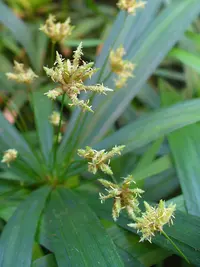
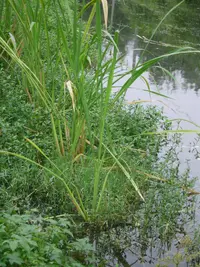
Dwarf striped umbrella sedge (Cyperus albostriatus) is a compact, grasslike wetland plant grown mainly for its neat, umbrella-shaped leaf clusters. It forms low, clumping tufts with narrow green leaves marked by fine pale stripes, giving a tidy, architectural look.
In nature it occurs in moist areas of southern Africa, often near streams or seasonally wet ground. It adapts well to containers, shallow water features, and bright indoor spots when humidity and moisture are consistent.
The plant is generally considered easy to grow if it never dries out completely and receives steady light and nutrients. Understanding how to care for Dwarf striped umbrella sedge focuses mostly on managing moisture and preventing prolonged drought stress.

Care Difficulty
Moderate Care

Light Preference
Partial Sun

Water Requirements
Keep Soil Moist

Temperature Preference
Tropical / Frost Sensitive

Hardiness Zone
9–11

Soil Texture
Loamy, Silty, Organic-rich

Soil pH
Acidic (5.5–6.5), Slightly acidic (6.5–7.0)

Soil Drainage
Waterlogged tolerant

Fertilization
Light (every 4–6 weeks)
Scan your plant to receive care tips personalized for your specific plant
Available on iOS and Android
This sedge prefers bright, indirect light with some protection from harsh midday sun.
This moisture-loving sedge thrives in consistently damp to wet conditions.
This sedge prefers warm, frost-free conditions to maintain active growth.
This species prefers consistently high humidity and reacts quickly to dry air.
Cyperus albostriatus thrives in constantly moist, organic-rich soil that resists drying out.
This species is well suited to container growing when moisture and stability are managed carefully.
Cyperus albostriatus responds well to modest, consistent feeding during active growth.
Pruning Cyperus albostriatus focuses on tidying foliage and maintaining a compact, healthy clump.
Cyperus albostriatus in containers benefits from periodic repotting to refresh soil and manage vigorous roots.
Cyperus albostriatus is most reliably propagated by division, with leaf cuttings and seeds as secondary options.
Cyperus albostriatus is frost sensitive and needs protection in regions with freezing winters.

Plant Health Check
Not sure what's wrong with your plant? Check your plant's health inside the app.
This species shows clear longitudinal white striping on its narrow leaves, a stable variegation that distinguishes it from most other Cyperus species, which usually have solid green foliage.
It forms tight clumps with relatively short, radiating leaf whorls, creating a low, umbrella-like canopy that makes it popular as a small ornamental sedge compared with the much taller Cyperus involucratus and related species.
In cultivation, it is commonly propagated by dividing its dense clumps rather than by seed, because the basal shoots and rhizome-like connections separate easily and establish quickly as independent plants.
This species spreads by short rhizomes and self-seeding but is usually manageable in gardens and containers. In constantly moist soil it can form dense clumps, so divide or thin periodically if it starts encroaching on nearby plants.
Keep your plants happy and healthy with plant identification, disease detection, and easy care guidance.