tall flatsedge Care (Cyperus eragrostis)

Also known as: umbrella sedge, Pale galingale, drain flat-sedge
tall flatsedge

About tall flatsedge

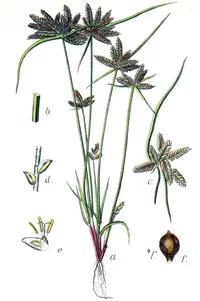
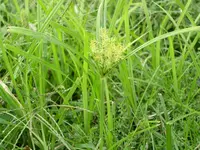
Tall flatsedge (Cyperus eragrostis) is a fast-growing, grass-like sedge often found in wet ditches, stream edges, rice fields, and other moist areas. It forms dense clumps of upright, triangular stems topped with umbrella-like clusters of narrow bracts. The plant is native to the Americas but has spread widely and can behave as a weed in suitable climates. It tolerates poor, waterlogged soils and competes strongly with other plants, which makes it vigorous but sometimes invasive in gardens. Those who want to care for tall flatsedge should know it prefers consistently moist conditions and full sun to light shade.

Main Plant Requirements

Care Difficulty

Easy Care

Light Preference

Full Sun

Water Requirements

Aquatic

Temperature Preference

Warm Climate

Hardiness Zone

8–11

Soil Texture

Loamy, Clay, Silty

Soil pH

Acidic (5.5–6.5), Slightly acidic (6.5–7.0)

Soil Drainage

Waterlogged tolerant

Fertilization

Minimal (feed rarely)

Get Personalized Care Plan

Scan your plant to receive care tips personalized for your specific plant

Available on iOS and Android

How to Care for the tall flatsedge

Cyperus eragrostis prefers consistently bright conditions similar to sunny, damp stream edges.

  • Provide 6–8 hours of direct sun daily, ideally with morning sun and light afternoon shade in hotter regions.
  • Plant can tolerate partial shade (3–4 hours sun), but stems may elongate and flop if light is too low.
  • In midsummer, protect from intense late-afternoon sun to reduce leaf scorch, and in winter ensure it is not shaded by buildings or trees.

This sedge thrives in very moist to saturated soils and reacts quickly if water is lacking.

  • Aim for constantly damp to soggy soil; do not allow the top 2–3 cm to dry, especially around young plants.
  • In summer, increase watering so the soil stays saturated or shallowly flooded; in cooler months, keep wet but avoid stagnant, foul-smelling water.
  • Wilting or browning tips indicate too little water, while yellowing, soft stems in Cyperus eragrostis may signal low oxygen in poorly aerated, anaerobic soil.

This species prefers mild, frost-free conditions but can handle a moderate range of outdoor temperatures.

  • Optimal growth occurs around 65–80°F (18–27°C), where stems stay upright and new shoots appear steadily.
  • Plants are damaged by frost and usually decline below 32°F (0°C); crowns may die if exposed for long periods.
  • Tall flatsedge tolerates short heat spells up to about 95°F (35°C) if soil remains saturated, but hot, dry winds can scorch foliage.

This species prefers consistently moist air but copes with a moderate range if roots never dry out.

  • Aim for 50–70% humidity, especially in heated or air-conditioned rooms where air dries out.
  • Leaves curling, browning tips, and faster wilting indicate humidity stress in tall flatsedge.
  • Place containers in grouped plantings, on pebble trays with water, or near a humidifier to raise local humidity without waterlogging roots.

Cyperus eragrostis grows best in wet, organic-rich substrates that stay saturated without becoming anaerobic.

  • Use a heavy, loamy mix with 40–60% compost or peat-free organic matter plus some sand to keep particles from compacting fully.
  • Allow very slow drainage or even standing water in saucers or outer cachepots, as roots tolerate and prefer waterlogged conditions.
  • A slightly acidic to neutral pH around 6.0–7.0 supports nutrient uptake and limits micronutrient lockout.
  • Avoid highly sandy, fast-draining, or hydrophobic mixes that dry between waterings, and prevent complete drying of the root zone.

This species is well suited to container culture where constant moisture can be controlled.

  • Choose a wide, stable pot that resists tipping as the clumps become tall and dense toward one side in bright exposures.
  • Select heavier materials like ceramic when growing tall flatsedge outdoors so wind and saturated soil do not shift or topple the container.
  • Set nursery pots inside watertight cachepots or trays to maintain shallow standing water while still being able to flush salts occasionally.

Cyperus eragrostis benefits from light, consistent feeding during active growth but does not require heavy fertilization.

  • Use a balanced liquid NPK fertilizer at 1/4–1/2 strength every 4–6 weeks in spring and summer, especially for container plants.
  • Alternatively, top-dress with a thin layer of compost at the start of the growing season for slow, steady nutrition.
  • Reduce feeding to 1 light application in fall, and stop fertilizing during winter dormancy or when growth pauses.
  • For tall flatsedge in water gardens, avoid high-nitrogen products that could encourage algae growth.

Pruning Cyperus eragrostis focuses on tidying the clump and encouraging fresh, upright growth.

  • In late winter or early spring, cut back old, winter-burned stems to just above the crown using clean shears.
  • Remove yellowing, dead, or damaged stalks throughout the growing season to maintain appearance and reduce disease risk.
  • Thin out the densest sections by removing some crowded stems at the base to improve air flow and keep a balanced shape.
  • Disinfect cutting tools before and after use to limit the spread of fungal or bacterial problems.

This vigorous sedge often needs periodic transplanting or division to prevent overcrowding and maintain healthy growth.

  • Plan to divide or transplant every 2–3 years, or when roots circle the pot, growth slows, or the clump becomes congested.
  • Carry out repotting or transplanting in spring, when Cyperus eragrostis resumes active growth and recovers fastest.
  • Lift the clump, gently tease or cut apart sections with healthy roots and shoots, and discard weak, woody centers.
  • Replant divisions at the same depth, water thoroughly, and keep soil evenly moist for 1–2 weeks to limit root stress.

Cyperus eragrostis is commonly propagated by division and, in suitable conditions, by seed.

  • Divide mature clumps in spring or early summer, separating them into sections with several shoots and healthy roots.
  • Replant divisions into consistently moist soil or shallow water, ensuring the crown sits just at or above the surface.
  • Sow fresh seeds on the surface of a wet, fine-textured mix, keeping them in bright light and 68–77°F for germination.
  • Avoid allowing divisions or seed trays to dry out, as sustained moisture is critical for rooting and early growth.

In mild climates this sedge is fairly cold tolerant, but harsh winters call for some protection, especially for container plants.

  • Cyperus eragrostis tolerates light frost but may suffer damage in prolonged freezes below about 20°F.
  • In-ground plants benefit from 5–8 cm of mulch around the crown to insulate roots while keeping the center uncovered.
  • Move containers to a frost-free but cool, bright location, and keep the root zone just damp, never waterlogged.
  • In late winter, remove dead foliage and check crowns for rot before new growth starts.

Care Tips

Use Flood Trays

Grow containers in a shallow, watertight tray and water from below to keep the root zone evenly moist without compacting the potting mix, which is especially useful if caring for tall flatsedge in hot, dry rooms.

Root Zone Cooling

In very hot climates, place pots inside a second, larger cachepot with damp sand or gravel between, which buffers root temperature and reduces daily moisture swings.

Divide Before Potting Up

Instead of moving an overgrown plant into a very large pot, lift and divide the clump into several smaller sections so each division can re-establish quickly and stay dense rather than becoming floppy.

Seasonal Cutback Cycle

Once per year, usually at the end of winter, cut back older stems near the base and remove any weak outer shoots to stimulate a flush of upright, vigorous new growth.

Monitor For Iron Deficiency

If new leaves turn pale yellow while veins remain greener in high-pH water areas, apply a chelated iron drench according to label directions and, if possible, switch to slightly more acidic irrigation water.

Common Pests and Diseases

Spider mites

This pest thrives in warm, dry indoor or sheltered spots on tall flatsedge, sucking sap from the thin leaves and stems. Symptoms include fine webbing, pale stippling, and a general faded look to the foliage.

Solution

Rinse foliage thoroughly with a strong but controlled stream of water, including leaf undersides, then repeat every few days until activity drops. Increase humidity around the plant, remove heavily infested stems, and use insecticidal soap or a ready-to-use horticultural oil that is labeled for spider mites, applied according to the product directions.

Aphids

These insects cluster on new shoots and flower stalks, feeding on sap and causing distorted growth and sticky honeydew. Symptoms include curling or stunted leaves and the possible growth of black sooty mold on the honeydew deposits.

Solution

Prune or pinch off heavily infested tips, then wash remaining stems thoroughly with water to dislodge aphids. For continued pressure, apply insecticidal soap or neem oil to all aboveground parts on a cool, overcast day, repeating at 5–7 day intervals until populations collapse.

Leaf spot (fungal)

This disease appears as scattered brown or dark olive spots on the narrow leaves, often with yellow halos under consistently wet conditions. Symptoms include premature browning and collapse of older foliage, especially in crowded or poorly ventilated clumps.

Solution

Remove and discard affected leaves to reduce the source of spores, and avoid overhead watering that keeps foliage wet for long periods. Thin crowded stands to improve airflow, and if the problem persists in high-value plantings, use a labeled ornamental grass fungicide, following all safety and timing directions carefully.

Rust

This disease causes small, raised orange or brown pustules on leaf surfaces, often accompanied by yellowing areas around the spots. Symptoms include weakened, patchy foliage and reduced vigor in dense, moist stands or container plantings kept constantly wet on the leaves.

Solution

Cut back and dispose of infected foliage, cleaning up all fallen leaf debris around the base. Improve spacing and air movement, water at soil level instead of overhead, and in severe or recurrent cases use a sulfur or other rust-labeled fungicide, applied preventively when warm, humid weather is expected.

Interesting Facts

Native range focus

This species is naturally native to the western coasts of North and South America, from British Columbia down through California and into Chile, where it typically occupies moist habitats such as stream edges, ditches, and wet meadows.

Adapts to disturbance

It readily colonizes disturbed, nutrient-rich wet soils, such as irrigated lawns, agricultural margins, and urban drainage systems, which helps explain its success as a weed in many introduced regions including parts of Europe, Australia, and New Zealand.

Distinctive leafy bracts

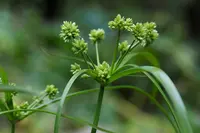
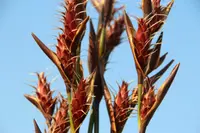
The flowering umbels are surrounded by several long, leaflike bracts that radiate outward, giving the plant a starburst appearance that makes it easy to distinguish from many other sedge species in the field.

Botan icon

Did you know?

In parts of its introduced range, especially in Mediterranean-climate regions, this sedge can form dense stands along waterways and irrigation channels that alter local plant communities and are monitored as an invasive species by conservation agencies.

FAQs about tall flatsedge

This species spreads quickly through both seed and short rhizomes, especially in consistently moist or disturbed soil. In favorable conditions it can form dense colonies, so regular thinning and removing seed heads help prevent unwanted spread in gardens.

Grow Healthy Plants with Botan Care

Keep your plants happy and healthy with plant identification, disease detection, and easy care guidance.

Botan plant care app — identify plants on mobile

Explore More Plants