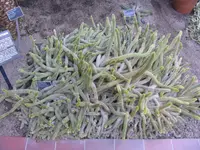
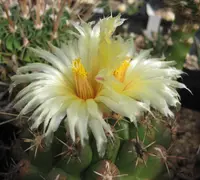
Cobas Tree Care (Cyphostemma currorii)

Also known as: Butter Tree, Kobas Grape, Cobas
Cobas Tree

About Cobas Tree

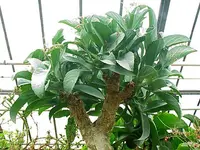
Cobas tree, Cyphostemma currorii, is a slow-growing succulent shrub to small tree with a thick, swollen trunk that stores water. The bark often peels in patches, giving it a mottled, sculptural look.

It comes from hot, arid regions of southwestern Africa, where it survives on rocky slopes with intense sun and very limited rainfall. This background makes it drought tolerant but sensitive to excess moisture and poor drainage.

The species grows slowly and can be demanding, especially in humid or cool climates, so it suits patient growers who can provide strong light and very free-draining soil. Understanding how to care for Cobas Tree starts with respecting its need for dryness, warmth, and good air movement.

Main Plant Requirements

Care Difficulty

Hard Care

Light Preference

Full Sun

Water Requirements

Low Water

Temperature Preference

Tropical / Frost Sensitive

Hardiness Zone

10–11

Soil Texture

Sandy, Rocky, Loamy

Soil pH

Slightly acidic (6.5–7.0), Neutral (7.0)

Soil Drainage

Well-drained

Fertilization

Minimal (feed rarely)

Get Personalized Care Plan

Scan your plant to receive care tips personalized for your specific plant

Available on iOS and Android

How to Care for the Cobas Tree

This desert succulent prefers intense light but benefits from some protection during the hottest hours.

  • Provide 6–8 hours of direct sun daily, with best growth in full morning sun and light afternoon shade in hot, arid climates.
  • Tolerates bright, open exposure but may scorch in harsh summer afternoons; use filtered light or slight shade where UV and heat are extreme.
  • In cooler or coastal regions, Cobas Tree can handle all-day sun; in winter, ensure maximum sun to prevent weak, elongated growth.

This caudiciform stores water in its swollen stem and must be kept on the dry side.

  • Allow soil to dry through at least the top 3–5 cm before watering; in the growing season, water deeply, then drain fully.
  • Use very fast-draining, gritty soil on a slope or mound; persistent moisture around the roots leads to rot and splitting of the caudex.
  • Reduce watering sharply in cool seasons or dormancy when Cyphostemma currorii drops leaves; wrinkling of the caudex signals it is time for a careful drink.

This species prefers hot, dry conditions and is highly sensitive to cold and frost.

  • Aim for 75–95°F (24–35°C) during active growth; it tolerates brief spikes to 105°F (40°C) if roots are shaded and soil is not waterlogged.
  • Protect from temperatures below 45°F (7°C); tissue damage often occurs near 40°F (4°C), and any frost can kill young growth.
  • In regions with cool winters, keep Cyphostemma currorii completely dry and sheltered, resuming warmth and light above 65°F (18°C) to restart growth.

This desert caudiciform prefers very dry air and does not need elevated humidity.

  • Target 20–40% relative humidity, similar to a heated indoor room or arid outdoor climate.
  • Cobas Tree tolerates very dry air but may show stress as softening, wrinkling, or black spotting on the caudex if overwatered at higher humidity.
  • Increase air movement with a fan and keep leaves dry rather than adding trays or humidifiers, which can encourage rot.

This species needs a very fast-draining, mineral-based mix that keeps the caudex dry around the base.

  • Use a gritty, sandy mix made of roughly 60–80% inorganic material such as pumice, coarse perlite, or crushed granite, with 20–40% lean cactus substrate.
  • Ensure rapid drainage so water runs through in seconds; the mix should feel coarse and never stay soggy or compacted.
  • Aim for slightly alkaline to neutral pH around 7.0–7.8, similar to many desert Cyphostemma currorii habitats.
  • Avoid peat-heavy, fine, or water-retentive mixes; add extra pumice or coarse sand to improve aeration and prevent root and caudex rot.

This species is well suited to container growing when stability and drainage are prioritized.

  • Choose a wide, heavy pot that resists tipping, as the swollen caudex and tall stems can become top-heavy in wind or accidental bumps.
  • Select an unglazed clay pot if possible, since its porous walls allow faster evaporation and help keep the caudex from staying damp.
  • Position the caudex slightly above the soil surface in the pot so water drains away from the neck and does not collect around it.

Cyphostemma currorii is a slow-growing caudiciform that needs only light, careful feeding to stay healthy in containers.

  • Use a dilute balanced liquid fertilizer (around 10-10-10) at 1/4–1/2 strength during active growth in spring–summer.
  • Feed sparingly, about every 4–6 weeks, and only when the soil is warm and the plant is producing new leaves.
  • Stop feeding in autumn and winter dormancy to prevent soft, weak growth and root problems.
  • For long-term Cobas Tree indoor care, a small amount of slow-release fertilizer in a gritty mix can support steady growth.

Cyphostemma currorii needs minimal pruning, mainly to maintain structure and remove problem growth in cultivation.

  • Best time for pruning is late winter to early spring before strong new growth starts.
  • Remove dead, damaged, or crossing stems using clean, sharp pruning shears to limit infection risk.
  • Lightly thin crowded shoots to keep the caudex visible and maintain a compact, sculptural form.
  • Avoid heavy cuts into the caudex; focus on soft shoots to guide shape and manage size.

Container-grown Cyphostemma currorii is repotted infrequently, with focus on root health and minimal disturbance.

  • Check for roots circling the pot or pushing out of drainage holes, or for stalled growth despite good light.
  • Plan repotting for late spring when active growth resumes and temperatures are consistently warm.
  • Repot every 3–5 years into a slightly larger pot with very gritty, fast-draining mix to prevent rot.
  • Lift the plant gently, disturb roots as little as possible, and water lightly after repotting to reduce stress.

Cyphostemma currorii is typically propagated from seed, which can be slow and requires warm, stable conditions.

  • Sow fresh, cleaned seeds in late spring–early summer in a very well-draining, sandy mix.
  • Lightly cover seeds, keep temperatures around 75–85°F, and maintain barely moist, not wet, conditions.
  • Germination may take several weeks to months, so provide steady warmth and avoid frequent disturbance.
  • Stem cuttings are less reliable; if attempted, allow cut surfaces to callus before planting in a gritty medium.

This species is not frost hardy and needs thoughtful winter care in most temperate climates.

  • Avoid exposure below about 40°F; freezing temperatures can damage the caudex and kill roots.
  • Move container plants indoors or into a bright, frost-free greenhouse before the first hard frost.
  • Keep soil almost dry during winter dormancy, watering only enough to prevent complete shriveling.
  • In very mild climates, a thick, dry mulch around the root zone helps buffer short cool spells.

Care Tips

Root zone spacing

When potting or placing this species in a rock garden, leave at least 5–8 cm of clear space around the caudex so air can circulate and the base dries quickly after watering, which reduces rot risk.

Heavy pot selection

Use a wide, heavy clay or cement container with a drainage hole, as the thick caudex and branching canopy become top-heavy over time and a stable pot prevents tipping and root disturbance.

Seasonal rest management

During its dry-season dormancy, keep the plant in a bright, airy spot and remove fallen leaves promptly, checking the caudex surface every few weeks for soft spots so any rot can be cut out early if needed.

Targeted pest checks

Inspect the folds and crevices of the caudex and branch nodes monthly with a hand lens, since mealybugs and scale often hide there, and spot-treat small colonies early with a cotton swab dipped in isopropyl alcohol.

Gradual sun adjustment

When moving the plant from indoor conditions to stronger outdoor light, increase exposure over 10–14 days by starting in bright shade and shifting into direct morning sun, which prevents sunscald on the pale, waxy bark while still supporting healthy growth for growing Cobas Tree.

Common Pests and Diseases

Mealybugs

This pest often hides in stem crevices and at the base of leaves, feeding on sap and stressing the caudex over time. Symptoms include white cottony clusters, honeydew, and sooty mold on nearby surfaces.

Solution

Isolate the plant and remove visible clusters with a cotton swab dipped in 70% isopropyl alcohol, then rinse the plant with a firm stream of water. For persistent infestations, apply a systemic insecticide labeled for succulents or use repeated sprays of insecticidal soap, ensuring the plant dries quickly afterward to protect the thick bark and caudex.

Scale insects

These insects attach firmly to stems and the woody caudex, appearing as small brown or gray bumps that suck plant sap. Symptoms include reduced vigor, yellowing leaves, and sticky honeydew on the pot or shelf.

Solution

Gently scrape or wipe off individual scales with a soft brush or cloth and 70% isopropyl alcohol, taking care not to damage the caudex skin. Follow with 2–3 applications of horticultural oil or insecticidal soap at 7–10 day intervals, applied in the evening and kept off the soil as much as possible to avoid stressing this drought-adapted species.

Spider mites

This pest thrives in hot, very dry indoor air and on stressed plants, feeding on the soft leaf tissue during the active growing season. Symptoms include fine webbing, tiny pale stippling on leaves, and gradual leaf drop.

Solution

Increase local humidity briefly around the foliage with light misting during active growth and rinse the leaves under a gentle but thorough stream of water, including the undersides. If mites persist, use insecticidal soap or a miticide labeled for ornamental succulents, repeating weekly until new growth appears clean while still maintaining a bright, well-ventilated, dry environment for the caudex.

Fungal leaf spots

This disease can develop in humid or poorly ventilated conditions, especially when water sits on leaves or young stems. Symptoms include dark, sometimes sunken spots on leaves that may coalesce and lead to premature leaf drop.

Solution

Remove and discard affected leaves and improve airflow by spacing plants and using a fan, while watering at the soil line to keep foliage dry. If spotting continues, apply a copper-based or other broad-spectrum fungicide suitable for succulents according to label directions, and shift the plant to a brighter, drier position to support healthy new growth as part of Cyphostemma currorii care.

Interesting Facts

Succulent grape relative

This species is a member of the grape family (Vitaceae) but has evolved a massive water-storing trunk and thick, peeling bark, an adaptation to survive long droughts in arid southwestern Africa.

Elephant-trampled seedlings

In parts of Namibia and Angola, new plants often establish in rock crevices or sites protected from large herbivores, because elephants and other browsers readily damage exposed young plants while ignoring the older, corky trunks.

Seasonal leaf strategy

The plant produces large, fleshy leaves only during the short wet season and then drops them in the dry season, reducing water loss through transpiration when conditions become harsh.

Botan icon

Did you know?

In its native range this species can reach several meters in height and develop a huge, bottle-shaped caudex that allows it to persist for many years in one of the driest regions where any grape-family plant naturally occurs.

FAQs about Cobas Tree

Container culture suits this slow-growing caudiciform shrub well. Use a wide, heavy pot with excellent drainage and a very gritty mix. Repot infrequently, only when clearly root-bound, to avoid damaging the swollen trunk and roots.

Grow Healthy Plants with Botan Care

Keep your plants happy and healthy with plant identification, disease detection, and easy care guidance.

Botan plant care app — identify plants on mobile

Explore More Plants