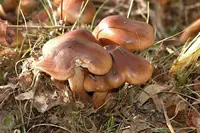
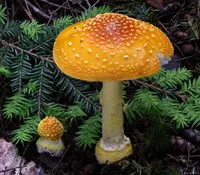
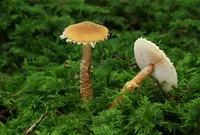
golden coincap Care (Cyptotrama chrysopepla)

golden coincap

About golden coincap

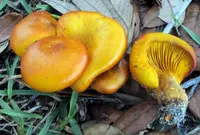
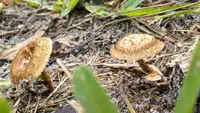
Golden coincap, Cyptotrama chrysopepla, is a small saprophytic fungus that grows on dead wood, bark, and woody debris rather than in soil. It develops clusters of bright yellow to golden caps with a dry, often slightly fuzzy surface, standing out clearly against dark, damp substrates.

This species is typically found in forests and woodlands across parts of North and South America, especially in humid, shaded environments. It is not a typical houseplant, and attempts to care for golden coincap indoors are generally challenging because it depends on decaying wood and specific moisture and microclimate conditions.

In nature, it favors shaded, consistently humid spots with rotting wood and good air movement, and it appears seasonally when those conditions align.

Main Plant Requirements

Care Difficulty

Hard Care

Light Preference

Shade

Water Requirements

Keep Soil Moist

Temperature Preference

Warm Climate

Hardiness Zone

Unknown

Soil Texture

Loamy, Organic-rich

Soil pH

Acidic (5.5–6.5)

Soil Drainage

Moist but well-drained

Fertilization

Minimal (feed rarely)

Get Personalized Care Plan

Scan your plant to receive care tips personalized for your specific plant

Available on iOS and Android

How to Care for the golden coincap

This small saprotrophic fungus prefers low, gentle light that mimics its natural forest-floor habitat.

  • Provide bright dappled shade or filtered light under shrubs or trees, with roughly 1–3 hours of soft morning sun and no harsh afternoon sun.
  • Avoid direct midday sun, which can dry substrates quickly and shorten golden coincap fruiting; strong sun also promotes substrate overheating.
  • In summer, increase shade as canopy thins or reflective surfaces intensify light; in cooler months, slightly more open shade is acceptable if substrates stay moist.

This fungus develops best on consistently moist, not waterlogged, woody or leaf-litter substrates.

  • Aim for evenly moist substrate, allowing only the upper 1–2 cm of leaf litter or wood to feel just barely dry before re-moistening.
  • Use light, repeated watering or misting so moisture penetrates but excess does not pool; good drainage or sloped ground helps prevent standing water and rot.
  • In hot, dry weather, increase frequency and monitor for curling, shriveling, or rapid cap collapse; reduce watering in cool, wet periods to avoid sour, anaerobic-smelling patches.

This species fruits best in mild, moist conditions typical of shaded woodlands.

  • Optimal fruiting usually occurs around 60–75°F (16–24°C), where moisture is stable and evaporation is moderate.
  • Cyptotrama chrysopepla tolerates brief drops near 40°F (4°C) but is sensitive to hard frost; repeated freezing can destroy fruiting bodies and slow underlying mycelium.
  • Sustained heat above 85°F (29°C), especially with low humidity, shortens mushroom lifespan; provide deeper shade and extra moisture buffering during hot, dry spells.

This wood-decaying fungus prefers moderately humid air but is not highly humidity-sensitive in typical outdoor settings.

  • Target ambient humidity around 50–70% when attempting golden coincap indoor care or in sheltered culture setups.
  • It tolerates brief dips to 30–40% but prolonged very dry air can shrink caps and speed desiccation.
  • Low humidity stress appears as wrinkled, brittle caps and rapid collapse after emergence.
  • Increase humidity locally by misting nearby surfaces, using a humidity tray under the culture container, or adding a room humidifier.

Cyptotrama chrysopepla fruits best from moist, organic-rich, well-aerated substrates rather than standard potting soil.

  • Provide a loose, fibrous substrate of decomposing hardwood chips, leaf litter, and coarse bark that mimics a forest floor.
  • Ensure rapid drainage yet consistent moisture by mixing coarse wood chips with 20–30% partially decomposed leaf mold or compost.
  • Keep pH slightly acidic to neutral, around 5.5–7.0, avoiding strongly alkaline materials such as large amounts of lime or concrete rubble.
  • Improve aeration by avoiding compaction, using chunky particles, and never saturating the substrate to the point of standing water or anaerobic odor.

This species can be grown in containers for observational culture, but only when the container environment mimics consistently moist, decaying wood conditions.

  • Use a wide, shallow tub or box that allows spreading substrate layers rather than a deep, narrow pot that stays waterlogged in the bottom.
  • Drill side ventilation holes above the substrate line to improve gas exchange while keeping the main base holes strictly for fast drainage.
  • Choose opaque or thick-walled containers that buffer temperature and slow surface drying of the wood-based substrate.

Cyptotrama chrysopepla, often called golden coincap, typically needs minimal fertilization in cultivation.

  • If grown in a container, use a very light application of balanced liquid fertilizer (around 10-10-10 NPK) diluted to 25% strength.
  • Feed only during active growth in warm months, about every 6–8 weeks, and skip feeding in winter or dormancy.
  • Avoid heavy compost or rich slow-release products, which can encourage competing plants and alter the fungal substrate.

Cyptotrama chrysopepla does not need structural pruning, but minor hygiene work can be useful in cultivation.

  • Carry out any clean-up in late fall or after fruiting bodies collapse and dry.
  • Remove only dead, decayed, or moldy substrate and spent mushrooms to reduce unwanted fungi and pests.
  • Use clean scissors or a sharp knife to cut mushrooms at the base rather than tearing, which disturbs the mycelium.
  • Light grooming maintains a tidy appearance without affecting future flushes of fruiting bodies.

This fungus is seldom kept in traditional pots, so care focuses on carefully moving colonized substrate rather than true repotting.

  • Transplant when the container or log is fully colonized, fruiting heavily, or when growth slows due to substrate exhaustion.
  • Plan moves for mild conditions in spring or early fall to limit temperature stress on the mycelium.
  • Shift the entire colonized block or log into a slightly larger, fresh substrate environment without breaking it apart.
  • Keep the substrate evenly moist and shaded for 1–2 weeks after moving to reduce shock and allow the mycelium to re-establish.

Cyptotrama chrysopepla is not commonly propagated by home growers, and reliable methods are technically demanding.

In most outdoor settings this fungus needs no special winter care, as the mycelium persists quietly in suitable substrate.

Care Tips

Use decaying wood

Establish the fungus on a small, partially rotted hardwood log or chip pile rather than plain potting mix, since this mimics its natural substrate and provides a steady food source for the mycelium.

Maintain microclimate

Place the inoculated wood in a shaded, wind-sheltered corner or a covered box with air holes to keep conditions stable and slightly humid around the developing colony.

Gentle surface misting

When caps begin to form, mist the surrounding air and the substrate surface lightly instead of soaking, so the delicate fruiting bodies do not collapse or rot.

Limit physical disturbance

Avoid moving or turning the colonized wood once growth is established, as repeated disturbance can break mycelial networks and reduce or stop fruiting.

Seasonal observation log

Keep a simple log of dates, weather, and appearance of fruiting bodies in the same site each year to learn the local pattern of growing golden coincap and time moisture adjustments more accurately.

Common Pests and Diseases

sap beetle feeding

This pest targets the small yellow caps and upper stems of the mushroom, chewing irregular pits and holes in the tissue. Symptoms include ragged cap edges, missing pieces, and small dark beetles present on or near the fruiting bodies.

Solution

Hand-pick visible beetles in the early morning or evening and remove heavily damaged fruiting bodies to reduce attraction. Keep the surrounding area free of decaying plant material that harbors beetles, and, in outdoor culture, use fine mesh or row cover over the fruiting zone to physically block adult beetles from reaching developing mushrooms.

fungus gnat larvae

These insects live in moist substrates and can tunnel into developing mushroom pins and stems, causing distorted growth and collapse. Symptoms include soft, water-soaked stems, aborted pins, and small black adult gnats flying low over the substrate.

Solution

Allow the surface of the growing substrate or casing layer to dry slightly between irrigations while keeping internal moisture adequate, which reduces larval survival. Use yellow sticky traps to reduce adult numbers and apply a biological control such as Bacillus thuringiensis israelensis (Bti) to the substrate to target larvae without harming the fungus, which is a core part of Cyptotrama chrysopepla care.

slugs and snails

These pests are attracted to the moist, shaded microhabitats where this species fruits and can rapidly consume entire caps. Symptoms include slime trails, missing whole mushrooms overnight, and smooth-edged bite marks on stems or caps.

Solution

Hand-remove slugs and snails during the evening or early morning and eliminate hiding spots such as boards, dense debris, or overturned pots near the fruiting area. For outdoor beds, create physical barriers using copper tape or rough diatomaceous earth rings around logs or substrates, and place iron phosphate slug baits at a distance to draw pests away from the mushrooms.

mold contamination

This disease affects the substrate or fruiting surface, where competing fungi such as Trichoderma or Penicillium produce green, blue, or white fuzzy patches that crowd out golden coincap mycelium. Symptoms include off-color patches on the substrate, halted mushroom production in affected zones, and a musty or sour odor.

Solution

Promptly remove and discard heavily contaminated portions of the substrate or any affected logs, taking care not to spread spores. Improve hygiene by sterilizing or pasteurizing new substrates, using clean tools, increasing airflow, and avoiding over-wetting the surface so that Cyptotrama chrysopepla mycelium can outcompete contaminants.

Interesting Facts

Metallic yellow cap

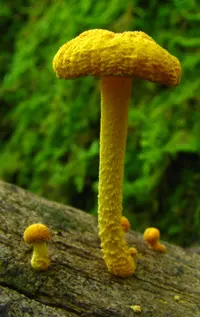
Mature fruiting bodies develop a dry, granular cap surface with an intense metallic yellow color that makes them stand out sharply against dark, decaying wood in shaded forests.

Wood-decaying saprobe

This species lives as a saprobe, breaking down dead hardwood and sometimes conifer wood, helping recycle complex plant polymers such as lignin and cellulose back into the forest nutrient cycle.

Broad but patchy range

It occurs in tropical to temperate regions of the Americas and beyond, yet often appears very locally and sporadically, so encounters can be infrequent even in suitable habitat.

Botan icon

Did you know?

Microscopic examination shows that this fungus has amyloid spores, meaning the spores turn a blue-black color in Melzer’s reagent, a diagnostic chemical reaction that mycologists use to help confirm its identification.

FAQs about golden coincap

This species is considered inedible. It is small, delicate, and lacks culinary value, and some related fungi can cause stomach upset. Avoid collecting or consuming it and leave identification and foraging to experienced mycologists.

Grow Healthy Plants with Botan Care

Keep your plants happy and healthy with plant identification, disease detection, and easy care guidance.

Botan plant care app — identify plants on mobile

Explore More Plants