Use hardwood substrates
Prepare fruiting blocks from well-composted oak or other hardwood sawdust with 10–20% wheat bran supplementation to provide the nutrients this fungus needs for reliable and repeatable flushes.

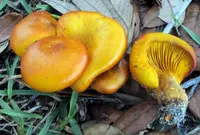
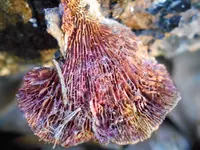
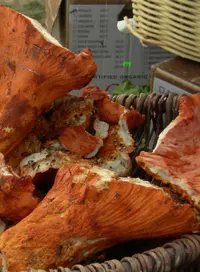
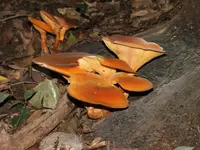
The southern jack-o'-lantern, Omphalotus subilludens, is a gilled mushroom, not a leafy houseplant. It produces bright orange, clustered fruiting bodies on or near buried wood. Caps are usually smooth and funnel-shaped, with dense, pale gills running down the stem. In very low light, the gills can show a faint green glow, a trait known as bioluminescence. This species occurs mainly in the southeastern United States, often in mixed or hardwood forests. It is not simple to cultivate because it requires specific woody substrates and stable, cool, humid conditions. Most home growers do not attempt to care for southern jack-o'-lantern indoors or outdoors.

Care Difficulty
Hard Care

Light Preference
Partial Shade

Water Requirements
Keep Soil Moist

Temperature Preference
Warm Climate

Hardiness Zone
Unknown

Soil Texture
Loamy, Organic-rich

Soil pH
Acidic (5.5–6.5)

Soil Drainage
Moist but well-drained

Fertilization
Minimal (feed rarely)
Scan your plant to receive care tips personalized for your specific plant
Available on iOS and Android
This wood-decay fungus prefers low to moderate forest light rather than direct open sun conditions.
This fungus needs consistently moist but not waterlogged conditions in the wood or organic debris it colonizes.
This species thrives in mild to warm conditions typical of late summer to fall in many temperate forests.
This fungus benefits from moderately moist air that prevents rapid drying of its substrate.
This species grows on wood, but similar conditions can be mimicked in a prepared substrate or adapted “soil-like” mix for cultivation projects.
This wood-decay fungus is only marginally suited to containers and is usually grown in specialized substrate blocks rather than ornamental pots.
This wood-decay fungus typically needs no supplemental feeding when grown on nutrient-rich hardwood substrates.
Pruning is not a standard practice for Omphalotus subilludens, which fruits from decaying wood rather than leafy stems.
Transplanting focuses on moving colonized wood rather than handling a conventional root system.
Propagation of Omphalotus subilludens is specialized and not commonly attempted by casual growers.
Outdoor colonies on hardy hardwood in their normal range usually need little targeted winter care.

Plant Health Check
Not sure what's wrong with your plant? Check your plant's health inside the app.
This fungus is native to the southeastern United States, where it commonly fruits at the base of hardwood trees, especially oaks, often in large, overlapping clusters.
The gills can show very weak greenish bioluminescence in dark-adapted conditions, but the glow is much dimmer and less conspicuous than in the closely related eastern jack-o'-lantern species.
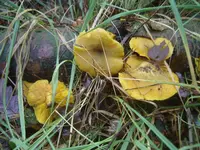
Although sometimes mistaken for edible chanterelles due to its orange color and gilled cap, it is poisonous and can cause severe gastrointestinal upset if eaten.

Molecular studies have shown that this species was long confused with other jack-o'-lantern fungi, and its recognition as a distinct taxon helped clarify species boundaries within the Omphalotus lineage in eastern North America.
This mushroom is strongly poisonous if eaten by people or animals. It causes severe stomach pain, vomiting, and diarrhea, but is rarely fatal. Teach children not to touch wild mushrooms and prevent pets from nibbling them.
Keep your plants happy and healthy with plant identification, disease detection, and easy care guidance.