

Host tree selection
Establish this mycorrhizal fungus only with suitable host trees such as birch or oak, and avoid mixing with non-host conifers in the same inoculation area to prevent weak or failed colonization.

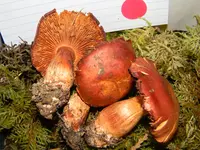
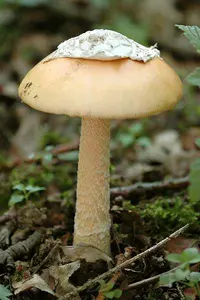
Ruddy webcap, Cystinarius rubicundulus, is a small woodland mushroom rather than a leafy houseplant. It forms reddish to orange-brown caps with a slender stem and fine web-like veils between cap and stem when young.
This species typically appears on soil in coniferous or mixed forests in temperate regions, usually in damp, mossy areas. It is a mycorrhizal fungus, meaning it partners with tree roots, so it cannot be grown in regular pots or standard garden beds.
Because of this close association with trees, it is not practical to cultivate or care for ruddy webcap in typical home or yard settings. In nature it favors moist, cool, shaded forest floors with undisturbed, humus-rich soil.

Care Difficulty
Hard Care

Light Preference
Partial Shade

Water Requirements
Keep Soil Moist

Temperature Preference
Cool Climate

Hardiness Zone
Unknown

Soil Texture
Loamy, Peaty, Organic-rich

Soil pH
Acidic (5.5–6.5)

Soil Drainage
Moist but well-drained

Fertilization
Minimal (feed rarely)
Scan your plant to receive care tips personalized for your specific plant
Available on iOS and Android
This woodland fungus prefers cool, shaded forest conditions rather than direct open sun.
This mycorrhizal fungus depends on consistently moist, not waterlogged, forest soil.
This species thrives in cool to mild woodland temperatures with protection from extremes.
Humidity is not a meaningful care factor for this wild ectomycorrhizal fungus and should not be actively managed indoors.
Cystinarius rubicundulus is a wild ectomycorrhizal mushroom that depends on natural forest soil rather than a prepared potting medium.
This species is not suitable for container growing, as it needs a stable, long-term association with living tree roots in natural ground.
This woodland ectomycorrhizal fungus naturally partners with tree roots and does not require intentional fertilization in cultivation.
Cystinarius rubicundulus is not managed like a garden plant, so deliberate pruning is neither necessary nor recommended.
This species is a mycorrhizal woodland fungus that is not suited to typical container culture or routine transplanting.
Cystinarius rubicundulus propagation is highly specialized and not practical for home growers, as it depends on complex mycorrhizal relationships with host trees.
This temperate woodland fungus overwinters naturally in soil as mycelium and requires no active winter care from gardeners.

Plant Health Check
Not sure what's wrong with your plant? Check your plant's health inside the app.
This ectomycorrhizal fungus is recorded mainly from northern and central Europe, with confirmed occurrences in countries such as Finland, Sweden, Norway, and parts of Germany, often in cool, moist forest habitats.
It typically forms mycorrhizal partnerships with birch (Betula species), exchanging mineral nutrients and water from the soil for carbohydrates produced by the tree through photosynthesis.
The fruiting body shows distinctive reddish to orange-brown colors, and the flesh may display stronger red tones when handled or exposed, which contributes to its common name ruddy webcap.
This mushroom is considered poisonous and must not be eaten. It belongs to a group containing serious kidney toxins. Identification is difficult, so foraging should be left to experts and similar-looking species also avoided.
Keep your plants happy and healthy with plant identification, disease detection, and easy care guidance.

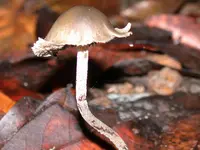
Dewdrop Mottlegill
Panaeolus acuminatus
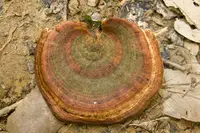
Microporus affinis
Microporus affinis
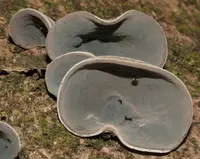
Ear fungus
Auricularia cornea
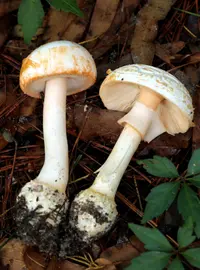
Rose-Tinted Amanita
Amanita roseotincta
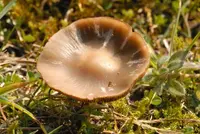
spring brittlestem
Psathyrella spadiceogrisea
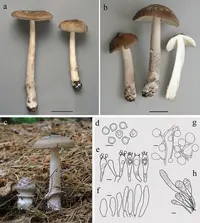
Shaggy Legged Ringless Amanita
Amanita rhacopus
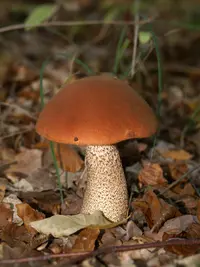
Red-capped Scaber Stalk
Leccinum aurantiacum
Orange Grisette
Amanita crocea