Rotate Substrate Pieces
Periodically rotate or slightly reposition the wood or bark pieces so the fungus can colonize fresh surfaces and avoid local nutrient exhaustion in one area.

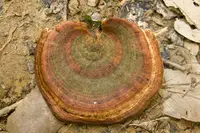
Microporus affinis is a small bracket fungus that forms thin, leathery shelves on decaying wood. It typically has a smooth to slightly velvety upper surface with a pale to brownish color and fine pores underneath.
This species occurs mainly in tropical and subtropical forests, where it helps decompose dead branches and logs. It grows in overlapping clusters and tends to persist for a long time once formed.
For those who want to care for Microporus affinis in cultivation, it requires consistently moist, woody substrate and shaded, humid conditions that mimic its natural forest habitat.

Care Difficulty
Moderate Care

Light Preference
Partial Shade

Water Requirements
Keep Soil Moist

Temperature Preference
Tropical / Frost Sensitive

Hardiness Zone
Unknown

Soil Texture
Loamy, Peaty, Organic-rich

Soil pH
Strongly acidic (4.5–5.5), Acidic (5.5–6.5)

Soil Drainage
Moist but well-drained

Fertilization
Minimal (feed rarely)
Scan your plant to receive care tips personalized for your specific plant
Available on iOS and Android
This wood-inhabiting fungus prefers low to moderate light, similar to a shaded forest floor.
Moist, not waterlogged, conditions support stable growth on its woody substrate.
This species favors warm, frost-free conditions similar to many tropical wood-decay fungi.
This fungus prefers consistently humid air and reacts quickly to drying conditions.
This wood-inhabiting polypore does not grow in conventional potting soil and instead needs a woody, well-aerated substrate.
This species can be grown in containers only when attached to suitable wood placed in a very well-drained setup.
This wood-decaying bracket fungus grows on nutrient-rich hosts and usually does not need supplementary fertilizer in garden or indoor settings.
As a shelf-like wood fungus, Microporus affinis does not require pruning in the usual horticultural sense.
This species is a wood-inhabiting fungus, so cultivation focuses on moving colonized wood rather than classic repotting.
Propagation is typically done by encouraging new colonization of suitable wood rather than by cuttings or seeds, which fungi do not form.
This wood-dwelling fungus is generally cold tolerant and needs little specific winter care once established on outdoor hosts.

Plant Health Check
Not sure what's wrong with your plant? Check your plant's health inside the app.
This species forms tough, woody, shelf-like brackets on dead or dying wood, with a pale to dark brown upper surface and a distinctly porous underside typical of polypores, which are fungi with tube-like pores instead of gills.
Microporus affinis is a white-rot fungus that breaks down lignin, the rigid component of wood, leaving paler, fibrous material and playing an important role in nutrient cycling in tropical and subtropical forests.
This species occurs across many tropical and subtropical regions, including parts of Africa, Asia, and the Americas, where it colonizes a range of hardwood hosts and contributes to natural wood decay in warm, humid climates.
Growth is slow and incremental, as this is a wood-decaying bracket fungus. New shelves typically appear seasonally and enlarge a few millimeters at a time, depending on moisture, temperature, and the condition of the dead wood it inhabits.
Keep your plants happy and healthy with plant identification, disease detection, and easy care guidance.