Dacryopinax elegans Care

Dacryopinax elegans

About Dacryopinax elegans

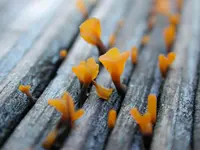
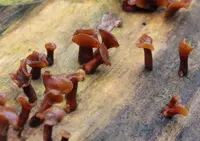
Dacryopinax elegans is a small, jelly-like fungus, not a traditional leafy houseplant. It forms thin, orange to yellow, fan-shaped fruiting bodies on decaying wood. In nature, it occurs mainly in warm, humid tropical and subtropical regions, often on dead branches or fallen logs.

Its growth depends strongly on consistently moist, shaded, and wood-rich environments, which makes it difficult to maintain indoors for most home growers. For those studying fungi or managing outdoor logs and wood features, learning how to care for Dacryopinax elegans mainly involves recreating a damp, shaded, and undisturbed habitat.

Main Plant Requirements

Care Difficulty

Moderate Care

Light Preference

Partial Shade

Water Requirements

Keep Soil Moist

Temperature Preference

Tropical / Frost Sensitive

Hardiness Zone

Unknown

Soil Texture

Loamy, Peaty, Organic-rich

Soil pH

Acidic (5.5–6.5)

Soil Drainage

Moist but well-drained

Fertilization

Minimal (feed rarely)

Get Personalized Care Plan

Scan your plant to receive care tips personalized for your specific plant

Available on iOS and Android

How to Care for the Dacryopinax elegans

This wood-decaying jelly fungus prefers low to moderate light that mimics a shaded forest environment.

  • Provide bright shade or dappled light, aiming for 1–3 hours of weak morning sun and no harsh afternoon sun to prevent tissue drying.
  • Grow Dacryopinax elegans on shaded, decaying wood where it receives indirect daylight but is protected from direct midday rays.
  • In summer, increase shade or filtered light; in winter, allow a bit more indirect light while avoiding exposure to strong, drying winds.

Moisture management focuses on keeping the substrate consistently damp but never waterlogged.

  • Use well-drained, moisture-retentive wood or woody debris and keep it evenly moist, avoiding standing water that can encourage bacterial decay rather than fungal growth.
  • Re-wet the substrate when the outer surface feels just starting to dry, rather than waiting until it becomes fully dry or crumbly.
  • In hot, dry weather, increase misting or gentle soaking frequency; in cooler or rainy periods, reduce added water to prevent sour, anaerobic conditions around the fruiting bodies.

This species develops best in warm, humid conditions with protection from temperature extremes.

  • Aim for 68–82°F (20–28°C) for active growth, which supports stable enzymatic activity and steady fruiting.
  • Protect from cold below about 50°F (10°C), as prolonged exposure slows development and temperatures near freezing can damage delicate jelly structures.
  • In hot periods above 86°F (30°C), increase humidity and shade while ensuring air movement, since stagnant, overheated air can dry or collapse the fruiting bodies.

This jelly fungus prefers consistently moist, humid conditions close to its natural forest habitat.

  • Aim for 70–90% humidity, as it typically fruits and persists poorly in dry air.
  • Low humidity causes shriveling, hardening, and rapid loss of the gelatinous texture of Dacryopinax elegans.
  • Increase humidity by misting surrounding substrates, using damp leaf litter, or placing culture containers inside a ventilated humidity dome.

This species develops on decaying wood or very woody, lignin-rich substrates rather than typical mineral soil.

  • Use a substrate based on well-rotted hardwood, sawdust, or sterile wood chips blended with some leaf litter or bark fines.
  • Keep the substrate loose and airy so oxygen can reach the mycelium; avoid compacted, muddy, or clay-heavy mixes.
  • Maintain constant, even moisture without waterlogging; excess standing water reduces aeration and encourages bacterial rot.
  • If adjusting pH, aim for slightly acidic to neutral conditions around pH 5.5–7.0 to support stable growth of Dacryopinax elegans.

This fungus can be grown in containers as long as the woody substrate and moisture are carefully managed.

  • Choose a wide, shallow container to spread woody substrate thinly, which improves gas exchange and prevents anaerobic pockets.
  • Drill or use side ventilation holes above the substrate line to balance high humidity with steady fresh air movement.
  • Select opaque or dark containers to limit light at the substrate level while allowing light exposure mainly to the fruiting surface.

This wood-decay fungus typically obtains nutrients from its substrate, so Dacryopinax elegans rarely benefits from added fertilizer in home culture.

As a small gelatinous fungus on dead wood, this species does not require structural pruning.

This fungus is normally grown on prepared wood or lignocellulosic substrates rather than in pots, so focus on renewing its substrate instead of classic repotting.

  • Replace colonized wood or blocks once fruiting declines and growth appears weak or patchy.
  • Time any move or re‑mounting for mild conditions, avoiding temperature or humidity extremes that stress the mycelium.
  • Transfer small, actively colonized pieces of substrate onto fresh, clean material to encourage new spread.
  • Handle substrates gently and keep them evenly moist during and after transfer to reduce damage and desiccation of fungal tissue.

Propagation of this jelly fungus is usually left to specialists, as it relies on spores and controlled substrate inoculation.

In natural outdoor settings this saprophytic fungus is generally cold tolerant within its climate range and needs no special winter care.

Care Tips

Use decaying wood

Establish this jelly fungus on well-rotted hardwood offcuts or logs, such as oak or beech, as it fruits more reliably on thoroughly decomposed wood than on fresh timber.

Maintain log moisture

Wrap small colonized logs or boards in breathable burlap and soak them for several hours if they dry out, then let them drain in the shade to keep the substrate moist but not waterlogged.

Provide shaded airflow

Position inoculated wood in a shaded, rain-sheltered but airy spot, such as under a bench with open sides, to reduce desiccation while still preventing stagnant, mold-prone conditions.

Harvest with care

Cut fruiting bodies with a clean knife rather than pulling them off by hand, leaving a thin layer attached so the mycelium in the wood remains undisturbed and can re-fruit.

Rotate fruiting sites

Plan to renew or rotate wood pieces every 2–3 years, as productivity declines once the lignin-rich tissues are exhausted, which supports long-term success when growing Dacryopinax elegans.

Common Pests and Diseases

Wood-decay competition fungi

This disease involves other wood-decay fungi colonizing the same dead wood substrate, reducing available nutrients and space for this species. Symptoms include poor or patchy fruit body development and replacement by tougher or more aggressive bracket or crust fungi.

Solution

Remove and discard heavily colonized wood where other fungi have fully taken over and introduce fresh, undecayed hardwood pieces to encourage growing Dacryopinax elegans on a cleaner substrate. Maintain moderate, stable moisture rather than constant saturation to favor this jelly fungus over more aggressive decay species.

Bacterial soft rot

This disease causes the gelatinous fruit bodies to become excessively slimy, foul-smelling, and rapidly collapse, especially under warm, stagnant, and very wet conditions. Symptoms include watery tissue, surface film, and disintegration of the jelly structures.

Solution

Improve air movement around the fruiting area, reduce standing water, and avoid direct overhead wetting that leaves water trapped on the fungus surface. Remove and dispose of rotting tissue and, if indoors, disinfect adjacent non-wood surfaces to lower bacterial load before new fruit bodies form.

Mite feeding damage

These insects are tiny arthropods that graze on the jelly surface, causing pitting, rough texture, and distorted or stunted fruit bodies. Symptoms include fine surface scarring and occasional light webbing on very dry or stored cultures.

Solution

Increase ambient humidity slightly while maintaining good airflow, since very dry, dusty conditions favor mites more than this jelly fungus. For small setups, gently rinse affected wood under cool running water to dislodge mites, then dry the wood surface to just damp and, if needed, isolate infested pieces away from clean cultures.

Mold contamination

This disease results from fast-growing molds colonizing the surface of the wood or the jelly structures, forming white, green, or gray fuzzy patches that can overrun young fruit bodies. Symptoms include visible mold tufts, off odors, and failure of new fruiting to develop normally.

Solution

Reduce crowding of wood pieces, increase ventilation, and avoid over-misting that keeps surfaces constantly wet, since this strongly favors molds. Remove and discard heavily contaminated fragments and, for controlled indoor cultures, start new pieces from cleaner wood and tools to improve long-term Dacryopinax elegans care.

Interesting Facts

Bright orange jelly

This fungus forms thin, gelatinous, bright orange fruiting bodies on dead wood, often appearing as small, irregular spatters rather than distinct caps or brackets.

Tropical wood decomposer

It is primarily found in warm, humid, tropical to subtropical regions where it grows on well-decayed wood, contributing to the breakdown of lignocellulose and nutrient cycling in forest ecosystems.

Taxonomic history changes

Originally described under other genera, this species has been reassigned to Dacryopinax as fungal classification has been revised using microscopic features and DNA data.

FAQs about Dacryopinax elegans

This jelly fungus develops best outdoors on very decayed wood in warm, humid conditions. Indoors it is difficult to maintain because the required constantly rotting substrate, airflow, and moisture balance are hard to reproduce in typical home environments.

Grow Healthy Plants with Botan Care

Keep your plants happy and healthy with plant identification, disease detection, and easy care guidance.

Botan plant care app — identify plants on mobile

Explore More Plants