Delicatula integrella Care

Delicatula integrella

About Delicatula integrella

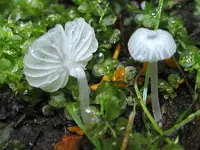
Delicatula integrella is a small, delicate mushroom-forming fungus rather than a leafy houseplant. It produces tiny, white to pale cream caps with thin, fragile stems, often scattered in mossy or grassy areas.

This species is typically found in temperate regions of Europe and parts of North America, usually on decaying plant material in damp, shaded habitats. Its fine structure and specific moisture needs make it more a subject of interest for mycology enthusiasts than for regular garden culture.

For those who still wish to care for Delicatula integrella in a controlled setting, it requires consistently moist conditions, stable shade, and a substrate rich in decaying organic matter.

Main Plant Requirements

Care Difficulty

Moderate Care

Light Preference

Partial Shade

Water Requirements

Moderate Water

Temperature Preference

Cool Climate

Hardiness Zone

Unknown

Soil Texture

Loamy

Soil pH

Slightly acidic (6.5–7.0)

Soil Drainage

Moist but well-drained

Fertilization

Minimal (feed rarely)

Get Personalized Care Plan

Scan your plant to receive care tips personalized for your specific plant

Available on iOS and Android

How to Care for the Delicatula integrella

This small woodland fungus prefers soft, cool light similar to a shaded forest floor.

  • Provide bright dappled light or full shade with brief early morning sun; avoid direct midday sun that can desiccate caps and surrounding substrate.
  • Aim for 1–3 hours of low-intensity light and the rest of the day in shade or filtered light through shrubs, leaf litter, or understory plants.
  • In summer, increase shade cover or leaf litter to prevent drying; in autumn, slightly more open shade supports fruiting of Delicatula integrella.

This fungus depends on consistently moist, but not waterlogged, soil or decaying leaf litter.

  • Maintain evenly moist conditions by allowing only the top 1–2 cm of surface leaf litter or soil to start drying before re-moistening.
  • Use well-drained, humus-rich substrate; water gently so moisture penetrates 5–8 cm without creating standing water, which encourages rot and collapse of fruiting bodies.
  • Reduce added moisture in cool, wet seasons and increase light misting during hot, dry spells; wilting, shriveling, or brittle caps indicate underwatering.

This species favors cool to mild conditions typical of shaded woodland floors.

  • Optimal growth and fruiting occur around 50–68°F (10–20°C), especially when combined with consistent moisture and shade.
  • Tolerates brief drops to about 32°F (0°C) but is sensitive to hard frost; repeated freezing can damage or prevent fruiting of Delicatula integrella.
  • In warm periods above 77°F (25°C), extra shade and moisture are important, as sustained heat and drying winds quickly desiccate the delicate fruiting bodies.

This small fungus prefers consistently moist, humid forest air and reacts quickly to drying out.

  • Aim for 70–90% humidity by keeping the substrate evenly moist in a sheltered, shaded spot.
  • Delicatula integrella dries and collapses in prolonged air below 50%, especially with wind exposure.
  • Signs of low humidity stress include shriveling caps, rapid color fading, and brittle fruiting bodies.
  • Increase local humidity with nearby vegetation, leaf litter cover, and protection from direct sun and drying breezes.

This saprotrophic fungus fruits best on consistently moist, humus-rich forest substrate rather than conventional garden soil.

  • Provide a loose, organic-rich layer made from well-rotted leaf litter, fine bark, and a little compost spread over the planting area.
  • Ensure fast drainage underneath by avoiding compacted clay and allowing excess water to percolate through coarse mineral soil or grit.
  • Maintain a slightly acidic to neutral reaction around pH 5.5–7.0, similar to many woodland leaf-litter environments where Delicatula integrella naturally occurs.
  • Avoid heavily fertilized, peat-only, or waterlogged substrates, which disrupt the decomposing organic layer this species needs to fruit reliably.

This species is only moderately suitable for container culture, typically in experimental or display woodland trays.

  • Use a broad, shallow container to mimic a thin forest-floor litter layer and prevent deep, stagnant zones in the substrate.
  • Create a drainage layer of coarse gravel or chunky bark under the litter mix so excess water leaves the root zone rapidly.
  • Choose a rigid, non-flexing container so the delicate litter structure is not disturbed when the tray is moved or watered.

This small saprotrophic fungus usually grows on nutrient-poor forest litter and does not benefit from routine fertilization in cultivation.

As a tiny woodland fungus, Delicatula integrella does not require pruning in cultivation or habitat-style setups.

In cultivation, this species is managed by renewing its substrate rather than traditional repotting.

  • Replace the leaf-litter or decaying-wood substrate once fruiting declines or contamination appears.
  • Renew the growing tray in cool, moist weather, matching its preferred forest-floor conditions.
  • Transfer colonized material gently onto fresh, similar substrate to limit disruption of the mycelium.
  • Keep the new setup evenly moist and shaded for several weeks to reduce stress and support recovery.

This fungus is best propagated by spreading its mycelium rather than by typical houseplant methods.

  • Use colonized substrate or spawn and move small pieces into fresh, moist leaf litter or fine woody debris.
  • Carry out new inoculations in cool, stable conditions, avoiding temperature extremes and drying winds.
  • Maintain high humidity and gentle air movement so the mycelium can spread without drying out.
  • Limit disturbance after placement, checking only for uniform moisture until new fruiting bodies appear.

Outdoor colonies in suitable climates are generally cold tolerant and need little targeted winter care.

  • In regions with severe freeze–thaw cycles, keep substrate lightly mulched with leaf litter to buffer temperature swings.
  • Avoid waterlogged conditions in winter trays, as ice formation within saturated substrate can damage mycelium.
  • For container culture in very cold zones, move trays to an unheated but frost-moderated shed or garage.

Care Tips

Substrate hygiene

Remove decaying moss, leaves, and other organic debris from around fruiting sites to reduce competing fungi and bacteria that can outcompete Delicatula integrella mycelium.

Gentle fruiting support

Place small pieces of sterilized, damp sphagnum or fine leaf litter around but not on top of emerging fruiting bodies to maintain local moisture without physically damaging the fragile caps and stems.

Targeted micro-watering

Use a narrow-spout bottle or syringe to moisten only the immediate substrate surface around the colony, avoiding direct contact with the tiny fruiting bodies, which can collapse under strong droplets.

Minimal disturbance zone

Mark and reserve a small, stable patch of suitable substrate and avoid stepping, raking, or frequently turning this area so the fine mycelial network can remain intact for repeated seasonal fruiting.

Seasonal observation log

Keep brief notes and photos of when and where fruiting occurs each year to better time moisture management and any light substrate top-ups, which improves long-term success when caring for Delicatula integrella.

Common Pests and Diseases

Slime mold colonization

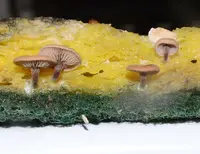
This disease appears as slimy, often whitish to pale yellow patches that can overgrow the tiny fruiting bodies and surrounding substrate. Symptoms include a wet, gelatinous surface that later dries into crusty deposits, reducing normal spore production.

Solution

Remove and discard heavily colonized substrate and fruiting bodies, then improve air movement and reduce surface wetness by thinning nearby vegetation or adjusting misting or watering patterns. Avoid overhead irrigation that keeps the substrate continuously saturated, and maintain good hygiene by clearing decaying plant debris where slime molds proliferate.

Mycophagous springtails

These insects are tiny, white to gray jumping arthropods that feed on fungal tissue and spores within very moist substrates. This pest can graze developing fruiting bodies, leading to deformed or partially eaten caps and rapid collapse of small clusters.

Solution

Lower the moisture level slightly by improving drainage and reducing constant surface saturation, while keeping conditions suitable for fungal growth. Remove heavily infested substrate patches and, if needed, use sticky traps around the area and encourage better airflow to create a less favorable environment for large springtail populations while still growing Delicatula integrella.

Fungal parasitism by competing fungi

This disease is caused by aggressive competitor fungi that overrun or parasitize the delicate fruiting bodies, seen as foreign mycelium, discoloration, or abnormal, stunted caps. Symptoms include rapid loss of distinct cap structure and replacement by a mat of different-colored fungal growth.

Solution

Carefully remove and discard affected clumps and adjacent substrate, working several centimeters beyond visibly colonized areas. Renew the substrate with clean, well-decomposed material, reduce overcrowding of organic debris, and maintain moderate, not extreme, humidity and moisture to favor the desired fungus over fast-growing competitors.

Interesting Facts

Almost translucent caps

The fruitbodies have very thin, whitish to pale ivory caps that can appear almost translucent when moist, which makes them easy to overlook among wet leaf litter.

Indicator of moist woodlands

This fungus typically fruits on decaying leaf litter and small plant debris in damp, shaded broadleaf woodlands, so its presence often reflects stable, moist forest-floor microhabitats.

Tiny and short-lived

Individual mushrooms are very small and delicate, and they tend to be short-lived, often collapsing or disappearing soon after weather conditions turn dry.

FAQs about Delicatula integrella

This small mushroom is not considered edible. It is very insubstantial, poorly documented for culinary use, and may be confused with other tiny white fungi. It is safest to treat it as non-edible and avoid consumption.

Grow Healthy Plants with Botan Care

Keep your plants happy and healthy with plant identification, disease detection, and easy care guidance.

Botan plant care app — identify plants on mobile

Explore More Plants