Scarlet Waxy Cap Care (Hygrocybe coccinea)

Also known as: Scarlet Waxcap, Scarlet Hood
Scarlet Waxy Cap

About Scarlet Waxy Cap

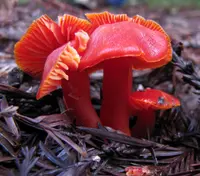
Scarlet waxy cap (Hygrocybe coccinea) is a small, grassland mushroom known for its bright red, glossy cap and slender, pale stem. It is not a houseplant but a wild fungus that appears in short turf, meadows, and mossy lawns, often in cooler, moist seasons.

This species occurs across parts of Europe, North America, and other temperate regions, usually where soils are low in nutrients and free from heavy fertilizer use. It tends to grow singly or in small groups rather than dense clusters.

Because it depends on specific soil conditions and complex relationships with mosses or soil fungi, it is considered difficult to cultivate intentionally. Gardeners interested in how to care for Scarlet Waxy Cap mainly focus on maintaining low-input, unfertilized grass areas with moderate moisture and undisturbed soil.

Main Plant Requirements

Care Difficulty

Hard Care

Light Preference

Partial Shade

Water Requirements

Keep Soil Moist

Temperature Preference

Cool Climate

Hardiness Zone

Unknown

Soil Texture

Loamy, Silty, Organic-rich

Soil pH

Strongly acidic (4.5–5.5)

Soil Drainage

Moist but well-drained

Fertilization

Minimal (feed rarely)

Get Personalized Care Plan

Scan your plant to receive care tips personalized for your specific plant

Available on iOS and Android

How to Care for the Scarlet Waxy Cap

This woodland fungus prefers low to moderate light that mimics dappled forest conditions.

  • Provide bright shade or dappled light, such as under deciduous trees, with only 1–2 hours of weak morning sun and no harsh midday or afternoon sun.
  • Scarlet Waxy Cap fruiting bodies develop best where leaf litter and grass receive filtered light rather than open, exposed lawn or full-sun sites.
  • Excessive sun dries the substrate quickly and suppresses fruiting, while deep, continuous shade can reduce the number and size of caps.

This fungus requires consistently moist, not waterlogged, ground to fruit reliably.

  • Aim for soil that feels evenly damp at 2–5 cm depth; if the surface is dry and leaf litter is crisp, recent rainfall or irrigation is usually needed.
  • In grassland or lawn settings, improve drainage so water does not pool for more than a few hours, since standing water encourages rot in Hygrocybe coccinea colonies.
  • During dry, warm periods, light, infrequent irrigation that moistens the upper 5–8 cm is better than heavy soaking that compacts soil and drives out air pockets.

This species fruits best in cool to mild conditions typical of autumn in temperate regions.

  • Optimal fruiting usually occurs around 45–65°F (7–18°C), with stable cool nights and slightly warmer days enhancing sporocarp (mushroom body) formation.
  • The mycelium tolerates brief drops close to 32°F (0°C), but repeated hard frosts below 28°F (-2°C) can halt visible fruiting until conditions improve.
  • Prolonged heat above 77–82°F (25–28°C) tends to dry the upper soil layer, so shade, leaf litter, and natural mulch help buffer temperature swings.

This fungus prefers consistently moist, high-humidity woodland conditions and reacts quickly to drying out.

  • Aim for 70–90% humidity, mimicking damp forest litter rather than dry garden beds.
  • Dry air or rapidly drying substrate causes caps to dull, shrivel, and disappear sooner after emergence.
  • Maintain humidity by keeping surrounding leaf litter moist, using fine misting around the fruiting area without waterlogging the ground.

This species fruits in thin, moist, organic-rich turf or mossy soil rather than in dense, garden-type substrates.

  • Use a loose, fine-textured mix resembling meadow turf: high organic matter with well-rotted leaf compost blended into sandy loam.
  • Ensure very free drainage; water should pass through quickly while the surface layer stays evenly moist, not saturated.
  • Keep pH slightly acidic to neutral, around 5.5–7.0, since strongly alkaline, limed soils reduce fruiting likelihood for Hygrocybe coccinea.
  • Avoid compacted, peat-only, or heavily fertilized soils; instead, improve aeration with fine sand or very small-grain grit, not chunky bark.

This woodland fungus is generally unsuitable for container growing, as it relies on complex soil ecology that pots rarely support.

Hygrocybe coccinea is a woodland fungus that relies on natural soil ecosystems and generally should not be fertilized in cultivation.

Hygrocybe coccinea does not need pruning, since mushrooms are temporary fruiting bodies rather than persistent stems or foliage.

Transplanting attempts for Hygrocybe coccinea are usually unsuccessful because it depends on complex soil and microbial relationships in situ.

  • Avoid lifting or moving wild clumps, since disturbing the soil can disrupt the underground mycelium network.
  • If attempting cultivation, focus on maintaining similar soil type, moisture, and surrounding vegetation rather than physical transplanting.
  • Do not expect container growth; this species is best left in its natural habitat without routine repotting.

Propagation of Hygrocybe coccinea is technically possible only through spores and is rarely practical for home growers, so active propagation is usually not recommended.

Scarlet Waxy Cap is naturally cold hardy in its native range and does not require special winter care in the ground.

Care Tips

Encourage Mycorrhizal Partners

Leave existing mosses, leaf litter, and low herbaceous plants undisturbed, as these support the soil fungi networks that this species relies on for fruiting.

Minimize Soil Disturbance

Avoid digging, rototilling, or heavy foot traffic in the fruiting area, since soil compaction and disruption of fungal threads can sharply reduce mushroom production for several seasons.

Use Low-Nutrient Groundcover

Maintain a short, unfertilized grass or moss lawn over the colony rather than rich flower beds, because high nutrient inputs favor competing fungi and can suppress Hygrocybe coccinea.

Manage Mowing Carefully

If growing Scarlet Waxy Cap in turf, mow on a higher setting and skip mowing for 1–2 weeks when fruiting bodies appear to prevent damage and allow full spore release.

Protect Microclimate Edges

Preserve partial shade from shrubs, low tree limbs, or natural landscape features around fruiting spots, which helps stabilize moisture and temperature at the soil surface and supports consistent yearly flushes.

Common Pests and Diseases

Slug and snail grazing

This pest feeds on the soft fruiting bodies, leaving ragged edges and holes in caps and stems. Symptoms include shredded margins, slime trails, and missing sections of mushrooms, especially after wet nights.

Solution

Hand-pick slugs and snails in the evening or early morning and remove nearby hiding places such as boards, dense ground cover, or stacked debris. Use physical barriers like copper tape around small colony areas, or place beer traps or iron phosphate bait at the edge of the habitat, keeping chemicals away from pets and wildlife as much as possible when caring for Scarlet Waxy Cap.

Fungivorous springtails

These insects congregate in damp moss and litter, feeding on fungal tissue and spores. This pest can cause pitting or surface scarring on caps and can hollow out very small fruiting bodies.

Solution

Keep the habitat evenly moist but not waterlogged and avoid heavy, stagnant thatch where springtails build high populations. If damage is significant, gently disturb and thin the moss layer, remove dense wet debris, and improve drainage so the substrate remains moist but with good air exchange, which reduces springtail numbers without eliminating the natural fungal community.

Fungal mycoparasites

This disease is caused by other fungi that parasitize waxcap fruiting bodies, sometimes covering them with white, gray, or other colored mold-like growth. Symptoms include distorted caps, rapid collapse, or a fuzzy coating on gills and stems.

Solution

Remove and discard parasitized fruiting bodies as soon as they are noticed to reduce spore spread. Avoid overenriching the soil with compost or fertilizer, maintain short grass or open moss around the colony, and keep the site well drained to favor waxcaps over competing parasitic fungi.

Mite damage

These insects feed directly on fungal tissue, often within gills or at the junction of cap and stem. Symptoms include small pits, fine tunneling, and premature collapse of caps, sometimes with tiny moving specks visible on close inspection.

Solution

Gently remove and dispose of heavily damaged mushrooms and reduce very dense surface litter where mites shelter. If damage is recurrent, lightly disturb the top layer of moss and litter between fruiting periods to break up mite habitat while keeping the overall site moist and undisturbed enough for the waxcaps to regrow.

Interesting Facts

Waxy scarlet cap

The cap surface is distinctly waxy and glossy when fresh, and its intense scarlet color often fades to orange or yellow with age or in strong light, which helps distinguish it from similar red waxcap species.

Grassland specialist

This fungus is strongly associated with unimproved, low-nutrient grasslands such as old lawns, churchyards, and pastures in Europe and parts of North America, and its presence often indicates long-established, low-fertilizer management.

Non-mycorrhizal lifestyle

Unlike many familiar mushrooms, it is not known to form typical mycorrhizal associations with plant roots and is instead thought to live as a specialist in nutrient-poor soils, possibly using complex interactions with soil microbes and organic matter.

Botan icon

Did you know?

Scarlet waxcaps, including Hygrocybe coccinea, have declined markedly in many regions due to agricultural intensification and loss of traditional low-input grasslands, and in several European countries this species is now used as part of conservation monitoring for threatened waxcap-rich grassland habitats.

FAQs about Scarlet Waxy Cap

This mushroom is generally regarded as inedible or of very poor culinary value. It is not considered poisonous, but can be confused with similar species. Foraging is best left to experienced mycologists who can identify waxcaps reliably.

Grow Healthy Plants with Botan Care

Keep your plants happy and healthy with plant identification, disease detection, and easy care guidance.

Botan plant care app — identify plants on mobile

Explore More Plants