Black Witches' Butter Care (Exidia glandulosa)

Also known as: Witches' Butter
Black Witches' Butter

About Black Witches' Butter

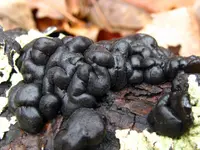
Black witches' butter, Exidia glandulosa, is a jelly fungus, not a traditional leafy plant. It forms irregular, black, warty cushions that feel rubbery or gelatinous when moist. These fruiting bodies usually appear on dead or decaying hardwood, especially oak.

In nature it is found in temperate forests across Europe and North America, emerging mainly in cool, damp seasons. It relies on consistently moist, shaded conditions and decaying wood, which makes it more challenging to cultivate at home.

Those who want to learn how to care for Black Witches' Butter need to recreate a cool, shaded, humid microhabitat with suitable rotting wood as a substrate.

Main Plant Requirements

Care Difficulty

Moderate Care

Light Preference

Partial Shade

Water Requirements

Keep Soil Moist

Temperature Preference

Cool Climate

Hardiness Zone

5–9

Soil Texture

Loamy, Silty, Organic-rich

Soil pH

Acidic (5.5–6.5), Slightly acidic (6.5–7.0)

Soil Drainage

Moist but well-drained

Fertilization

Minimal (feed rarely)

Get Personalized Care Plan

Scan your plant to receive care tips personalized for your specific plant

Available on iOS and Android

How to Care for the Black Witches' Butter

This wood-inhabiting jelly fungus prefers cool, shaded woodland light rather than direct sun.

  • Provide dappled or full shade with no more than 1–2 hours of weak early-morning sun; avoid any direct midday or afternoon sun, which can dry and toughen the fruiting bodies.
  • Black Witches' Butter forms best on shaded, north- or east-facing logs where it receives indirect light all day and remains moist.
  • In summer, protect host wood from exposure that raises surface temperatures or causes rapid drying; in winter, low light is acceptable as long as moisture is maintained.

This fungus depends on consistently moist wood rather than direct watering of the fruiting bodies.

  • Maintain host logs or branches in humus-rich, well-drained woodland soil that stays evenly moist but not waterlogged; avoid standing water around the base.
  • Before re-wetting cut wood, check that the outer 2–5 cm feel just starting to dry, then soak or thoroughly hose until the wood is evenly moist again.
  • Shriveled, hard Exidia glandulosa that swells and becomes gelatinous after rain indicates previous dryness; persistent soggy, rotting wood with foul odor suggests chronic over-saturation.

This species is adapted to cool, temperate woodland climates with broad seasonal variation.

  • Optimal active growth usually occurs around 40–65°F (4–18°C), common in moist autumn and winter conditions in many temperate forests.
  • It tolerates a broad annual range of roughly 20–80°F (-7–27°C); short frosts may pause activity but rarely kill the organism within the wood.
  • Extended heat above 80–85°F (27–29°C), especially combined with drying winds and sun, reduces visible fruiting; shelter host wood in cooler, shaded, humid microsites during hot spells.

This fungus prefers consistently moist, humid conditions rather than dry air.

  • Aim for 70–90% humidity, similar to a shaded, damp woodland environment.
  • Dry air causes shriveling, tougher rubbery texture, and reduced or halted new jelly-like growth.
  • Increase humidity by placing culture containers in a closed, ventilated terrarium box with damp sphagnum or by misting nearby surfaces, not the fruiting bodies directly.

This wood-decay fungus is not grown in conventional soil but on suitable woody substrates.

  • Use well-rotted hardwood logs or thick branches with high organic matter instead of soil, as Exidia glandulosa digests dead wood.
  • Ensure the log drains freely and does not sit in standing water, because prolonged submersion limits oxygen and slows colonization.
  • Maintain slightly acidic conditions (around pH 5–6.5) by avoiding lime-treated timber or heavy ash contamination on the wood surface.
  • To improve aeration, raise logs off bare ground on bricks or racks so air can move around and excess moisture drains away.

This species is generally unsuitable for traditional container growing, as it requires colonized wood rather than potting media.

Exidia glandulosa (black witches' butter) fruits on nutrient-poor dead wood and generally does not need additional fertilizer.

Exidia glandulosa itself is not pruned; any management focuses on the host wood it grows on.

  • Carry out any pruning of the supporting tree or log in late winter or after main fungal fruiting has finished.
  • Remove only dead, unsafe, or badly damaged branches that host the fungus, using clean, sharp saws or loppers.
  • Avoid cutting away colonized wood unless needed for safety, as this removes the substrate the fungus requires.
  • Shape or thin surrounding vegetation rather than the fungus to improve light and airflow around the site.

This wood-inhabiting jelly fungus is not suited to normal repotting and behaves more like a decomposer than a potted plant.

  • Transplant only if moving colonized logs or branches, not the fungus alone, since it depends on the wood substrate.
  • Shift logs in cool, moist weather to reduce drying stress on the mycelium inside the wood.
  • Place the new log location in partial shade with stable moisture so the wood does not desiccate quickly.
  • Avoid frequent moving; instead, allow the colonized wood to remain undisturbed for several years.

Propagation of Exidia glandulosa is specialized and usually left to natural spore spread rather than home methods.

  • In nature, the fungus reproduces from spores released from mature jelly fruiting bodies in cool, damp weather.
  • To encourage spread, keep colonized hardwood branches in a shaded, moist, but well-ventilated area outdoors.
  • Position fresh, uncolonized hardwood close to existing fruiting logs so airborne spores can land and infect new substrate.
  • Avoid disinfectants or fungicides near the site, as these can suppress spore germination and mycelium growth.

This species is very cold hardy and typically needs no special winter care in the landscape.

  • Fruit bodies often appear or persist in cool, wet winter conditions on dead hardwood.
  • For container-grown wood sections, keep them outdoors in a shaded, moist spot rather than in a heated room.
  • Avoid rapid drying by shielding logs from strong winter sun and wind while still allowing natural rain exposure.

Care Tips

Use hardwood sections

Place inoculated substrate on small, partially decayed hardwood logs or thick branches rather than fine woodchips, as this provides stable moisture and structure that support long-term fruiting bodies.

Create shaded microclimate

Stack inoculated logs on the north or east side of a building, fence, or hedge to give consistent shade and wind protection that reduces desiccation of the gelatinous fruiting masses.

Manage moisture pulses

If conditions are very dry, briefly hose or mist the log surface in the evening and then let it dry back naturally, as this short wet–dry cycle often triggers renewed formation of Black Witches' Butter fruiting bodies.

Encourage natural colonization

Leave a few old, lichen-free oak or beech branches in a quiet, shaded corner of the garden and avoid stripping bark, since intact bark and undisturbed wood increase the chance of Exidia glandulosa establishing naturally.

Monitor competing fungi

Inspect host wood every few weeks and remove heavily colonized sections if fast-growing bracket fungi take over, so the remaining wood resources stay more available for growing Black Witches' Butter.

Common Pests and Diseases

Myxomycete slime molds

This disease appears as slimy, often brightly colored patches that may colonize the same decaying wood as the jelly fungus. Symptoms include temporary coverage of Exidia glandulosa fruiting areas, which can slow or interrupt normal spore production.

Solution

Physically remove visible slime mold masses with a plastic scraper or gloved hand and rinse the wood surface with clean water. Reduce excess moisture and improve air movement around the log or stump so the surface dries more quickly between rains, which makes conditions less favorable for recolonization.

Competing wood-decay fungi

This disease issue involves other basidiomycete or ascomycete fungi colonizing the same log, often forming tough brackets, crusts, or other fruiting bodies that outcompete the jelly fungus for wood resources. Symptoms include a gradual reduction in the size, number, or frequency of Exidia glandulosa fruiting bodies on the wood.

Solution

Cut away or break off large competing fruiting bodies without damaging the underlying wood where possible, and avoid moving in new infected wood that already carries aggressive bracket fungi. For those who want to grow Exidia glandulosa, selecting fresh but already dead hardwood and keeping it as a separate substrate from other mushroom logs helps limit competition.

Wood-boring beetles

These insects tunnel through dead hardwood, creating galleries that weaken the substrate and alter moisture balance. Symptoms include fine sawdust-like frass, small exit holes, and sections of wood that dry out and no longer support consistent jelly fungus formation.

Solution

Prune and remove heavily bored sections of wood, keeping the soundest portions as the primary substrate for the fungus. Store logs off bare soil, allow good airflow, and avoid prolonged contact with stacked firewood, which often carries high beetle populations.

Interesting Facts

Specialized bark decomposer

This jelly fungus feeds almost exclusively on dead, attached hardwood branches, especially oak, contributing significantly to the breakdown of lignin-rich wood in temperate forests.

Rehydrates after drying

Its fruiting bodies can dry out to a hard, black crust in dry weather and then rapidly swell back into a jelly-like mass after rain, resuming spore release.

Microscopic spine coverage

The outer surface is covered in tiny wart-like projections that bear the spore-producing basidia, a feature used by mycologists to distinguish it from similar black jelly fungi.

Botan icon

Did you know?

Historically, this species was often confused with the similar Exidia nigricans, and only careful microscopic study and detailed field work in Europe clarified that two distinct but closely related black jelly fungi were being lumped under one name for many years.

FAQs about Black Witches' Butter

This jelly fungus is technically edible but considered of low culinary value due to its texture and lack of flavor. It is crucial to avoid confusion with toxic look-alike fungi and follow reliable identification resources.

Grow Healthy Plants with Botan Care

Keep your plants happy and healthy with plant identification, disease detection, and easy care guidance.

Botan plant care app — identify plants on mobile

Explore More Plants