Candle larkspur Care (Delphinium elatum)

Also known as: Alpine Larkspur, Bee Larkspur, alpine delphinium
Candle larkspur

About Candle larkspur

Candle larkspur (Delphinium elatum) is a tall, clump-forming perennial grown mainly for its upright flower spikes. It belongs to the buttercup family and is valued in cottage and mixed borders. Dense spires of blue, purple, white, or pink flowers rise above divided, palmate foliage, giving strong vertical structure in early to mid-summer. In nature, related forms occur in mountainous and cool-temperate regions of Europe and western Asia. The plant offers impressive blooms but can be moderately demanding, as it dislikes heat stress, wind, and poorly drained soil. Understanding how to care for Candle larkspur, especially its need for cool conditions, fertile soil, and consistent moisture, helps keep it vigorous and long-lived.

Main Plant Requirements

Care Difficulty

Moderate Care

Light Preference

Full Sun

Water Requirements

Regular Water

Temperature Preference

Cool Climate

Hardiness Zone

3–7

Soil Texture

Loamy, Silty, Organic-rich

Soil pH

Acidic (5.5–6.5), Slightly acidic (6.5–7.0)

Soil Drainage

Moist but well-drained

Fertilization

Moderate (every 2–4 weeks)

Get Personalized Care Plan

Scan your plant to receive care tips personalized for your specific plant

Available on iOS and Android

How to Care for the Candle larkspur

Delphinium elatum grows best in bright, cool conditions with protection from harsh afternoon sun.

  • Provide 6–8 hours of direct sun daily, ideally with full morning sun and light or filtered shade after about 2–3 pm, especially in warmer regions.
  • In hot summers, position Candle larkspur where nearby shrubs or fences cast partial afternoon shade to reduce leaf scorch and flower fade.
  • In cooler climates, choose an open, south- or east-facing site; too much shade causes weak, leaning stems and fewer flower spikes.

Delphinium elatum prefers evenly moist, not saturated, soil throughout the growing season.

  • Water when the top 3–5 cm of soil feels dry, soaking the root zone deeply while avoiding standing water or soggy patches.
  • Use rich, well-drained soil and mulch 5–8 cm deep to slow evaporation, helping maintain steady moisture between rainfalls.
  • Watch foliage and stems for cues: drooping, crisp edges, or slow bud development suggest underwatering, while yellowing lower leaves or mushy crowns point to overwatering.

This perennial thrives in cool to mild temperatures and struggles with intense heat or severe cold without protection.

  • Optimal growth occurs around 60–75°F (16–24°C), supporting strong stems and long-lasting flower spikes during late spring and early summer.
  • Plants tolerate brief dips to about 20°F (-6°C) once established, but young growth is sensitive to late frosts and benefits from light frost cloth or garden fleece.
  • In hot regions, protect from extended periods above 85°F (29°C) with afternoon shade and consistent soil moisture to reduce heat stress and stem collapse.

Delphinium elatum prefers moderate humidity but usually copes with typical outdoor levels in temperate gardens.

  • Aim for 40–60% humidity, which is common outdoors in many regions during the growing season.
  • Plants tolerate short dry spells, but prolonged hot, very dry air can scorch flower spikes and leaf edges.
  • If air is very dry, reduce stress by mulching the soil surface and watering consistently rather than misting the foliage.

Delphinium elatum grows best in deep, fertile, moisture-retentive but well-drained soil.

  • Use a loamy structure enriched with 25–40% compost or well-rotted manure to support tall, fast growth.
  • Ensure free drainage by avoiding heavy, compacted clay; mix in coarse sand or fine grit where water lingers after rain.
  • Aim for slightly alkaline to neutral pH, around 6.8–7.5, which supports strong stems and flower production.
  • Avoid waterlogged areas and shallow, stony soils that dry out rapidly and restrict root depth.

This species can be grown in containers if the pot is large, stable, and drains efficiently.

  • Choose a tall, heavy container at least 30–40 cm deep to anchor the tall, top-heavy stems against wind.
  • Fill the pot with a rich, loam-based mix and add 20–30% grit or perlite to prevent water sitting around the crown.
  • Position the container where it will not heat excessively, since sun-warmed pots dry the root zone faster than in-ground plantings.

Delphinium elatum responds well to consistent but moderate feeding during the active growing season.

  • Apply a balanced granular or slow-release fertilizer (around 10-10-10) in early spring as new shoots emerge.
  • Supplement with light applications of diluted liquid feed (1/2 strength) every 3–4 weeks through flowering when caring for Candle larkspur.
  • Use compost or well-rotted manure as a top-dressing to improve soil structure and nutrient availability.
  • Stop feeding in late summer to early fall so growth can harden off before winter dormancy.

Pruning Delphinium elatum supports strong flowering spikes and a tidy clump.

  • In early spring, remove any dead or damaged stems at the base using clean, sharp pruners.
  • After the main flowering flush, cut spent flower spikes down to a low, healthy leaf node to encourage possible rebloom.
  • Thin crowded stems at ground level to improve air circulation and reduce fungal disease risk.
  • In late fall after frost blackens foliage, cut stems back to 5–10 cm above soil to prepare for winter.

Delphinium elatum is usually grown in borders, so transplanting in-ground plants is more relevant than repotting.

  • Plan any transplanting for early spring or early fall when temperatures are mild and soil is workable.
  • Look for signs such as stunted growth, crowded clumps, or flowering decline that suggest division and relocation are needed.
  • Lift the clump carefully with a fork, keeping as much root and surrounding soil intact as possible to limit shock.
  • Replant divisions at the same depth, water well, and provide temporary shade or wind protection until new growth establishes.

Delphinium elatum is commonly propagated by seed and division, and sometimes by basal cuttings for named cultivars.

  • Sow fresh seeds in late winter to early spring in trays with moist, free-draining mix at 60–65°F, with bright, indirect light.
  • For division, split established clumps in early spring just as new shoots appear, keeping several buds and roots per piece.
  • Take basal cuttings in spring when shoots are 7–10 cm tall, then root in a sterile, moist, well-aerated medium under high humidity.
  • Label named cultivars and keep them separate from seed-grown plants to maintain flower form and color.

Delphinium elatum is fairly cold hardy in many temperate gardens but benefits from simple winter care.

  • After hard frost, cut back spent stems to a few cm above soil to reduce rot and disease carryover.
  • Apply a 5–8 cm layer of mulch around the crown to insulate roots, keeping mulch slightly away from stems.
  • In very cold or exposed sites, add extra mulch or evergreen boughs for wind protection, especially for young plants.
  • Container-grown plants are more vulnerable; move pots to a sheltered, frost-free or minimally freezing spot if possible.

Care Tips

Install Vertical Supports

Place sturdy stakes or a wire grid on the windward side before stems exceed 20–30 cm, then loosely tie shoots every 15–20 cm of growth to prevent snapping in wind and rain.

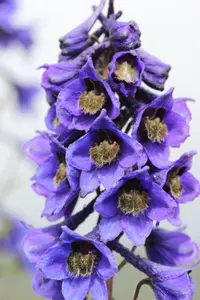
Disbud For Larger Spikes

For exhibition-quality flowers, remove side buds along the main spike when they are pea-sized so the plant can direct energy into fewer, larger, and more uniform blooms.

Plan Successive Plantings

Stagger planting or division of clumps over 2–3 weeks in spring so flowering times are spread out, giving a longer display and more flexibility when cutting stems.

Mulch To Protect Crowns

Apply a 5–7 cm layer of composted bark or leaf mold around but not over the crowns to keep roots cool, stabilize soil moisture, and reduce soil splash that can spread foliar disease when growing Candle larkspur.

Cut Back For Rebloom

Immediately after the first flowering flush, cut stems down to just above a strong basal shoot, then water and feed lightly to encourage a smaller second wave of flower spikes later in the season.

Common Pests and Diseases

Delphinium leaf miner

This pest tunnels inside the leaves, causing pale winding trails, blotches, and eventual browning or tearing of affected areas.

Solution

Remove and destroy mined leaves as soon as damage appears to break the life cycle, then monitor new growth closely. For heavier infestations, apply a systemic insecticide labeled for leaf miners on ornamentals, following label directions and avoiding application when plants are in full bloom to protect pollinators.

Delphinium aphid

These insects cluster on stems and flower spikes, sucking sap and causing curling foliage, distorted buds, and sticky honeydew that can attract sooty mold.

Solution

Spray colonies off with a firm stream of water, then treat remaining aphids with insecticidal soap or a light horticultural oil, coating stems and the undersides of leaves. Encourage natural predators like lady beetles by avoiding broad-spectrum insecticides, and remove heavily infested stems if needed.

Powdery mildew

This disease appears as a white or gray powdery coating on leaves and stems, often starting on lower leaves and spreading in humid, crowded plantings.

Solution

Improve air circulation by spacing plants properly and removing dense or shaded foliage, then discard affected leaves instead of composting them. In humid climates, apply a fungicide labeled for powdery mildew at the first signs of infection, repeating as directed, and water at soil level to keep foliage dry.

Crown and stem rot

This disease causes blackened, mushy crowns or lower stems, often accompanied by sudden wilting and collapse of tall flower spikes, especially in poorly drained or waterlogged soil.

Solution

Remove and discard affected plants, including as much of the rotted crown and surrounding soil as possible, to limit spread. Improve drainage with raised beds or soil amendment, avoid overhead and excessive watering, and rotate plantings so new delphiniums are not placed in previously affected spots.

Slug and snail damage

These pests chew irregular holes in young leaves and can completely remove emerging shoots, often leaving slime trails on soil and foliage, particularly in cool, damp conditions.

Solution

Hand-pick slugs and snails in the evening, use slimy-pest barriers like copper tape around vulnerable clumps, and place iron phosphate slug baits according to label directions. Keeping mulch thin right around the crown and reducing wet debris near plants helps protect growing Candle larkspur from early-season losses.

Interesting Facts

Tall mountain native

This species is native to montane and subalpine meadows of central and eastern Europe, where it grows naturally along moist slopes and forest edges rather than in lowland habitats.

Highly toxic alkaloids

All parts of Delphinium elatum contain diterpenoid alkaloids that can disrupt nerve and muscle function, which is why the species is considered poisonous to humans and livestock if ingested.

Selective pollinator access

The long, backward-pointing nectar spur of each flower favors long-tongued pollinators such as bumblebees, which can reach the nectar more efficiently than short-tongued insects.

Botan icon

Did you know?

Modern tall garden cultivars of Delphinium elatum, often seen in traditional cottage gardens, were intensively bred in Europe in the late 19th and early 20th centuries to enhance spike height, flower size, and the distinctive blue and violet pigment range that is uncommon in many other ornamental perennials.

FAQs about Candle larkspur

Lack of blooms often comes from insufficient light, excess nitrogen fertilizer, or plants that are too young. Crowded clumps and dry roots in late spring can also reduce flower spikes. Dividing and feeding balanced fertilizer usually restores flowering.

Grow Healthy Plants with Botan Care

Keep your plants happy and healthy with plant identification, disease detection, and easy care guidance.

Botan plant care app — identify plants on mobile

Explore More Plants