branched shanklet Care (Dendrocollybia racemosa)

Also known as: branched collybia
branched shanklet

About branched shanklet

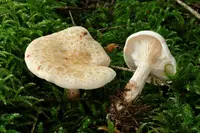
Branched shanklet, Dendrocollybia racemosa, is a small, delicate mushroom rather than a true houseplant. It is known for its thin, upright stems that branch near the top, often carrying tiny secondary caps. This species commonly appears on old, decaying mushrooms in cool, moist forest habitats, especially in temperate regions of the Northern Hemisphere.

It has a specialized lifestyle, depending on well-rotted fungal material and stable humidity, which makes it difficult to cultivate in typical home conditions. Those interested in how to care for branched shanklet usually need to recreate a cool, shaded, consistently moist environment with abundant decaying organic matter.

Main Plant Requirements

Care Difficulty

Hard Care

Light Preference

Shade

Water Requirements

Keep Soil Moist

Temperature Preference

Cool Climate

Hardiness Zone

Unknown

Soil Texture

Organic-rich, Peaty

Soil pH

Acidic (5.5–6.5)

Soil Drainage

Moist but well-drained

Fertilization

Minimal (feed rarely)

Get Personalized Care Plan

Scan your plant to receive care tips personalized for your specific plant

Available on iOS and Android

How to Care for the branched shanklet

This fungus prefers cool, dim forest light rather than direct sun exposure.

  • Provide 0–2 hours of weak, early-morning sun at most; dense shade or heavily filtered light under trees suits branched shanklet best.
  • Choose a site with constant shade from taller vegetation or logs, mimicking the forest floor where light stays below about 1,000 lux.
  • Avoid strong midday or afternoon sun, which quickly dries host mushrooms and substrate, reducing fruiting and causing caps to fade or shrivel.

Moisture for this fungus must stay consistently high without becoming stagnant or waterlogged.

  • Maintain evenly moist, humus-rich substrate; the upper 2–3 cm should feel damp but not soupy when pressed between fingers.
  • Increase moisture input during dry, windy, or hot periods by misting leaf litter and host mushrooms, allowing surfaces to dry slightly between sessions.
  • Reduce added moisture in cool, wet seasons to prevent sour, anaerobic smells and slimy, collapsing mushrooms, signs of poor drainage or excess water.

This species is adapted to cool to mild conditions typical of shaded forest floors.

  • Aim for 50–68°F (10–20°C) for active growth and fruiting, with most consistent development near 55–60°F (13–16°C).
  • Tolerate short drops to about 32°F (0°C), but repeated hard frosts below 28°F (-2°C) damage host mushrooms and reduce Dendrocollybia racemosa fruiting.
  • Limit exposure above 75°F (24°C); prolonged heat over 80°F (27°C) dries the substrate, so combine shade and higher humidity during hot spells.

This fungus needs consistently high humidity to fruit reliably in cultivation.

  • Aim for 80–95% humidity around the culture using a covered chamber or tented setup.
  • Low humidity causes shriveling, pale caps, and aborted branched shanklet fruiting bodies.
  • Increase humidity with a fine-mist spray, moist perlite trays, and tight enclosure while still allowing minimal fresh air exchange.

Dendrocollybia racemosa is a saprophytic fungus that grows on decaying mushrooms rather than conventional soil.

  • Provide a substrate of well-decayed, previously dried agaric mushrooms placed on a moist but not waterlogged bed of leaf litter or conifer needles.
  • Keep the underlying layer loose and airy so excess water drains away and the mushroom tissues stay only slightly damp.
  • Aim for a mildly acidic to neutral environment (pH 5.5–7.0) by using forest-derived organic matter rather than limed materials.
  • Avoid compacted garden soil, manure-rich mixes, or any medium that stays soggy, since these favor competing molds and bacterial rot.

This species can be cultured in containers, but only as a specialized fungal project rather than a typical potted plant.

  • Use a wide, shallow box or tub that lets spent mushroom substrate spread in a thin layer for aeration.
  • Drill side ventilation holes high on the container to balance humidity with steady but gentle fresh air exchange.
  • Place the container inside a larger humidity chamber or covered tray system to stabilize moisture without direct mist hitting the fruiting bodies.

Dendrocollybia racemosa is a saprophytic fungus that gains nutrients from decaying mushrooms and does not benefit from conventional fertilization.

Pruning is not applicable for Dendrocollybia racemosa, as it is a small, short-lived fungus rather than a structural plant.

Transplanting is rarely appropriate because this fungus depends on specific decaying mushrooms and moist forest substrates.

  • Leave wild colonies undisturbed, since moving them usually disrupts the delicate relationship with their host mushrooms and substrate.
  • Cultivation in containers is not practical, so signs like slow growth or crowding are not meaningful indicators for repotting.
  • If scientific cultivation is attempted, transfer small substrate sections intact, minimizing disturbance and keeping moisture and shade constant.

Propagation of Dendrocollybia racemosa is specialized and generally limited to professional or research settings rather than home culture.

Winter care is not needed, as this fungus appears seasonally on suitable decaying mushrooms and does not behave like a perennial garden plant.

Care Tips

Use old Russulas

Reserve partially decomposed Russula or Lactarius fruiting bodies as the primary substrate, since this fungus is specialized to colonize old brittlegill caps rather than fresh hardwood or compost blocks.

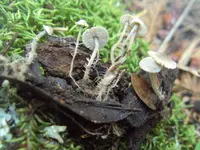
Maintain moss layer

Encourage a stable moss carpet around the old mushrooms by using a shallow tray with an acid, low-nutrient medium, which helps retain moisture and mimics the cool forest floor microhabitat.

Cool-air cycling

Provide a daily or seasonal cool-air cycle, for example 45–55°F nights and slightly warmer days, to simulate the late-season forest conditions that trigger reliable sporophore production when growing branched shanklet.

Gentle mist management

Mist the air above the culture lightly instead of wetting the fungus directly, and use a fine sprayer, as free water on the delicate stems and branches encourages bacterial growth and collapse.

Quarantine wild material

When introducing wild-collected russulas as host material, keep them in a separate, closed container for several days to monitor for competing molds or insects before placing them with established cultures.

Common Pests and Diseases

Competing saprophytic fungi

This disease refers to other wood-decay fungi colonizing the same host material and outcompeting the branched shanklet mycelium for space and nutrients. Symptoms include reduced or absent Dendrocollybia racemosa fruiting on wood or old Russula stems where it previously appeared.

Solution

Remove heavily colonized competing fungi from the substrate and refresh with clean, undecayed conifer litter or partially decomposed Russula material when attempting Dendrocollybia racemosa care indoors. Maintain moderate but not excessive moisture and good air exchange to favor its cooler, niche conditions over faster-growing competitors.

Mite grazing

This pest involves tiny soil or substrate mites feeding on the fine mycelium and developing fruiting bodies. Symptoms include malformed or aborted stems, pitted surfaces, and slow colonization of the substrate.

Solution

Limit organic debris build-up in rearing containers, avoid overfeeding with rich substrates, and keep conditions slightly cooler and drier within this species’ tolerance. If infestations are visible, physically remove heavily affected substrate, refresh with clean material, and use fine mesh covers to reduce mite access while maintaining airflow.

Fungal parasitism

This disease is caused by parasitic or opportunistic fungi colonizing the fruiting bodies and mycelium, leading to discoloration, soft spots, or overgrowth by a different mold. Symptoms include distorted caps, loss of the characteristic branched stem structures, and premature collapse of fruiting bodies.

Solution

Promptly remove and discard any infected fruit bodies and nearby substrate to limit spore spread. Improve ventilation, reduce condensation, and avoid overly dense substrate packing to lower humidity spikes that favor parasitic fungi, while still keeping the substrate evenly moist for growing branched shanklet.

Interesting Facts

Parasitic on other mushrooms

This species grows almost exclusively from the old, blackened stems of certain Collybia s.l. mushrooms, especially former Gymnopus dryophilus, making it a highly specialized fungal parasite or severe opportunist on other decaying fungi.

Unusual branched stem clubs

In addition to its small cap, it produces distinct side branches from the stem that end in tiny sterile clubs, a rare feature among gilled mushrooms and the origin of the common name branched shanklet.

Cold season fruiting

It often appears in late autumn and can persist into early winter in cool, moist forest litter, sometimes fruiting after its host mushrooms have long since collapsed and blackened.

Botan icon

Did you know?

This fungus is monotypic at the genus level, meaning Dendrocollybia contains only this single known species worldwide, which underscores its unusual combination of parasitic lifestyle, morphology, and ecology.

FAQs about branched shanklet

This fungus is not considered edible. It is very small, rare, and grows on old, decaying mushrooms, which makes identification and collection difficult. It has no culinary value and should be left for observation only.

Grow Healthy Plants with Botan Care

Keep your plants happy and healthy with plant identification, disease detection, and easy care guidance.

Botan plant care app — identify plants on mobile

Explore More Plants