

Substrate rotation
Rotate or swap out small pieces of colonized wood or bark every 6–12 months to prevent nutrient exhaustion and keep the fungal colony active and visually healthy when growing Dendrothele acerina.

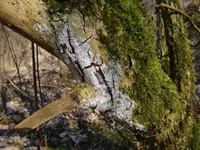
Dendrothele acerina is not a typical houseplant but a crust-like fungus that forms thin, patchy growths on the surface of bark or wood. It appears as flat, often pale or slightly colored mats that closely adhere to their substrate rather than forming stems, leaves, or noticeable fruiting bodies.
This species is mainly recorded in temperate regions, especially on deciduous trees such as maple. It plays a role in wood decomposition and nutrient cycling in forest ecosystems.
Because it is a specialized wood-inhabiting fungus, it is not commonly cultivated and can be difficult to maintain in controlled conditions. For those who attempt to care for Dendrothele acerina in culture, stable moisture and suitable woody material are essential.

Care Difficulty
Moderate Care

Light Preference
Partial Shade

Water Requirements
Moderate Water

Temperature Preference
Warm Climate

Hardiness Zone
Unknown

Soil Texture
Loamy

Soil pH
Slightly acidic (6.5–7.0)

Soil Drainage
Well-drained

Fertilization
Minimal (feed rarely)
Scan your plant to receive care tips personalized for your specific plant
Available on iOS and Android
This crust-forming fungus prefers cool, shaded conditions on its woody hosts rather than direct sun exposure.
Moist but not constantly saturated bark supports the most stable growth of Dendrothele acerina.
This species favors cool to mild conditions and is sensitive to both hard frost and intense heat on exposed wood surfaces.
This crust fungus tolerates a wide humidity range but benefits from moderately moist air when cultivated.
In cultivation, Dendrothele acerina is managed on wood pieces or bark-like substrates rather than traditional soil.
This species is only loosely manageable in containers, grown on wood or bark set in trays rather than as a typical potted plant.
This fungus lives on tree surfaces and typically obtains all needed nutrients from its environment, so added fertilizer is unnecessary for Dendrothele acerina.
As a crust-like fungus on bark, this species does not require active pruning or shaping by the home grower.
This organism is a bark-dwelling fungus rather than a conventional potted plant, so it is not suited to routine repotting or transplanting.
For practical purposes in gardens or homes, this bark-associated fungus is not intentionally propagated by typical plant-owner methods.
As a temperate bark fungus adapted to outdoor conditions, this species generally needs no special winter care from gardeners.

Plant Health Check
Not sure what's wrong with your plant? Check your plant's health inside the app.
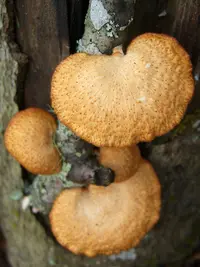
This species forms a thin, crust-like layer closely attached to the bark surface, rather than producing stalked or cup-shaped mushrooms. The fruiting body is smooth to slightly uneven and often appears as a pale, inconspicuous film on the host.
Dendrothele acerina is most often recorded on the bark of maple trees (genus Acer), which is also reflected in its species name acerina. It is considered a typical bark-dwelling, or corticolous, fungus in temperate forests and parks.
This fungus contributes to the gradual breakdown of dead outer bark tissue and surface organic matter. By colonizing bark surfaces, it participates in nutrient cycling on tree trunks without acting as an aggressive wood-decaying pathogen.
This crust fungus is not commonly reported as toxic, but it is not considered edible and should not be ingested. Sensitive individuals may experience skin irritation from spores or contact, so handling with gloves is sensible.
Keep your plants happy and healthy with plant identification, disease detection, and easy care guidance.

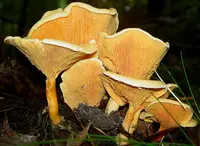
False Chanterelle
Hygrophoropsis aurantiaca
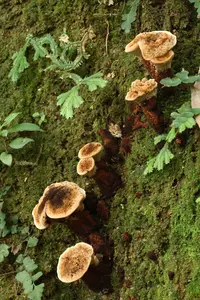
Coltricia montagnei
Coltricia montagnei
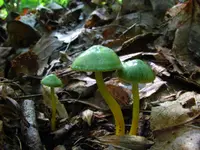
Parrot Mushroom
Gliophorus psittacinus
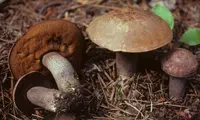
Lilac-brown bolete
Sutorius eximius
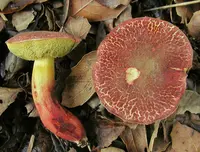
Vejvarut Paphiopedilum
Xerocomellus dryophilus
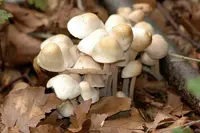
clustered toughshank
Collybiopsis confluens
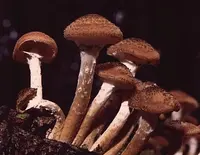
honey mushroom
Armillaria ostoyae
hexagonal-pored polypore
Neofavolus alveolaris