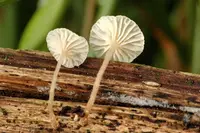
hexagonal-pored polypore Care (Neofavolus alveolaris)

Also known as: diamond polypore
hexagonal-pored polypore

About hexagonal-pored polypore

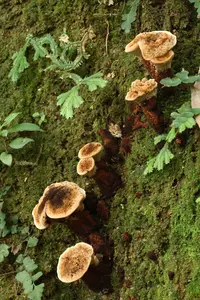
Neofavolus alveolaris, commonly called hexagonal-pored polypore, is a small bracket fungus rather than a traditional leafy plant. It forms thin, fan-shaped caps with a distinctive pattern of hexagonal pores on the underside.

This species usually grows on dead or decaying hardwood branches in temperate forests, especially in spring. Its role as a decomposer means it prefers consistently damp, shaded environments and wood rather than soil.

For those interested in how to care for hexagonal-pored polypore in cultivation, it generally requires fresh hardwood, high humidity, and protection from direct sun, which can dry the fruiting bodies quickly.

Main Plant Requirements

Care Difficulty

Moderate Care

Light Preference

Partial Shade

Water Requirements

Keep Soil Moist

Temperature Preference

Cool Climate

Hardiness Zone

Unknown

Soil Texture

Loamy, Organic-rich

Soil pH

Acidic (5.5–6.5), Slightly acidic (6.5–7.0)

Soil Drainage

Moist but well-drained

Fertilization

Minimal (feed rarely)

Get Personalized Care Plan

Scan your plant to receive care tips personalized for your specific plant

Available on iOS and Android

How to Care for the hexagonal-pored polypore

Neofavolus alveolaris, commonly seen on dead hardwood, prefers cool, shaded forest-like light rather than direct sun.

  • Provide dappled or filtered light under trees or on a shaded log, with at most 1–2 hours of weak morning sun and no direct afternoon sun.
  • Aim for bright shade similar to a north-facing forest edge; heavy, deep shade slows fruiting, while open, exposed sites dry the fungus quickly.
  • In late spring to early summer, when daylight is longer, extra canopy or shade cloth helps prevent the hexagonal-pored polypore from scorching or desiccating.

This wood-decaying fungus depends on consistently moist, but not waterlogged, substrate rather than a fixed watering schedule.

  • Before watering, check the log or wood: the outer 2–5 cm should feel cool and damp, not soggy, and never completely bone-dry or crumbly.
  • Water thoroughly when the surface begins to lighten in color and lose sheen, then allow excess to drain away so air can still reach the wood.
  • Reduce added moisture in cool, wet seasons to avoid standing water and sour odors, which indicate anaerobic, low-oxygen conditions harmful to Neofavolus alveolaris.

This species develops best in cool to mild conditions typical of spring and early summer in temperate forests.

  • Optimal growth occurs around 55–70°F (13–21°C), when moisture is high and temperature swings are moderate.
  • Fruiting bodies tolerate down to about 32°F (0°C), but repeated hard frosts below 28°F (-2°C) can damage or halt visible growth until warmer weather returns.
  • Sustained heat above 80–85°F (27–29°C), especially with low humidity, causes rapid drying and shortens fruiting duration, so prioritize shade and moisture during hot spells.

This bracket fungus tolerates a wide humidity range but fruits best in consistently moist air.

  • Aim for 70–90% humidity around developing fruiting bodies for reliable growth.
  • Tolerates brief dips to 50–60%, but prolonged dry air causes cracking, pale coloration, and stalled expansion.
  • Increase humidity outdoors by retaining moist wood and leaf litter; in controlled setups for hexagonal-pored polypore, use misting and high-humidity chambers without direct water spray on pores.

For cultivation on substrates, Neofavolus alveolaris benefits from a loose, woody, well-aerated medium rather than dense mineral soil.

  • Use a mix based on hardwood sawdust or fine wood chips with 20–30% composted organic matter to provide structure and nutrients.
  • Ensure very rapid drainage by avoiding clay components and adding coarse bark or perlite so water never pools around the colonized substrate.
  • Keep the substrate slightly acidic to neutral (pH 5.5–7.0), which supports fungal enzyme activity and stable mycelial growth.
  • Avoid compacted, waterlogged, or heavily fertilized garden soil, which limits aeration and encourages competing molds and bacteria.

This species can be grown in containers when provided with stable, well-drained woody substrate blocks or bags.

  • Select a container that closely fits the colonized substrate to limit unnecessary air space that dries surfaces too quickly.
  • Use rigid, ventilated tubs or buckets with side openings so fruiting bodies can emerge horizontally without deforming.
  • Elevate the container on blocks or a mesh rack to allow free drainage and airflow beneath, reducing stagnant moisture at the base.

This wood-decaying fungus typically grows on nutrient-rich dead hardwood and needs no supplemental fertilizer in natural or cultivated settings.

Pruning needs for Neofavolus alveolaris are minimal and focus only on hygiene and observation rather than shaping growth.

  • Remove spent or decaying brackets with clean scissors or a sharp knife to reduce unwanted mold growth.
  • Cut only the fruiting body, leaving the underlying wood substrate intact to avoid disrupting the fungal network.
  • Dispose of removed material in the trash or a sealed compost system if monitoring for pests or secondary decay.
  • Clean tools with alcohol after use to limit the spread of fungi or bacteria between logs or host pieces.

This species is usually managed on logs or wood substrates, so care focuses on transplanting colonized material rather than traditional repotting.

  • Consider moving the substrate only when growth declines, the wood is exhausted, or contamination becomes heavy.
  • Transplant in mild weather, typically spring or early fall, to avoid temperature extremes that stress the mycelium.
  • Shift colonized wood gently to a new, similar hardwood log or chunk, keeping moisture and shade conditions stable.
  • Handle pieces carefully to avoid excessive cutting or breaking, which can dry out internal mycelium and slow recovery.

Propagation of this fungus is specialized and generally managed by experienced growers or mycology enthusiasts rather than casual plant owners.

Outdoor colonies are naturally cold hardy in much of their range and usually need no special winter care beyond stable habitat conditions.

Care Tips

Use fresh substrate

Prepare small hardwood log sections or fresh hardwood chips each season, since this fungus colonizes and fruits best on recently cut, undecayed wood rather than old, fully decomposed material.

Pre-soak hardwood pieces

Before inoculation, soak logs or chips in clean, non-chlorinated water for 12–24 hours to hydrate the wood and support faster mycelium establishment.

Maintain even airflow

Provide gentle but continuous air movement around colonizing and fruiting containers to reduce bacterial growth on the pore surface and to keep fruiting bodies from becoming misshapen.

Staggered inoculation batches

Inoculate several small batches of hardwood at 2–3 week intervals so you can observe which wood species and moisture levels fruit best in your space and adjust caring for hexagonal-pored polypore over time.

Careful harvest technique

Cut fruiting bodies cleanly at the base with a sharp knife instead of pulling, leaving the underlying mycelium undisturbed so the same substrate can produce additional flushes.

Common Pests and Diseases

Competing wood-decay fungi

This disease issue occurs when other wood-decay fungi colonize the same dead hardwood, outcompeting and deforming fruiting bodies. Symptoms include misshapen or stunted brackets, discolored pore surfaces, and rapid breakdown of the host log or branch.

Solution

Remove and discard heavily overrun wood and fruiting bodies, then source fresh, clean hardwood for growing hexagonal-pored polypore. Maintain good airflow and moderate, stable moisture on culture logs to favor healthy Neofavolus alveolaris development and slow competitor fungi.

Mite feeding damage

This pest problem involves tiny mites grazing on young fruiting bodies and pore surfaces. Symptoms include rough, pitted surfaces, pale patches, and fine dust-like frass on or around the brackets.

Solution

Improve air circulation and avoid overly stagnant, warm, and dry microclimates that favor mites. Gently rinse fruiting bodies with clean water to remove mites, and if grown in a controlled setup, reduce population buildup by cleaning surrounding structures and, where appropriate, introducing predatory mites from trusted biological control suppliers.

Fungus gnat larvae

These insects lay eggs in very moist wood or substrate, and their larvae tunnel through developing fungal tissue. Symptoms include small holes, collapsing margins of fruiting bodies, and soft, waterlogged areas near the base.

Solution

Allow the substrate surface to dry slightly between misting sessions while keeping internal moisture adequate, and improve drainage or ventilation around culture logs. Remove and discard fruiting bodies with severe tunneling, and use fine mesh barriers or sticky traps to reduce adult fungus gnat numbers in indoor or sheltered cultivation areas.

Slug and snail grazing

This pest problem is caused by slugs and snails feeding on soft bracket edges and pore surfaces. Symptoms include irregular bite marks, missing tissue along margins, and slime trails on wood or nearby surfaces.

Solution

Hand-pick slugs and snails in the evening or early morning and remove nearby hiding spots such as dense debris or stacked boards. In outdoor or greenhouse setups, use physical barriers like copper tape, collars, or coarse grit around culture areas and apply iron phosphate bait if populations remain high.

Interesting Facts

Spring fruiting specialist

This bracket fungus appears mainly in early to mid-spring on dead or recently fallen hardwood branches, making it one of the more conspicuous early-season wood-decay fungi in temperate forests.

Distinctive hexagonal pores

The underside of the fruiting body has large, angular to hexagonal pores rather than gills, which inspired both its common name hexagonal-pored polypore and its former placement in the genus Polyporus.

Thin, fan-shaped caps

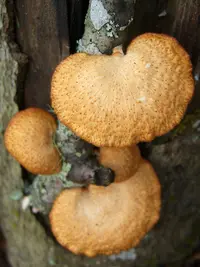
Its caps are thin, fan- to kidney-shaped, often overlapping in small clusters, and range from orange to yellowish or pale with age, a combination that helps distinguish it from thicker, tougher bracket fungi on the same substrates.

FAQs about hexagonal-pored polypore

This bracket fungus is considered non-toxic but also not recommended as food. The fruiting bodies are thin, tough, and leathery, making them essentially inedible. It is best treated as a wood-decaying species for observation, not consumption.

Grow Healthy Plants with Botan Care

Keep your plants happy and healthy with plant identification, disease detection, and easy care guidance.

Botan plant care app — identify plants on mobile

Explore More Plants