Mycelium protection
Mark and avoid stepping on the area where the fungus fruiting bodies appear, because compacted soil damages the underground mycelium and can reduce future flushes for several years.

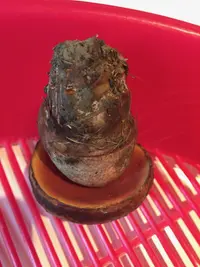
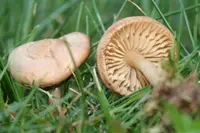
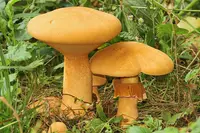
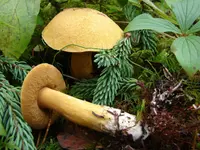
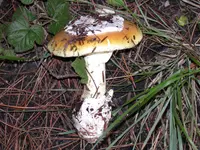
Neoboletus praestigiator is a fleshy, pore-bearing mushroom rather than a leafy houseplant. It forms stout stalks and rounded caps with a smooth, often strongly colored surface. The pores under the cap replace gills and release spores for reproduction.
This bolete is described from European habitats, where it grows on the ground in association with trees, usually in forests or woodland edges. As a mycorrhizal fungus, it forms a partnership with tree roots, so it cannot be grown like a typical potted plant.
Understanding how to care for Neoboletus praestigiator mainly means respecting its natural woodland conditions, including undisturbed soil, leaf litter, and adequate moisture in its native range rather than conventional indoor culture.

Care Difficulty
Moderate Care

Light Preference
Partial Shade

Water Requirements
Moderate Water

Temperature Preference
Warm Climate

Hardiness Zone
Unknown

Soil Texture
Loamy

Soil pH
Slightly acidic (6.5–7.0)

Soil Drainage
Well-drained

Fertilization
Minimal (feed rarely)
Scan your plant to receive care tips personalized for your specific plant
Available on iOS and Android
This mycorrhizal bolete prefers bright woodland conditions with dappled light rather than full exposure.
This forest-dwelling fungus depends on consistently moist, but not waterlogged, soil around its tree partners.
This species favors temperate woodland conditions and fruits best in mild, stable temperatures.
This woodland bolete fruiting body does not require managed humidity in typical outdoor conditions.
This mycorrhizal mushroom relies on suitable forest soil rather than a standard potting substrate.
This species is not well suited to container growing because it depends on forming mycorrhizal associations with tree roots in open soil.
This wild ectomycorrhizal fungus gains nutrients mainly through its tree partners, so Neoboletus praestigiator usually does not need direct fertilization.
This mushroom-forming fungus does not benefit from pruning, and fruiting bodies should generally be left undisturbed.
This species forms symbiotic associations with tree roots and is not suited to conventional container culture or routine transplanting.
As a mycorrhizal bolete, this fungus is challenging to propagate intentionally and is usually left to spread naturally by spores.
This temperate woodland fungus is naturally cold hardy and typically needs no special winter care in outdoor conditions.

Plant Health Check
Not sure what's wrong with your plant? Check your plant's health inside the app.
This species was separated from the Neoboletus luridiformis complex based on detailed microscopic features and DNA studies, reflecting how modern mycology uses molecular data to resolve look‑alike bolete groups.
It is recognized by a characteristic cap color pattern that differs from other closely related red‑pored boletes, helping field mycologists distinguish it within mixed European forest bolete communities.
The fungus forms ectomycorrhizal partnerships with certain trees in European forests, exchanging mineral nutrients and water from the soil for sugars produced by its host through photosynthesis.
This species has a moderate growth rate. Fruiting bodies usually appear within 1–3 years after establishing suitable mycorrhizal association with host trees. Growth and fruiting are strongly influenced by soil moisture, temperature, and undisturbed leaf litter.
Keep your plants happy and healthy with plant identification, disease detection, and easy care guidance.