Spore Bed Renewal
After each fruiting flush, gently rake and loosen the top 2–3 cm of the substrate and add a thin layer of fresh, well-pasteurized organic matter to keep the mycelium vigorous and reduce contamination pressure.

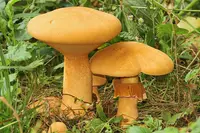
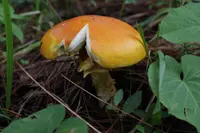
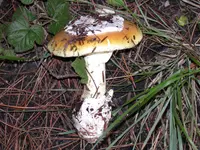
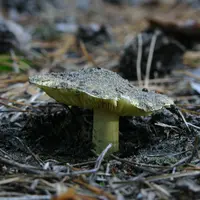
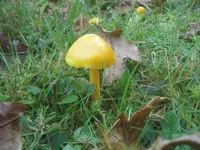
Golden cap, Phaeolepiota aurea, is a large, fleshy mushroom rather than a typical leafy houseplant. It forms tall, sturdy stems topped with rounded, golden-yellow caps often covered in fine granules.
This species is usually found in temperate regions of Europe and parts of Asia, growing on rich soil in meadows, field edges, and disturbed woodland edges. In nature it often appears in groups where the soil is well supplied with organic matter.
Because it is a terrestrial fungus with specific soil fungi relationships, it is challenging to cultivate reliably at home. Most people interested in how to care for Golden Cap focus on understanding its natural habitat rather than active cultivation.
It favors moist, nutrient-rich soil and moderate light, similar to lightly shaded open woodland or meadow margins.

Care Difficulty
Moderate Care

Light Preference
Partial Shade

Water Requirements
Regular Water

Temperature Preference
Cool Climate

Hardiness Zone
Unknown

Soil Texture
Loamy, Silty, Organic-rich

Soil pH
Acidic (5.5–6.5), Slightly acidic (6.5–7.0)

Soil Drainage
Moist but well-drained

Fertilization
Minimal (feed rarely)
Scan your plant to receive care tips personalized for your specific plant
Available on iOS and Android
This terrestrial fungus prefers bright, indirect woodland light rather than harsh, open sun.
This species needs consistently moist, but not waterlogged, substrate to fruit and develop properly.
This fungus thrives in cool to mild conditions typical of late summer to autumn in temperate regions.
This mushroom prefers moderately moist air but usually tolerates typical outdoor humidity in temperate regions.
Phaeolepiota aurea fruits best in loose, humus-rich ground that stays evenly moist yet drains freely.
This species is generally unsuited to long-term container cultivation and performs more reliably in open ground.
Phaeolepiota aurea is a wild, mycorrhizal fungus that normally does not require intentional fertilization in gardens or containers.
Phaeolepiota aurea does not require horticultural pruning, as it is a fungus that fruits and then naturally decomposes.
This species is not suited to conventional repotting, as Phaeolepiota aurea grows from an underground mycelial network rather than a root-based plant system.
Propagation of Phaeolepiota aurea is specialized and usually left to experienced mycologists or controlled culture facilities.
In suitable climates, the underground mycelium of Phaeolepiota aurea is generally hardy and needs no targeted winter care.

Plant Health Check
Not sure what's wrong with your plant? Check your plant's health inside the app.
The spores are covered with tiny wart-like projections, a feature that helps distinguish this species microscopically from many similar-looking golden mushrooms.
The thick, granular partial veil leaves a large, long-lasting ring on the stem, and veil remnants often coat the cap and upper stem with a distinct mealy or grainy texture.
It typically fruits in nutrient-rich, often disturbed soils such as near compost heaps, farmyards, and heavily manured or fertilized ground, reflecting a preference for high nitrogen environments.

This species was historically listed as edible in some European field guides, but is now considered potentially toxic or at least unsafe to eat due to reports of gastrointestinal upsets and its tendency to accumulate environmental contaminants, so modern mycologists recommend avoiding consumption.
This fungus is sometimes reported as edible when young, but it is strongly discouraged for consumption. Identification is difficult, poisoning risk is significant, and older fruiting bodies accumulate toxins and contaminants. Treat it as inedible and leave it intact.
Keep your plants happy and healthy with plant identification, disease detection, and easy care guidance.