Parrot Mushroom Care (Gliophorus psittacinus)

Also known as: Parrot Waxcap
Parrot Mushroom

About Parrot Mushroom

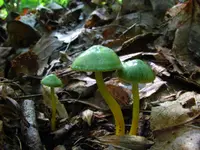
Gliophorus psittacinus, commonly called parrot mushroom, is a small, waxy-cap fungus known for its bright green to yellow cap that often fades with age. It forms scattered groups in grassland and mossy habitats rather than in dense clusters.

This species typically appears in cool, moist meadows, pastures, and open woodland clearings, especially in temperate regions. It grows from soil, not wood, and remains low and delicate.

Its need for undisturbed, nutrient-poor grassland makes it challenging to cultivate, so most people only observe it in the wild. For anyone aiming to care for Parrot Mushroom, stable moisture, clean soil, and mild light are key background conditions, but true home cultivation is rarely practical.

Main Plant Requirements

Care Difficulty

Hard Care

Light Preference

Partial Shade

Water Requirements

Keep Soil Moist

Temperature Preference

Cool Climate

Hardiness Zone

Unknown

Soil Texture

Loamy, Silty, Organic-rich

Soil pH

Strongly acidic (4.5–5.5), Acidic (5.5–6.5)

Soil Drainage

Moist but well-drained

Fertilization

Minimal (feed rarely)

Get Personalized Care Plan

Scan your plant to receive care tips personalized for your specific plant

Available on iOS and Android

How to Care for the Parrot Mushroom

This woodland fungus prefers cool, shaded habitats with only brief periods of direct sun.

  • Provide dappled or filtered light under grasses, moss, or low vegetation, with no more than 1–2 hours of weak morning sun per day.
  • Choose sites with partial to full shade, such as north-facing slopes or under deciduous trees, to protect Parrot Mushroom from drying out.
  • Avoid strong midday or afternoon sun, which rapidly overheats and desiccates the fruiting bodies, reducing color intensity and lifespan.

This species depends on consistently moist, never stagnant, soil conditions in its natural habitat.

  • Maintain evenly damp soil by relying on natural rainfall where possible, allowing only the top 1–2 cm to start drying before adding water if conditions are very dry.
  • Favor well-drained but moisture-retentive soils with organic matter; avoid compacted or waterlogged sites that cause fungal structures to rot.
  • Watch for caps shriveling or cracking as a sign of drying, while slimy, collapsing fruiting bodies in standing water suggest chronic overwatering.

This fungus fruits best in cool, moist conditions typical of autumn grasslands and open woodlands.

  • Optimal fruiting usually occurs around 45–60°F (7–16°C), often during cool, damp periods with frequent light rain and high humidity.
  • The mycelium in soil tolerates brief drops near 32°F (0°C), but hard, prolonged frost can halt activity and damage exposed fruiting bodies.
  • Temperatures above 70°F (21°C), especially combined with dry wind or full sun, quickly desiccate caps and shorten the visible fruiting period.

This fungus needs consistently high humidity to form and sustain fruiting bodies.

  • Aim for 80–95% humidity, mimicking damp woodland or mossy grassland conditions.
  • Dry air causes caps to shrivel, colors to dull, and fruiting to abort before spores develop.
  • Use a covered, well-ventilated terrarium or humidity tent with frequent fine misting when caring for Parrot Mushroom.

Gliophorus psittacinus fruits best in moist, organically enriched, well-aerated ground rather than compact mineral soils.

  • Use a loose mix of leaf litter, fine bark, and loamy soil to mimic forest-floor or grassy turf structure.
  • Ensure constant moisture with slow drainage, but avoid standing water that turns the substrate anaerobic.
  • Maintain slightly acidic to neutral conditions around pH 5.5–7.0 to support associated grasses and soil microbes.
  • Incorporate decayed leaves and fine wood fragments to increase organic matter, microbial activity, and pore spaces for aeration.

This species is generally unsuitable for standard container growing because it relies on complex soil and grassland ecosystems.

This woodland fungus naturally obtains nutrients from soil organic matter, so Parrot Mushroom usually needs no deliberate fertilization in gardens or containers.

Gliophorus psittacinus does not need structured pruning because mushroom fruiting bodies are temporary structures, not woody growth.

  • Remove spent or decaying fruiting bodies with clean gloved hands or a disinfected knife once they collapse or discolor.
  • Discard removed tissue in household trash or hot compost to reduce spread of fungal disease or nuisance spores.
  • Avoid disturbing the underlying soil or leaf litter layer, which contains the true fungal body (mycelium).

This species is not suited to typical container culture, so care focuses on minimally disturbing its natural or semi-natural habitat rather than repotting.

  • Avoid transplanting Gliophorus psittacinus whenever possible, because the mycelium forms fine networks in soil that are easily damaged.
  • If relocation is unavoidable, move soil blocks containing intact turf and leaf litter, ideally in cool, moist weather during fall.
  • Keep the soil profile oriented the same way and avoid breaking clumps; this reduces root-equivalent stress to the mycelium.
  • Water the new site gently after transplanting and maintain even moisture, preventing both waterlogging and complete drying.

Intentional propagation of this fungus is technically challenging for home growers and is rarely attempted outside specialist mycology setups.

This fungus is naturally cold hardy in temperate climates and usually requires no special winter care when left in suitable soil and leaf litter conditions.

Care Tips

Use local strains

Source spores or spawn from local collections or clubs rather than distant suppliers, as locally adapted strains often fruit more reliably in the same climate and soil type.

Maintain leaf litter

Keep a thin, undisturbed layer of mixed deciduous leaf litter over the soil so the fungal mycelium has a stable, moist organic horizon to colonize and fruit through.

Minimize soil disturbance

Avoid digging, rototilling, or heavy raking in areas where fruiting bodies appear, since these activities break up the mycelium network and can reduce or stop future flushes.

Avoid high nitrogen

Do not apply lawn fertilizers with high nitrogen around the colony, because excess nitrogen shifts soil biology toward fast-growing decomposer microbes that can outcompete this fungus.

Retain partial shade

Maintain a light tree or shrub canopy or use a breathable shade cloth so the fruiting area stays cool and moist, which supports more consistent and visible results when growing Parrot Mushroom.

Common Pests and Diseases

Mycophagous springtails

These insects feed on fungal tissue and can graze the fruiting bodies, leaving pitted, scarred, or partially eaten caps and stems. This pest is most active in consistently moist, organic-rich substrates where the mushrooms develop.

Solution

Reduce surface moisture and improve drainage of the fruiting substrate, then gently remove heavily damaged mushrooms. In cultivation trays, use fine mesh barriers, avoid overwatering, and, if needed, apply a targeted, substrate-safe biological control such as predatory mites rather than broad-spectrum chemicals.

Fungus gnat larvae

These insects develop in damp organic matter and their larvae chew through mycelium and young fruiting bodies, causing collapse, distorted growth, or soft, tunneled stems. Symptoms include small black adult gnats flying near the growing area and fragile mushrooms that fall over easily.

Solution

Allow the upper layer of the substrate or soil to dry slightly between waterings, remove any decaying plant debris, and use yellow sticky traps to reduce adult populations. For ongoing problems under Parrot Mushroom indoor care conditions, introduce a biological control such as Bacillus thuringiensis israelensis (BTI) or predatory nematodes to specifically target larvae in the substrate.

Slugs and snails

These pests feed directly on caps and stems, leaving irregular holes, slime trails, and sometimes complete loss of small fruiting bodies, especially in damp outdoor sites. Damage is often worst after rainy periods or overnight when these mollusks are most active.

Solution

Hand-pick slugs and snails in the evening, remove cover such as dense leaf litter right around fruiting patches, and use physical barriers like copper tape or sharp grit around small cultivation beds. If populations are high, place beer traps or iron phosphate slug baits at a distance from the main fruiting area to lure them away.

Parasitic fungi

This disease results from other fungi colonizing the fruiting bodies, leading to misshapen, discolored, or prematurely decaying mushrooms with fuzzy or powdery growth on caps and stems. Symptoms include rapid softening, off-color patches, and visible secondary fungal growth, especially in crowded or poorly ventilated conditions.

Solution

Promptly remove and discard infected mushrooms and any obviously contaminated substrate, then improve ventilation and reduce overcrowding in the fruiting area. Maintain moderate moisture rather than constant wetness, sterilize or replace heavily contaminated containers, and avoid reusing substrate that previously held infected specimens.

Interesting Facts

Color-changing cap

The cap surface is bright green when fresh but shifts toward yellow, orange, or pinkish tones as it ages or dries, a feature used by mycologists to distinguish it from similar waxcap species.

Waxcap grassland indicator

This fungus is strongly associated with unimproved, low-nutrient grasslands and is used in Europe as an indicator species for traditional, species-rich waxcap grassland habitats that are threatened by intensive agriculture.

Slimy, waxy texture

Both the cap and stem are typically covered with a distinct slimy layer, while the flesh underneath is waxy and fragile, characteristics that place it in the waxcap group (family Hygrophoraceae).

Botan icon

Did you know?

The vivid green pigments that give the fresh fruiting bodies their parrot-like color are water-soluble and can leach out in rain or when handled, sometimes leaving paler or differently tinted surfaces on the same mushroom over time.

FAQs about Parrot Mushroom

This brightly colored waxcap is not considered a good edible. It is small, slimy, and offers little flesh. There are also potential confusion risks with other fungi, so it is best treated as inedible and left unharvested.

Grow Healthy Plants with Botan Care

Keep your plants happy and healthy with plant identification, disease detection, and easy care guidance.

Botan plant care app — identify plants on mobile

Explore More Plants