Lilac-brown bolete Care (Sutorius eximius)

Lilac-brown bolete

About Lilac-brown bolete

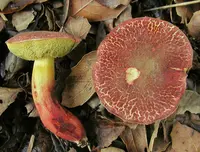
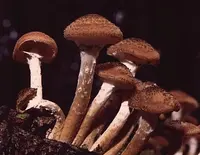
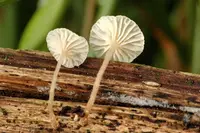
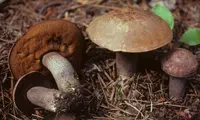
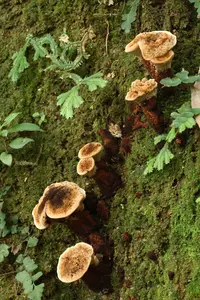
The lilac-brown bolete, Sutorius eximius, is a fleshy, mycorrhizal fungus rather than a traditional leafy plant. It forms stout purple-brown caps and thick, velvety stems with a pore surface instead of gills.

This species typically appears in mixed or coniferous woodlands, often in association with trees such as pines and hemlocks. It grows from soil rich in organic matter, usually in warm, humid seasons.

Reports on edibility are mixed, so it is not recommended for casual foraging. For those who wish to study or care for Lilac-brown bolete in cultivation, conditions that mimic its shaded forest habitat are essential.

Main Plant Requirements

Care Difficulty

Moderate Care

Light Preference

Partial Shade

Water Requirements

Regular Water

Temperature Preference

Warm Climate

Hardiness Zone

Unknown

Soil Texture

Loamy, Sandy, Organic-rich

Soil pH

Acidic (5.5–6.5)

Soil Drainage

Moist but well-drained

Fertilization

Minimal (feed rarely)

Get Personalized Care Plan

Scan your plant to receive care tips personalized for your specific plant

Available on iOS and Android

How to Care for the Lilac-brown bolete

This ectomycorrhizal fungus prefers dappled woodland light rather than direct, open sun.

  • Provide bright shade or filtered light under trees, with about 2–4 hours of gentle morning sun and protection from harsh midday and afternoon sun.
  • Site fruiting areas on the north or east side of woods where the Lilac-brown bolete is sheltered by canopy foliage and low ground vegetation.
  • Avoid deep, continuous shade that limits spore production, and prevent caps from drying by shielding them from intense summer sun exposure.

This woodland bolete depends on consistently moist, not waterlogged, soil around its host trees.

  • Maintain evenly moist leaf litter and upper soil, allowing the top 2–3 cm to dry slightly before the next thorough soak from rainfall or supplemental water.
  • Focus irrigation on the surrounding forest floor, not directly on fruiting bodies, using slow, gentle watering that drains freely through the soil profile.
  • Reduce supplemental watering during cool, rainy seasons; signs of excess include soggy, foul-smelling soil, while dry, cracked ground and shrinking caps suggest moisture shortage for Sutorius eximius.

This species develops best in mild to warm conditions typical of late summer and early autumn woodlands.

  • Support active growth and fruiting at 60–75°F (16–24°C), with the soil staying slightly cooler than the air under tree canopy shade.
  • Protect habitat from frost, as sustained temperatures below 30°F (-1°C) can damage mycelium near the surface and suppress fruiting the following season.
  • Tolerate short warm spells up to about 80–85°F (27–29°C) if soil moisture is stable and the site remains shaded, but prolonged heat and drought reduce fruiting.

This ectomycorrhizal fungus handles a wide humidity range but performs best with moderate ambient moisture.

  • Aim for 50–70% humidity to support stable fruiting conditions for Lilac-brown bolete.
  • It tolerates short dry spells, but prolonged air below 40% can slow development and dry caps.
  • Low humidity stress shows as cracked, brittle caps; increase moisture with nearby water trays, damp leaf litter, or light site misting, not direct spraying on fruiting bodies.

This species prefers loose, well-aerated, organic-rich ground replicating a forest floor rather than standard potting media.

  • Use a mix of leaf litter, well-rotted wood fragments, and slightly sandy mineral soil to mimic natural woodland conditions for Sutorius eximius.
  • Ensure rapid drainage; soil should feel moist but never waterlogged, as standing water promotes rot of mycelium and host tree roots.
  • Target slightly acidic conditions around pH 5.0–6.5, common under conifers and oaks where this bolete typically associates.
  • Improve aeration by incorporating coarse sand or fine bark pieces, avoiding compacted clay or heavily fertilized, peat-only mixes.

This bolete is generally unsuitable for container growing because it relies on long-term ectomycorrhizal association with tree roots in open ground.

This ectomycorrhizal fungus relies mainly on its tree partners for nutrition, so the Lilac-brown bolete needs little direct fertilization.

  • Avoid applying synthetic balanced NPK fertilizer directly to mushroom sites, as excess nutrients can disrupt the soil community.
  • If nearby trees are in poor soil, top-dress with a thin layer of mature compost 1–2 times per year, staying clear of existing fruiting bodies.
  • During winter or dormancy, skip all feeding, since fungal activity and host tree uptake are much lower.

Sutorius eximius does not require pruning in the way ornamental plants do, but fruiting bodies can be managed for hygiene and spore control.

  • Harvest mushrooms by cutting the stem at the base with a clean knife when caps are mature but firm.
  • Remove decaying, insect-damaged, or moldy fruiting bodies promptly to limit disease spread in the patch.
  • Avoid disturbing surrounding soil or tree roots during removal to preserve the underground mycelium network.

As an ectomycorrhizal partner of trees, this bolete is not suited to standard container culture, so focus on careful transplanting of associated trees or soil.

  • Treat repotting as rare; only move container-grown host trees if roots circle the pot, growth slows, or watering becomes difficult.
  • Transplant or up-pot in early spring or early fall, when temperatures are mild and tree stress is lower.
  • Move root balls with as much original soil and leaf litter as possible to retain the Sutorius eximius mycelium.
  • Water gently after transplanting and shade temporarily for 3–7 days to reduce root and mycelial stress.

Propagation of this bolete is specialized and not straightforward for typical home growers.

  • In nature, it spreads via spores released from mature caps that germinate near compatible tree roots.
  • For experimental growing, place spore-rich cap fragments or spore prints into undisturbed, slightly acidic soil around suitable host trees.
  • Maintain evenly moist, well-drained soil and avoid fungicides, as these damage the mycelium needed for new colonies.
  • Expect slow, unpredictable establishment; visible fruiting may take several years under suitable conditions.

This woodland fungus is quite cold hardy and usually needs minimal winter care in the ground near its host trees.

  • In colder regions, a 3–5 cm layer of leaf litter or mulch around host tree roots helps buffer freeze–thaw cycles.
  • Avoid deep soil disturbance in winter so the mycelium network remains intact.
  • Container-grown host trees with associated mycelium should be overwintered in a frost-free but cool, bright location.

Care Tips

Use host roots

Establish this ectomycorrhizal fungus near compatible tree species such as oaks, beeches, or pines, planting your inoculated substrate within the fine root zone so the fungus can form a stable, nutrient-exchanging partnership.

Shaded soil management

Maintain a thick but loose leaf-litter layer over the inoculated area to protect fungal mycelium from drying while still allowing air flow and preventing compaction of the upper soil horizon.

Careful foot traffic

Mark and protect the inoculated patch from repeated walking, heavy pots, or equipment to avoid crushing fine roots and fungal mycelium that sit close to the soil surface.

Minimal soil disturbance

Avoid digging, tilling, or frequent repotting in the colonized zone so the mycorrhizal network can build up over several seasons without mechanical breakage.

Targeted moisture checks

Insert a narrow soil probe or wooden skewer 5–10 cm deep in the inoculated area to confirm that the root–fungus zone is slightly moist, not just the surface, before adjusting irrigation when growing Lilac-brown bolete outdoors.

Common Pests and Diseases

Mycodiplosis larvae

This pest consists of small fly larvae that feed on developing mushroom tissue, creating tunnels and soft, discolored areas in the caps and stems. Symptoms include deformed fruiting bodies and accelerated decay.

Solution

Remove and discard heavily infested fruiting bodies, then collect and dispose of any nearby decaying mushrooms that can harbor larvae. For outdoor patches, reduce excess organic debris, harvest mushrooms promptly, and if needed, use fine mesh or physical barriers over developing fruiting bodies to limit egg‑laying by adult flies.

Mite infestation

These insects are microscopic arthropods that feed on spores and young tissue, often leading to misshapen, stunted, or patchy fruiting bodies. Symptoms include a powdery or dusty appearance on gill or pore surfaces and uneven cap development.

Solution

Carefully remove and discard affected fruiting bodies and surrounding substrate that may harbor mites. Improve site hygiene by removing old fungal material, keep the area slightly drier between flushes, and if cultivation is attempted, bake or pressure‑sterilize substrate before use to reduce mite introduction.

Bacterial blotch

This disease causes greasy, water‑soaked spots or streaks on caps that may turn brown and slimy in wet conditions. Symptoms include rapid deterioration of the affected tissue and unpleasant odor as breakdown progresses.

Solution

Harvest mushrooms as soon as caps are mature and avoid overhead watering that keeps surfaces wet for long periods. Increase air movement around the patch, remove and discard affected mushrooms promptly, and avoid handling fruiting bodies with dirty or wet tools that can spread bacteria.

Fungal parasitism

This disease involves secondary fungi that colonize the bolete, causing distorted, discolored, or partially overgrown caps and stems. Symptoms include abnormal textures, off‑color patches, or crusty growths on the fruiting body surface.

Solution

Remove parasitized fruiting bodies as soon as they are noticed and dispose of them away from the site to reduce spore spread. Maintain good forest‑floor hygiene by clearing excessive, compacted organic layers in managed areas and avoid creating overly shaded, stagnant pockets that favor opportunistic parasitic fungi.

Interesting Facts

Unusual cap coloration

This bolete develops a distinctive lilac to purplish-brown cap that can darken with age, a color combination that is uncommon among fleshy boletes and makes it relatively easy to recognize in the field when fresh.

Mycorrhizal with conifers

Sutorius eximius forms ectomycorrhizal associations with conifer roots, especially pines and hemlocks, exchanging mineral nutrients and water from the soil for sugars produced by the tree.

Blue-staining flesh

When the pores or cut flesh are bruised or cut, they often slowly stain bluish to gray-blue due to oxidation of certain pigment compounds, a reaction that helps distinguish it from some similar non-staining species.

FAQs about Lilac-brown bolete

This bolete is generally classified as inedible or at best of very poor culinary value. Texture is often tough and flavor indifferent. It should not be collected for food, especially since similar-looking boletes can be toxic.

Grow Healthy Plants with Botan Care

Keep your plants happy and healthy with plant identification, disease detection, and easy care guidance.

Botan plant care app — identify plants on mobile

Explore More Plants