

Divide crowded clumps
Lift and divide overly dense rhizome clumps every 3–4 years in early spring, replanting healthy fans at the same depth to maintain vigor and prevent the center from dying out.

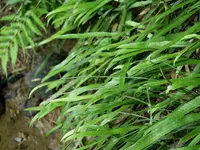
Deparia lancea is a deciduous woodland fern valued for its graceful, arching fronds and finely divided leaflets. It forms low, spreading clumps that create a soft, layered look. Native to moist, shaded forests in East Asia, it is adapted to cool, sheltered sites with consistent moisture and rich, humus-based soil. The plant tends to be reliable and relatively low-maintenance in suitable conditions, but it resents drying out or prolonged heat. Gardeners who understand how to care for Deparia lancea usually find it a steady performer in shade borders and naturalistic plantings.

Care Difficulty
Moderate Care

Light Preference
Partial Shade

Water Requirements
Keep Soil Moist

Temperature Preference
Cold Hardy

Hardiness Zone
5–8

Soil Texture
Loamy, Silty, Organic-rich

Soil pH
Acidic (5.5–6.5), Slightly acidic (6.5–7.0)

Soil Drainage
Moist but well-drained

Fertilization
Minimal (feed rarely)
Scan your plant to receive care tips personalized for your specific plant
Available on iOS and Android
This woodland fern thrives in bright shade with only brief direct sun.
This fern prefers evenly moist, never soggy soil throughout the growing season.
This temperate fern is adapted to cool to mild conditions with moderate summer warmth.
This fern prefers consistently moist air and reacts quickly to dry conditions.
Provide loose, organic-rich, evenly moist soil that mimics a woodland floor.
This fern grows reliably in containers when moisture and stability are managed carefully.
This woodland fern grows well in humus-rich soil and benefits from light feeding in containers or poor ground.
Pruning needs are light and focus mainly on hygiene and tidiness for this deciduous fern.
This fern is more often grown in the ground, but container plants or crowded clumps benefit from periodic transplanting.
Propagation is usually done by division, since spore raising is slow and requires controlled conditions.
This hardy fern usually overwinters well in the ground in temperate regions with minimal intervention.

Plant Health Check
Not sure what's wrong with your plant? Check your plant's health inside the app.
This fern is naturally found in shaded, moist ravines and stream banks in East Asia, where it grows in humus-rich soils with steady seepage rather than standing water.
The species name lancea refers to its narrow, lance-shaped leaf segments, which give the fronds a finely textured, arching appearance compared with many broader woodland ferns.
Unlike many evergreen ferns, this species is deciduous and drops its fronds in colder seasons, allowing the plant to conserve resources in winter and resprout from its rhizome in spring.
Growth is moderate. In suitable shade and moisture, this fern usually adds 5–15 cm of frond length per year, forming a wider clump over several seasons rather than rushing to full size in one year.
Keep your plants happy and healthy with plant identification, disease detection, and easy care guidance.

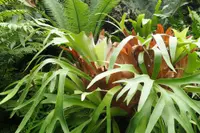
Elkhorn Fern
Platycerium bifurcatum
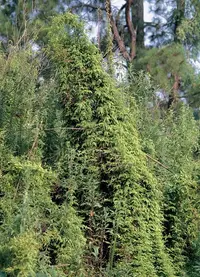
Japanese climbing fern
Lygodium japonicum
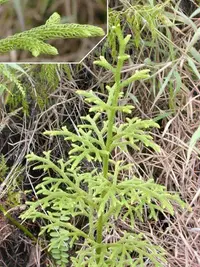
staghorn clubmoss
Lycopodiella cernua
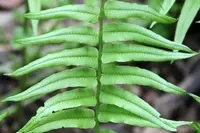
narrow-leaved glade fern
Homalosorus pycnocarpos
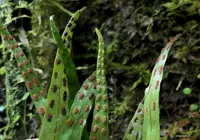
starscale fern
Pleopeltis astrolepis
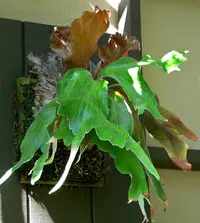
Platycerium stemaria
Platycerium stemaria
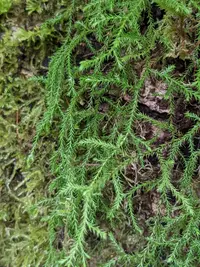
Oregon spikemoss
Selaginella oregana
Water sprite
Ceratopteris thalictroides