

Spore-friendly surfaces
To establish new patches, press a thin layer of finely sieved, low-nutrient substrate or milled sphagnum onto stone, wood, or soil, then gently mist so spores and fragments can anchor instead of washing away.

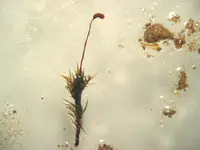
Dicranella varia is a small acrocarpous moss, meaning it forms upright, cushion-like tufts rather than spreading carpets. It has fine, bright green leaves that create soft, dense patches on soil and rock.
This species is common in temperate regions, often found on disturbed ground, paths, banks, and open woodland soils. Its ability to colonize bare substrates and tolerate some fluctuation in moisture makes it relatively forgiving in cultivation.
Dicranella varia prefers cool, humid conditions, consistent moisture, and a loose, slightly acidic substrate. Understanding how to care for dicranella moss helps keep its cushions compact and evenly green indoors or in terrariums.

Care Difficulty
Moderate Care

Light Preference
Partial Shade

Water Requirements
Keep Soil Moist

Temperature Preference
Cool Climate

Hardiness Zone
5–9

Soil Texture
Loamy, Silty, Organic-rich

Soil pH
Strongly acidic (4.5–5.5), Acidic (5.5–6.5)

Soil Drainage
Moist but well-drained

Fertilization
Minimal (feed rarely)
Scan your plant to receive care tips personalized for your specific plant
Available on iOS and Android
This small moss prefers soft, indirect light similar to a shaded forest floor.
This moss requires consistently moist conditions without long dry periods or stagnant water.
This moss is cool to mild climate adapted and tolerates a broad outdoor temperature range.
This moss prefers consistently moist, cool air with fairly high humidity.
This species thrives on fine, moist, acidic substrates that stay damp but not stagnant.
This moss is suitable for shallow container culture, especially in trays or terrariums.
This moss has very low nutrient demand, so added fertilizer is usually unnecessary and can be harmful.
Pruning needs for Dicranella varia are minimal and focus on light grooming rather than shaping.
Transplanting Dicranella varia focuses on renewing its moist substrate rather than handling true roots.
Propagation relies on dividing existing cushions rather than complex techniques.
This moss is generally cold hardy and needs little specific winter care in most temperate climates.

Plant Health Check
Not sure what's wrong with your plant? Check your plant's health inside the app.
This moss frequently colonizes newly exposed, disturbed, or compacted soils, such as roadside banks and paths, helping stabilize the surface and trap fine particles for later plant succession.
Populations often behave as short-lived colonists that appear quickly after disturbance and then decline as taller vegetation shades them out, reflecting an adaptation to early successional habitats.
The narrow leaves characteristically curve or bend to one side when dry, a feature used by bryologists to distinguish it from similar small mosses under a hand lens.
This species spreads gradually through spores and fragmentation, forming low cushions or patches rather than fast mats. It is not considered aggressive and rarely outcompetes other small ground-hugging plants under typical garden or terrarium conditions.
Keep your plants happy and healthy with plant identification, disease detection, and easy care guidance.

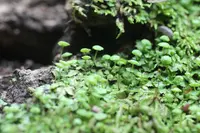
Cryptomitrium tenerum
Cryptomitrium tenerum
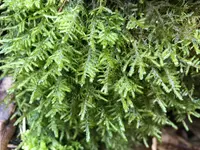
Flat Neckera
Alleniella complanata
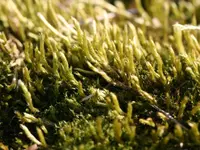
brachythecium moss
Brachythecium salebrosum
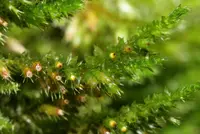
Lateral Cryphaea
Cryphaea heteromalla
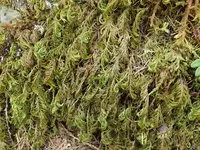
dendroalsia moss
Dendroalsia abietina
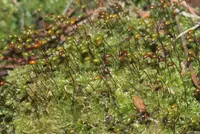
velvet feather-moss
Brachytheciastrum velutinum
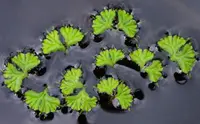
fringed heartwort
Ricciocarpos natans
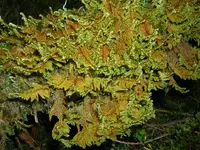
mollusc ctenidium moss
Ctenidium molluscum