Anchor On Substrate
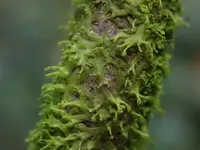
Press the moss firmly onto rough, stable surfaces like bark, rock, or unglazed clay and secure it with biodegradable mesh or cotton thread for 4–6 weeks so rhizoids can attach and form a long-lasting carpet.

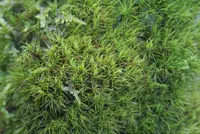
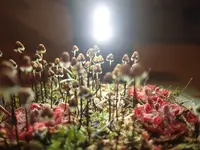
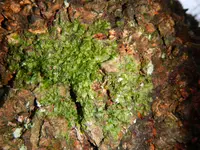
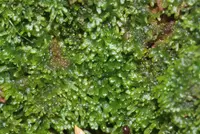
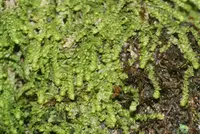
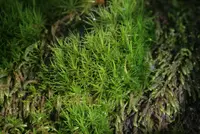
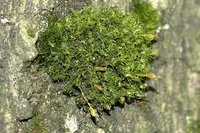
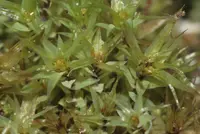
Dicranum fulvum, often called dicranum moss, is a small, tuft-forming moss that creates dense, soft cushions of green to yellow-green foliage. The upright, slightly curved leaves give it a textured, windswept look.
This species naturally occurs on acidic substrates such as rocks, decaying wood, and forest floors in cool, humid woodlands of North America and parts of Europe. It stays low-growing and slowly spreads, which makes it suitable for naturalistic terrariums and shaded garden features.
Dicranum fulvum prefers consistent moisture, good air circulation, and low to moderate light away from harsh sun. Understanding these simple needs makes it easier to care for dicranum moss successfully.

Care Difficulty
Moderate Care

Light Preference
Partial Shade

Water Requirements
Keep Soil Moist

Temperature Preference
Cool Climate

Hardiness Zone
3–7

Soil Texture
Loamy, Peaty, Organic-rich

Soil pH
Strongly acidic (4.5–5.5), Acidic (5.5–6.5)

Soil Drainage
Moist but well-drained

Fertilization
Minimal (feed rarely)
Scan your plant to receive care tips personalized for your specific plant
Available on iOS and Android
This moss prefers cool, shaded woodland-style light with brief, gentle sun exposure.
This moss thrives in consistently moist, not waterlogged, conditions that mimic a cool forest floor.
This species is adapted to cool, temperate climates with marked seasonal changes.
This species prefers consistently moist, humid air and reacts quickly to drying conditions.
This moss grows best on moist, acidic, well-aerated substrates rich in decomposed organic matter.
This species can be grown successfully in shallow containers when moisture and stability are controlled carefully.
This moss typically grows well without added fertilizer, especially when mounted on bark or acidic substrates.
Dicranum fulvum needs minimal pruning, mainly for hygiene and appearance rather than growth control.
Transplanting is occasional and mainly needed when Dicranum fulvum outgrows its patch or the substrate deteriorates.
Propagation is usually done by division of mats rather than spores, which require controlled lab-like conditions.
This moss is naturally cold hardy and usually needs no special winter care beyond stable moisture.

Plant Health Check
Not sure what's wrong with your plant? Check your plant's health inside the app.
The upper leaf cells of Dicranum fulvum often contain yellow‑brown pigments that give the shoot tips a distinct coppery or fulvous tone, which is a key field character separating it from many other green Dicranum species.
When dry, the narrow lance‑shaped leaves twist strongly and turn to one side, creating a characteristic swept appearance that helps bryologists distinguish this species during herbarium identification.
Dicranum fulvum commonly grows on acidic, nutrient‑poor humus or decaying wood in coniferous and mixed forests, where its dense cushions help stabilize loose organic layers and retain moisture on the forest floor.
Growth is slow. In suitable, cool, consistently moist conditions, it may extend only a few millimeters per year. Disturbance, drying winds, foot traffic, and irregular moisture all reduce growth, so stability and steady humidity are important.
Keep your plants happy and healthy with plant identification, disease detection, and easy care guidance.