Bluish Veilwort Care (Metzgeria violacea)

Bluish Veilwort

About Bluish Veilwort

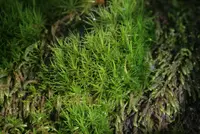
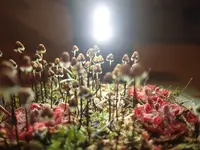
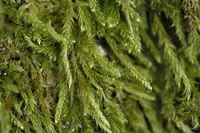
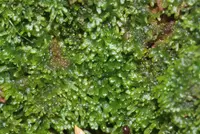
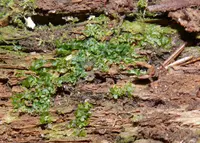
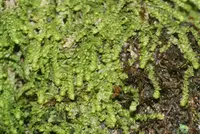
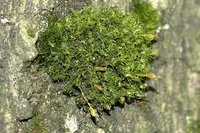
Bluish veilwort, Metzgeria violacea, is a tiny thalloid liverwort that forms delicate, flat green ribbons on bark, rocks, or damp soil. It often shows a faint bluish or violet sheen in the right light, which gives the species its common name.

In nature it occurs mainly in humid, shaded forests, often in temperate and subtropical regions with clean, moist air. It is small and slow-growing, but can form dense mats when conditions stay consistently cool and damp.

This plant is sensitive to drying out and air pollution, so it is less forgiving than common houseplants. To care for Bluish Veilwort, provide stable moisture, gentle airflow, and soft, indirect light without strong heat or sun exposure.

Main Plant Requirements

Care Difficulty

Hard Care

Light Preference

Shade

Water Requirements

Keep Soil Moist

Temperature Preference

Cool Climate

Hardiness Zone

Unknown

Soil Texture

Peaty, Organic-rich, Loamy

Soil pH

Strongly acidic (4.5–5.5), Acidic (5.5–6.5)

Soil Drainage

Waterlogged tolerant

Fertilization

Minimal (feed rarely)

Get Personalized Care Plan

Scan your plant to receive care tips personalized for your specific plant

Available on iOS and Android

How to Care for the Bluish Veilwort

This small epiphytic liverwort prefers low to moderate, filtered light similar to a shaded forest floor.

  • Provide bright, indirect light or full shade with dappled sun, such as 1–2 hours of weak morning sun and the rest of the day in filtered light.
  • Avoid direct midday or afternoon sun, which can scorch the delicate thalli, cause bleaching, and dry Metzgeria violacea out within hours in hot, exposed positions.
  • In outdoor shade gardens, place Bluish Veilwort on the north or east side of rocks, logs, or tree bases where it stays shaded even in summer.

This species thrives in consistently moist conditions and reacts quickly to drying or stagnant water.

  • Aim for constantly damp, never saturated substrate; surfaces should feel cool and moist but not squishy when pressed with a fingertip.
  • Increase misting or gentle watering when the surface film looks dull, edges begin to curl, or fronds feel less pliable, common in hot, windy, or low-humidity periods.
  • Reduce watering slightly in cooler seasons but never allow complete drying; overwatering shows as soft, disintegrating patches and a sour smell on Metzgeria violacea mats.

This liverwort grows best in mild, frost-free conditions that mimic cool, humid woodland microclimates.

  • Maintain optimal growth around 55–70°F (13–21°C), where tissues remain firm and growth is steady without heat stress or desiccation.
  • Protect from hard frost; damage often begins below 32°F (0°C), so provide cover, move logs or slabs to sheltered spots, or use insulating leaf litter in cold snaps.
  • Tolerate short spikes up to about 80–86°F (27–30°C) only if humidity stays high and light is low; above this, growth slows and edges dry or brown, especially in full sun or wind.

This liverwort needs very high humidity to maintain healthy, hydrated fronds.

  • Aim for 80–95% humidity; growth slows and edges crisp in drier air.
  • In typical heated homes, Bluish Veilwort dehydrates quickly, showing dull, curling thalli and pale tips.
  • Increase humidity with closed terrariums, covered jars, or foggers rather than open trays, ensuring some air exchange to prevent stagnant air.

This species prefers a constantly moist, fine-textured, organic substrate rather than standard potting mixes.

  • Use a mix of milled sphagnum moss, fine orchid bark, and leaf mold or composted pine fines for a soft, moisture-retentive layer.
  • Provide very gentle drainage; the mix should stay evenly damp but not submerged, mimicking moisture on shaded rocks or bark.
  • Keep pH slightly acidic to neutral, around 5.5–7.0, avoiding strongly alkaline materials like limestone chips or hard tap water residues.
  • Avoid compacted garden soil, coarse sand, or peat alone, which either suffocate the rhizoids or dry out too quickly on the surface.

This species is suitable for very small containers, especially enclosed or semi-enclosed setups.

  • Choose shallow, wide containers so the creeping mats can spread laterally without deep substrate that stays waterlogged at the bottom.
  • Select glass or plastic containers that slow evaporation, but leave a small vent to limit condensation dripping directly onto the plant.
  • Raise the substrate on a thin drainage layer of inert grit or LECA so excess water collects below the rooting zone without saturating it.

This tiny epiphytic liverwort grows on low-nutrient substrates and usually needs no added fertilizer when humidity and shade are correct.

Metzgeria violacea needs only light grooming to maintain a healthy, even mat of growth.

  • Trim back dead, discolored, or decaying fronds at any time using fine scissors or tweezers.
  • In late winter or early spring, lightly clip overly thick patches to improve air flow and light penetration.
  • Remove any loose debris, algae, or competing mosses rather than cutting healthy tissue.
  • Avoid heavy cutting; aim to keep a thin, continuous carpet instead of dense, layered clumps.

This species is usually grown on bark, rocks, or wood, so care focuses on renewing the mounting surface rather than classic repotting.

  • Transplant when growth detaches, substrate crumbles, or the colony thins despite good humidity and shade.
  • Best timing is in mild, humid conditions, often spring or early autumn, to limit moisture stress.
  • Every 2–3 years, move small patches to fresh, clean, rough-surfaced bark, rock, or wood.
  • Handle fronds gently, press onto the new surface, then keep in high humidity and low air movement until reattached.

Propagation of Metzgeria violacea is usually done by vegetative division of small patches rather than by spores for home growers.

  • Best season is spring or early autumn, when conditions are cool, shaded, and consistently moist.
  • Lift thin mats with tweezers, dividing them into tiny sections that each carry healthy green tissue.
  • Press divisions onto damp bark, rock, or wood and mist with soft, low-mineral water.
  • Maintain very high humidity, indirect light, and stable air to encourage new attachment and lateral spread.

This liverwort is cold tolerant when kept moist and shaded, and usually needs minimal winter care outdoors in mild climates.

  • In regions with hard freezes below about 20°F, grow Metzgeria violacea in containers or mounted pieces that can be moved to a sheltered, frost-free area.
  • Maintain cool, moist conditions without waterlogging; never allow the substrate to dry completely.
  • Outdoors, position colonies in protected, north-facing or shaded exposures that avoid drying winter winds.

Care Tips

Use stable substrate

Attach the thallus gently to rough, inert materials such as lava rock, cork bark, or unglazed ceramic, which provide micro-crevices for anchoring while avoiding decomposition of organic mounts that can smother this tiny liverwort.

Control boundary moss

Regularly trim back faster-growing mosses or algae around the colony edge with fine tweezers so they do not overgrow and shade the delicate fronds when growing Bluish Veilwort in mixed terraria.

Fine-mist hydration

Use a very fine mister or atomizer sprayed above the plant rather than directly onto it, creating a short-lived fog that rehydrates tissues without displacing or tearing the thin thalli.

Gentle air movement

Provide a low, indirect airflow in closed cases or terraria to reduce stagnant, saturated air that can promote fungal films on the surface, but avoid direct drafts that cause desiccation of the thin tissue.

Segmented colony division

If a patch becomes overcrowded, lift and divide only small, healthy edge sections with a scalpel and transfer them to new, clean substrate, leaving the stressed central area undisturbed to reduce transplant shock.

Common Pests and Diseases

Fungus gnats

These insects are small dark flies that develop in constantly wet, organic substrates and often appear around overly saturated terrarium moss and liverwort colonies. Symptoms include tiny flies hovering near the planting container and fine larvae feeding in the upper substrate layer.

Solution

Allow the substrate surface to partially dry between mistings while keeping the liverwort itself humid, improve air movement, and remove algae-rich, soggy debris where larvae feed. Yellow sticky traps help capture adults, and a biological control such as Bacillus thuringiensis israelensis (BTi) in irrigation water can reduce larvae without harming Metzgeria violacea tissues when used as directed.

Springtail overpopulation

These insects are tiny, pale to gray jumping arthropods that thrive in constantly moist microhabitats such as liverwort cultures and closed terraria. Symptoms include dense clusters of small specks that hop when disturbed on the substrate surface and among the thalli.

Solution

Reduce chronic oversaturation by slightly lowering watering frequency while maintaining high ambient humidity, and increase ventilation by briefly opening closed containers each day. Rinse off heavy concentrations with gentle water flow and, if needed, use a fine-mesh barrier or repot a portion of healthy thalli onto fresh, well-rinsed substrate to reestablish a balanced colony.

Algal overgrowth

This disease is characterized by a slick green film that spreads over the substrate and sometimes over the thin thalli, competing with the liverwort for light and moisture balance. Symptoms include a bright green, shiny coating that makes the surface appear slimy and can smother new growth.

Solution

Lower light intensity slightly, shorten daily light duration to 8–10 hours, and improve air exchange to discourage constant surface wetness. Gently rinse or mechanically wipe away the algal film with soft water, remove heavily colonized substrate, and replant healthy Metzgeria violacea fragments on fresh, clean, low-nutrient media to restore stable conditions for Metzgeria violacea plant care.

Filamentous mold

This disease presents as white, gray, or sometimes light green fuzzy threads developing on decaying organic matter and across thalli in very stagnant, closed environments. Symptoms include softening, collapse, and discoloration of affected patches where the mold covers the plant surface.

Solution

Increase ventilation, remove lids or open vents daily to reduce stagnant moisture, and carefully trim or lift out visibly colonized thalli and decaying debris. Rinse the remaining healthy plant gently with clean, lukewarm water and reestablish it on fresh substrate, keeping humidity high but avoiding condensation directly on the plant for long periods.

Desiccation damage

This physiological disorder occurs when humidity drops or air movement increases suddenly, causing the very thin thalli to dry, curl, and turn pale or brown at the edges. Symptoms include brittle, shriveled segments and patchy dieback following drafts, heater use, or prolonged open-air exposure.

Solution

Maintain stable humidity around 70–90% by using enclosed containers or humidity trays and avoid direct airflow from fans or vents. Gradually adapt plants when opening a terrarium by limiting exposure time at first, and rehydrate stressed thalli with fine misting and shade, removing only fully dead tissue after new growth resumes.

Interesting Facts

Violet-tinted oil bodies

Under magnification, its leaf-like lobes often show violet or bluish oil bodies, which inspired the common name bluish veilwort and help distinguish it from green Metzgeria species.

Preference for shaded rock

This liverwort is especially frequent on shaded, often slightly calcareous rock faces and old mortar, forming thin, translucent mats rather than dense cushions, unlike many mosses.

Ribbon-like thallus form

The plant has a flattened, ribbon-like thallus only about 0.2–0.5 mm wide, with a distinct midrib, and branches in a characteristic forked pattern that bryologists use for identification.

FAQs about Bluish Veilwort

This liverwort is adapted to cool, humid, shaded outdoor habitats such as rocks, logs, and moist bark. Indoors it is harder to maintain stable humidity and airflow, so outdoor culture in sheltered, damp sites is usually more successful.

Grow Healthy Plants with Botan Care

Keep your plants happy and healthy with plant identification, disease detection, and easy care guidance.

Botan plant care app — identify plants on mobile

Explore More Plants