dicranum moss Care (Dicranum fuscescens)

Also known as: Dusky Fork-moss
dicranum moss

About dicranum moss

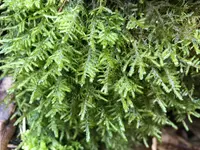
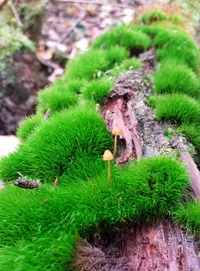
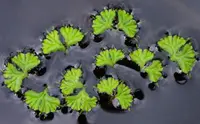
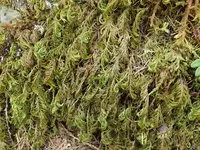
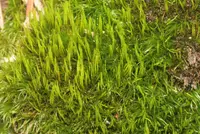
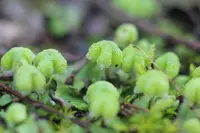
Dicranum fuscescens, often called fork moss or dicranum moss, is a small, tuft-forming bryophyte that creates dense, cushion-like mats. It has upright, slightly curved leaves that give clumps a soft, textured look. This moss is native to cool, moist forests across the Northern Hemisphere, where it grows on soil, decaying wood, and sometimes rocks in shaded sites. In cultivation it stays compact and slow-growing, which makes it relatively easy to manage but slow to establish. It prefers consistently moist, acidic, well-drained substrates and low to medium light, similar to a forest floor. Understanding these natural conditions helps guide how to care for dicranum moss in terrariums, moss gardens, or shaded outdoor corners.

Main Plant Requirements

Care Difficulty

Moderate Care

Light Preference

Shade

Water Requirements

Keep Soil Moist

Temperature Preference

Cold Hardy

Hardiness Zone

3–7

Soil Texture

Loamy, Peaty, Organic-rich

Soil pH

Strongly acidic (4.5–5.5), Acidic (5.5–6.5)

Soil Drainage

Moist but well-drained

Fertilization

Minimal (feed rarely)

Get Personalized Care Plan

Scan your plant to receive care tips personalized for your specific plant

Available on iOS and Android

How to Care for the dicranum moss

This moss prefers cool, shaded forest-like light rather than direct, open sun.

  • Provide bright shade or dappled light under shrubs or trees, with 0–2 hours of weak morning sun and no direct afternoon sun.
  • Aim for filtered light levels similar to a north-facing woodland edge; strong midday sun can scorch and dry dicranum moss within hours.
  • In summer, increase shade as the sun intensifies, while in winter allow more open exposure so it still receives 2–4 hours of low-angle light.

Moist, never stagnant conditions suit Dicranum fuscescens best.

  • Keep the substrate consistently damp to the touch; allow only the top 1–2 mm to begin drying before rewetting, especially in warm or windy weather.
  • Use soft, low-mineral water when possible, applying it gently so the moss cushions are not disturbed or compacted by strong flow.
  • Signs of underwatering include crisp, pale tips and shrinking cushions, while sour odor, slimy patches, or algae growth indicate excess moisture and poor drainage.

This species favors cool, stable conditions similar to shaded woodland climates.

  • Support active growth at 50–68°F (10–20°C); short periods up to 72°F (22°C) are tolerated if humidity stays high and direct sun is avoided.
  • Cold tolerance is good down to about 23°F (-5°C) when moist and sheltered, but repeated freeze–thaw on exposed sites can damage cushions.
  • In hot spells above 75°F (24°C), increase shade, airflow, and moisture; avoid placing moss where rock or hardscape surfaces can overheat and bake the clumps.

This moss requires consistently high humidity to maintain dense, upright cushions.

  • Aim for 70–90% humidity, as prolonged exposure below 50% quickly dries the fine leaves.
  • Tolerates brief dry air but shows stress as dull, brown-tipped, and flattened shoots.
  • Increase humidity with frequent fine misting, open-topped terrariums, or a covered tray with moist sphagnum, without submerging the clumps.

This species prefers a loose, acidic, organic substrate that stays moist yet never stagnant.

  • Use a mix of fine pine bark, shredded leaf mold, and a small amount of sand to mimic its natural forest floor habitat.
  • Aim for acidic conditions around pH 4.5–5.5, avoiding added lime or alkaline amendments.
  • Keep the substrate airy by avoiding compacted garden soil and gently pressing, not packing, the moss onto the surface.
  • Ensure water can drain freely beneath the moss layer so the base stays damp while excess water moves away.

This moss can be grown successfully in shallow containers when moisture and drainage are carefully balanced.

  • Choose a wide, shallow container to allow spreading cushions while preventing deep, waterlogged substrate layers.
  • Select a stable, heavier container material if kept outdoors so light, cushiony mats are not displaced by wind.
  • Elevate the container slightly so drainage holes remain clear and runoff does not wick back into the substrate, reducing rot risk.

This moss gains most nutrients from its substrate and water, so Dicranum fuscescens usually needs no additional fertilizer in typical indoor or terrarium culture.

Dicranum fuscescens needs only light pruning to keep cushions tidy and healthy in culture.

  • Best timing is during active growth in spring or early fall, when recovery is fastest.
  • Gently pinch or trim away brown, dead, or detached tufts without disturbing healthy green shoots.
  • Remove crowded or matted patches to improve air flow and maintain an even cushion shape.
  • Use clean fingers or fine scissors and avoid pulling, which can tear rhizoids anchoring the moss.

Transplanting is more relevant than repotting for Dicranum fuscescens, which is usually grown on bark, rock, or shallow trays.

  • Transplant when cushions detach easily, substrate breaks down, or growth becomes patchy despite suitable moisture and light.
  • Choose cool, moist weather or a mild indoor period, often in spring or early fall, to reduce transplant shock.
  • Move whole cushions with as much attached substrate as possible, pressing them gently onto the new moist surface.
  • Mist thoroughly after moving, keep humidity high, and shade from strong light for 1–2 weeks while rhizoids re-anchor.

Cultivated Dicranum fuscescens is most often propagated by division of existing cushions rather than by spores.

  • Plan division in spring or early fall, when moisture is reliable and temperatures are mild.
  • Lift a healthy cushion and gently tear or cut it into smaller clumps, keeping shoots and attached substrate together.
  • Press divisions onto fresh acidic, well-drained but consistently moist substrate such as peat-bark or sphagnum mix.
  • Maintain high humidity, good air movement, and low to medium light until new anchoring and fresh green tips appear.

This moss is naturally cold hardy and usually needs minimal winter care outdoors.

  • In the ground or on logs and rocks, Dicranum fuscescens tolerates freezing and snow without extra insulation.
  • For shallow trays or containers, keep the substrate barely moist, not waterlogged, to avoid freeze–thaw damage.
  • If grown indoors, maintain cool conditions, moderate light, and steady humidity, allowing a slightly drier, slower winter phase.

Care Tips

Use acidic substrate

Prepare a substrate with milled sphagnum, fine pine bark, and a little washed sand to mimic conifer forest floors and help the moss anchor and spread evenly.

Anchor loose cushions

Gently press mats or tufts onto the substrate with a plastic mesh or light twigs for 2–3 weeks so rhizoids can attach securely and the moss does not dry out or shift.

Create shaded microclimate

Surround the moss with low ferns, small branches, or bark pieces to cast light shade and reduce air movement, which keeps the colony more stable and hydrated.

Rinse to remove debris

Every few weeks, lightly mist with clean, soft water until runoff to wash away dust, algae, and fallen particles that can smother the fine leaves and trap excess moisture.

Rotate collection patches

When collecting from a garden bed or outdoor nursery area, harvest small sections from different spots and allow at least one full season of regrowth in each area to maintain a healthy, sustainable source for growing dicranum moss.

Common Pests and Diseases

Bryophyte rust fungus

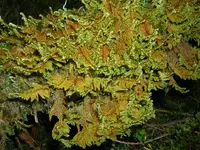
This disease causes scattered yellow to rust-brown spots or patches on moss cushions, often leading to thinning or local dieback. Symptoms include reduced vigor and patchy, discolored tufts, especially in stagnant, humid pockets.

Solution

Remove and discard affected patches of moss and any underlying debris, then improve air movement and reduce prolonged surface wetness by adjusting misting frequency and ventilation. For valuable cultures, a targeted application of a sulfur-based fungicide at very low dose, tested on a small area first, can help suppress the fungus while monitoring closely for phytotoxicity on the bryophyte tissue.

Slugs and snails

These pests rasp the moss surface, creating torn cushions, missing tufts, and irregular bare patches, especially in shaded, moist setups. Symptoms include slime trails on glass, hardscape, or near damaged moss colonies.

Solution

Hand-pick slugs and snails at dusk or after misting and remove hiding places such as decaying leaves, loose bark, or overturned pots. In outdoor or terrarium borders, use barriers like copper tape, sharp grit, or carefully placed iron phosphate bait outside the main moss area to reduce populations without contaminating the substrate where Dicranum fuscescens grows.

Springtail overpopulation

These insects are usually harmless detritivores but can become a nuisance in enclosed Dicranum cultures when populations explode, sometimes disturbing new growth and altering the micro-surface of the moss. Symptoms include swarms of tiny white or gray jumping insects on the substrate and water film after misting.

Solution

Reduce excess moisture and organic debris by moderating watering, improving drainage, and removing decaying plant material. If numbers remain high, introduce gentle biological controls such as predatory mites suited to terrarium use, or briefly lower humidity while maintaining substrate moisture to bring the population back into balance without harming the moss.

Moss mite damage

These arachnids graze on moss tissues and microbial films, leading to a roughened surface, fine speckling, and gradual thinning of cushions. Symptoms include uneven, patchy growth and a dusty look when viewed closely, sometimes with tiny moving dots on the moss surface.

Solution

Lower population levels by gently rinsing the moss surface with dechlorinated water and improving air circulation to avoid stagnant, overly warm microclimates. In persistent cases, apply an insecticidal soap or horticultural oil at very dilute strength as a spot treatment, testing a small section first and avoiding heavy coating that could smother the gametophytes responsible for growing Dicranum fuscescens.

Interesting Facts

Acidic forest specialist

This species is typically found on acidic, nutrient-poor forest soils and rotting logs in boreal and temperate coniferous woods, often forming dense carpets under spruce and fir canopies.

Distinctive leaf twisting

Its narrow leaves are characteristically curved or twisted to one side when dry, a trait that helps reduce water loss and makes the cushions look distinctly tousled compared with many other forest mosses.

Well-developed costa

The leaf midrib (costa) in this species is strong and often extends nearly to the leaf tip, providing mechanical support and helping the plant maintain its upright, tufted growth form in shaded, moist habitats.

FAQs about dicranum moss

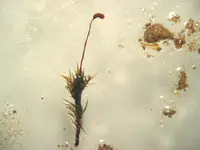
This species is a moss, so it does not produce true flowers or showy blooms. Instead, it forms small spore capsules on stalks when conditions are suitable, usually in cool, consistently moist environments.

Grow Healthy Plants with Botan Care

Keep your plants happy and healthy with plant identification, disease detection, and easy care guidance.

Botan plant care app — identify plants on mobile

Explore More Plants