Anchor To Hardscape
Press thin portions of the thallus firmly onto rock, wood, or mesh using fishing line or fine cotton thread so new growth can quickly attach and form a dense, stable mat that resists being lifted by water flow or handling.

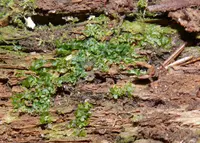
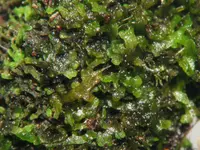
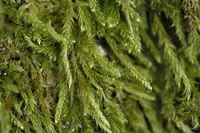
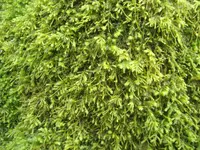
Bog germanderwort, Riccardia latifrons, is a small aquatic liverwort often used in aquariums and paludariums. It forms dense, finely branched mats with a delicate, moss-like look.
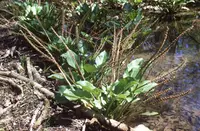
This species naturally occurs in moist, shaded habitats such as stream edges, seeps, and wetlands in tropical and subtropical regions. It clings to wood, rocks, or substrate and slowly spreads to create a compact green carpet.
Riccardia latifrons is considered moderately easy when conditions are stable, but it is sensitive to drying out and sudden changes in water quality. To care for Bog Germanderwort, provide clean, low to medium light, consistently moist or submerged conditions, and gentle water flow.

Care Difficulty
Hard Care

Light Preference
Partial Shade

Water Requirements
Aquatic

Temperature Preference
Tropical / Frost Sensitive

Hardiness Zone
Unknown

Soil Texture
Peaty, Organic-rich

Soil pH
Acidic (5.5–6.5)

Soil Drainage
Waterlogged tolerant

Fertilization
Minimal (feed rarely)
Scan your plant to receive care tips personalized for your specific plant
Available on iOS and Android
This small aquatic liverwort prefers soft, filtered light that mimics shaded stream or bog edges.
This plant is adapted to constantly moist to submerged conditions and reacts quickly to drying.
This liverwort prefers stable, cool to mild temperatures without sudden shifts.
This moss-like liverwort needs consistently high humidity to grow dense and healthy.
This species anchors best on inert, constantly wet substrates rather than traditional potting soil.
This species is suitable for container culture, especially in aquaria and closed terraria that maintain stable moisture.
This small aquatic liverwort has very low nutrient demand, so fertilizing should stay light and carefully controlled for healthy growth.
Riccardia latifrons benefits from light pruning to maintain compact growth and prevent over-shading in aquaria or terraria.
This liverwort is usually attached to hardscape rather than repotted, so care focuses on gentle transplanting when it becomes overgrown or poorly anchored.
Propagation of this species is straightforward through division of existing mats rather than from spores in typical home setups.
As an aquatic or terrarium liverwort, this plant needs stable cool to mild conditions rather than traditional outdoor winter protection.

Plant Health Check
Not sure what's wrong with your plant? Check your plant's health inside the app.
This liverwort forms very small, repeatedly branched, flattened shoots that resemble tiny fern fronds, a growth pattern that increases surface area for gas exchange and light capture in low, shaded habitats.
In aquaria, this species often establishes best where there is gentle water movement, which helps keep its delicate thalli free from sediment while still allowing it to anchor to wood, rock, or substrate.
Growth is typically slow compared with many aquatic mosses and liverworts, yet once established it can form dense, long‑lasting mats that provide stable microhabitats for small invertebrates and biofilm.
This liverwort creeps slowly to moderately, forming low, dense mats. It does not usually become invasive but can gradually cover hardscape or substrate. Regular trimming and limiting attachment points keeps growth contained and easy to manage.
Keep your plants happy and healthy with plant identification, disease detection, and easy care guidance.