Substrate Anchoring
Press the moss firmly onto a rough, stable surface such as bark, lava rock, or coarse cork, then secure it loosely with cotton thread or a fine net for 4–6 weeks so rhizoids can attach before supports are removed.

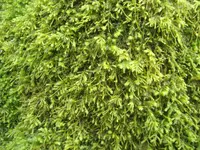
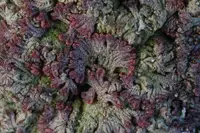
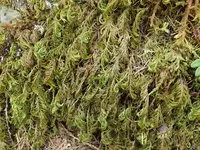
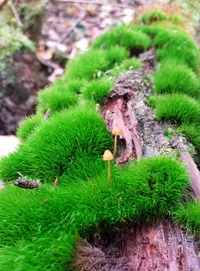
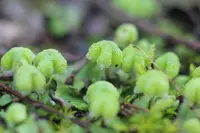
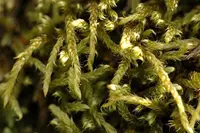
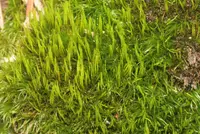
Tree-skirt moss (Pseudanomodon attenuatus) is a small, mat-forming moss that often grows at the base of tree trunks, rocks, and shaded walls. It creates low, dense cushions or patches with fine, bright to yellow-green shoots that give surfaces a soft, textured look.
This species is native to parts of Europe and Asia but is also grown in controlled indoor and terrarium setups for its tidy, decorative habit. It is generally considered moderate in difficulty, as it needs consistent moisture, clean water, and stable humidity, but it does not demand strong light or rich soil. Learning how to care for tree-skirt moss mainly involves maintaining gentle airflow and avoiding long dry periods.

Care Difficulty
Moderate Care

Light Preference
Partial Shade

Water Requirements
Keep Soil Moist

Temperature Preference
Cool Climate

Hardiness Zone
5–9

Soil Texture
Loamy, Silty, Organic-rich

Soil pH
Acidic (5.5–6.5)

Soil Drainage
Moist but well-drained

Fertilization
Minimal (feed rarely)
Scan your plant to receive care tips personalized for your specific plant
Available on iOS and Android
This moss prefers soft, indirect light that mimics a shaded forest floor.
This species performs best in consistently moist, not waterlogged, conditions.
This moss is adapted to cool to mild climates with moderate seasonal shifts.
This moss prefers consistently moist, humid air similar to a shaded forest floor.
Provide a loose, moisture-retentive yet well-drained, organic substrate for stable growth.
This species adapts very well to container culture, including shallow dishes and terrariums.
This moss needs very little feeding, especially when grown on bark or rock surfaces.
Pseudanomodon attenuatus benefits from light grooming rather than structural pruning.
This moss is usually grown on surfaces or shallow substrates, so transplanting focuses on renewing its growing base rather than root disturbance.
Pseudanomodon attenuatus is most often propagated by simple division and relocation of existing cushions.
This moss is generally cold hardy and needs little winter care in most temperate climates.

Plant Health Check
Not sure what's wrong with your plant? Check your plant's health inside the app.
This moss often forms dense, creeping mats around the base of tree trunks, creating a distinct skirt-like ring that can help stabilize surface soil and retain moisture at the root flare.
It shows a marked preference for bark and substrates with higher calcium content, and is frequently found on trees such as ash and maple in regions with relatively base-rich conditions.
Its presence is strongly associated with consistently humid, shaded forest microhabitats, so healthy populations can indicate a stable, moist woodland environment with relatively clean air.
This species spreads slowly to moderately by creeping stems and fragments. It forms low cushions or mats around tree bases rather than racing outward. Regular trimming and lifting small patches keeps growth neatly contained in designed moss gardens or terrariums.
Keep your plants happy and healthy with plant identification, disease detection, and easy care guidance.