

Attach To Hardscape
Press the thallus gently onto clean rock, driftwood, or mesh and secure it loosely with fine fishing line or plant-safe mesh until it self-attaches, which keeps the mat from floating and creates more controlled growth forms.

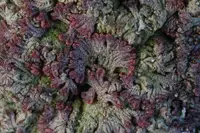
Cavernous crystalwort (Riccia cavernosa) is a small aquatic liverwort often used in aquariums, paludariums, and specialized terrariums. It forms soft, cushion-like mats of branching, cave-like thalli rather than true leaves and stems.
In nature, it occurs in clean, slow-moving or still freshwater habitats, often attached to rocks or submerged wood. Its delicate structure and need for stable water conditions make it more suited to attentive hobbyists than complete beginners.
Light to moderate light, consistent moisture, and good water quality support healthy growth, and many aquarists research how to care for Cavernous Crystalwort before adding it to a tank.

Care Difficulty
Moderate Care

Light Preference
Partial Shade

Water Requirements
Aquatic

Temperature Preference
Warm Climate

Hardiness Zone
Unknown

Soil Texture
Organic-rich, Peaty

Soil pH
Acidic (5.5–6.5)

Soil Drainage
Waterlogged tolerant

Fertilization
Minimal (feed rarely)
Scan your plant to receive care tips personalized for your specific plant
Available on iOS and Android
This aquatic liverwort favors bright, indirect light and protection from harsh midday sun.
This species depends on constant moisture and stable water conditions rather than a strict watering schedule.
This liverwort grows best in mild, stable temperatures without strong cold or heat extremes.
This aquatic liverwort needs very high humidity to prevent rapid desiccation.
Riccia cavernosa usually anchors to hard surfaces or loose substrates rather than traditional soil.
This species is well suited to container culture in aquariums, shallow trays, or small tubs.
This small aquatic or terrarium liverwort benefits from light, consistent nutrition rather than heavy feeding.
Pruning Riccia cavernosa helps maintain compact growth, light penetration, and good water flow.
This liverwort is usually attached to hardscape or mesh rather than grown in deep substrate, so transplanting is simple.
Propagation of Riccia cavernosa is straightforward because every healthy fragment can form a new colony.
In most indoor aquaria or terrariums, this liverwort needs minimal winter care as long as conditions stay stable.

Plant Health Check
Not sure what's wrong with your plant? Check your plant's health inside the app.
This liverwort naturally occurs in moist limestone caves and rock crevices, where it forms mats on shaded, calcareous substrates rather than on typical soil or tree bark.
Its thallus is distinctly cavernous and inflated, with internal air spaces that give it a spongy, hollow appearance, a feature that differentiates it from the flat thalli of more common Riccia species.
In addition to producing spores, it readily spreads by fragmentation, where small broken pieces of the thallus can reattach and form new colonies in stable, humid microhabitats.
This species adapts to both, but conditions matter more than location. It prefers consistently high humidity, clean water, stable temperatures, and gentle water movement. Indoors, aquaria or terraria usually provide more stable, controllable conditions than outdoor setups.
Keep your plants happy and healthy with plant identification, disease detection, and easy care guidance.

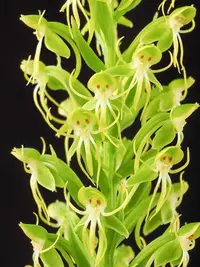
Waterspider bog orchid
Habenaria repens
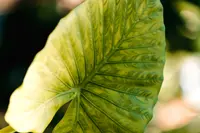
Elephant Ear
Colocasia esculenta Royal Hawaiian Maui Gold
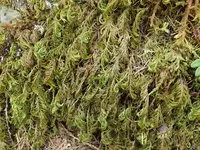
dendroalsia moss
Dendroalsia abietina
Buffalo Spinach
Enydra fluctuans
dicranella moss
Dicranella varia

fringed heartwort
Ricciocarpos natans
hypnum moss
Hypnum jutlandicum
 POPULAR
Polka Dot Plant
Hypoestes phyllostachya