

Substrate Pre‑soaking
Before planting, soak the chosen substrate (bark, compacted soil, rock, or foam) thoroughly, then squeeze or drain until just damp to ensure the moss anchors quickly without drying or rotting.

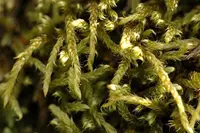
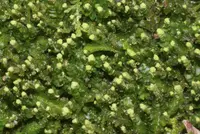
Hypnum moss (Hypnum jutlandicum) is a low-growing, carpet-forming moss often used in shaded gardens, terrariums, and naturalistic landscapes. It forms soft, dense mats of fine, overlapping stems that follow the contours of soil, rocks, or logs.
This species is widespread in cool, temperate regions, especially in moist forests, heaths, and peatlands. It prefers shade to dappled light, steady moisture, and acidic, low-nutrient substrates.
Its resilience, slow vertical growth, and ability to knit together surfaces make it relatively straightforward to care for hypnum moss when its moisture and shade needs are respected.

Care Difficulty
Moderate Care

Light Preference
Partial Shade

Water Requirements
Keep Soil Moist

Temperature Preference
Cold Hardy

Hardiness Zone
3–8

Soil Texture
Loamy, Silty, Organic-rich

Soil pH
Strongly acidic (4.5–5.5), Acidic (5.5–6.5)

Soil Drainage
Moist but well-drained

Fertilization
Minimal (feed rarely)
Scan your plant to receive care tips personalized for your specific plant
Available on iOS and Android
This moss prefers cool, consistently moist sites with gentle, indirect light.
This moss thrives in evenly moist, never fully dry conditions.
This species is adapted to cool, humid climates but tolerates a fairly wide outdoor temperature range.
This species needs consistently moist, high-humidity conditions to stay dense and green.
This moss prefers a moist, organic, and slightly acidic substrate rather than true mineral soil.
This species can grow well in shallow containers when moisture and stability are controlled carefully.
This moss species needs minimal feeding and often grows well without added fertilizer in suitable conditions.
Hypnum jutlandicum needs only light grooming to keep mats dense and healthy.
This species is usually transplanted as groundcover patches rather than repotted as a typical container plant.
Propagation of Hypnum jutlandicum is commonly done by division and re-laying small mats.
In the ground, this moss is cold hardy and typically needs no special winter care.

Plant Health Check
Not sure what's wrong with your plant? Check your plant's health inside the app.
This species is strongly associated with acidic, nutrient-poor forest soils and rotting wood, especially in coniferous and heather-dominated habitats, where it can form extensive mats that help stabilize the surface.
Dense carpets of this moss in boreal and Atlantic heath forests trap leaf litter and slow decomposition, acting as a modest but consistent carbon sink in cool, wet landscapes.
Its layered, pleated shoots create many small air pockets that hold water and reduce evaporation, providing a humid microhabitat for fungi, springtails, and other small invertebrates that live within the moss mat.

In European forest monitoring, this species is frequently used as a bioindicator of long-term habitat continuity and low-intensity forest management, because stable, undisturbed stands allow its carpets to persist and expand over many years.
This species grows slowly to moderately, usually expanding a few cm per year under stable moisture and shade. Growth speeds up on consistently damp, compacted substrates and slows in dry, exposed, or frequently disturbed spots.
Keep your plants happy and healthy with plant identification, disease detection, and easy care guidance.

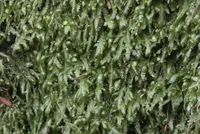
homalia moss
Homalia trichomanoides
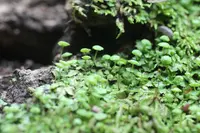
Cryptomitrium tenerum
Cryptomitrium tenerum
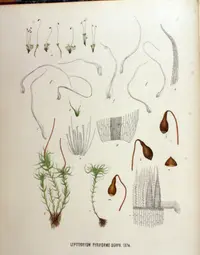
leptobryum moss
Leptobryum pyriforme
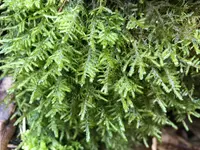
Flat Neckera
Alleniella complanata
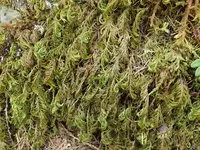
dendroalsia moss
Dendroalsia abietina
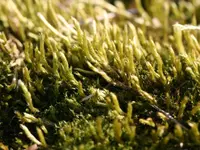
brachythecium moss
Brachythecium salebrosum
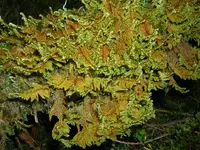
mollusc ctenidium moss
Ctenidium molluscum
Matchstick Flapwort
Odontoschisma denudatum