

Secure to Substrate
Gently pin or tie loose mats to bark, rock, or wood using soft plant ties or fine nylon thread so new rhizoids can attach quickly and the cushions stay stable during misting or watering.

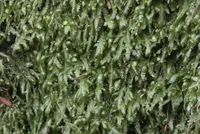
Homalia trichomanoides, often called homalia moss, is a creeping epiphytic moss that forms thin, delicate mats on bark, rocks, and decaying wood. Its small, overlapping leaves create a fine-textured, trailing carpet with a soft, featherlike look.
In nature, it occurs mainly in humid, shaded forests of Europe and parts of Asia, where it benefits from consistently moist air and gentle light. Its need for stable moisture and humidity makes it moderately demanding under home conditions.
Those who want to learn how to care for homalia moss should know it prefers cool to mild temperatures, soft light, and a consistently damp, well-drained substrate, such as fine bark or moss mixes.

Care Difficulty
Moderate Care

Light Preference
Partial Shade

Water Requirements
Keep Soil Moist

Temperature Preference
Cool Climate

Hardiness Zone
Unknown

Soil Texture
Loamy, Peaty, Organic-rich

Soil pH
Strongly acidic (4.5–5.5), Acidic (5.5–6.5)

Soil Drainage
Moist but well-drained

Fertilization
Minimal (feed rarely)
Scan your plant to receive care tips personalized for your specific plant
Available on iOS and Android
This species prefers low to moderate, filtered light similar to a shaded forest floor.
Moist, never stagnant conditions suit this moss best.
This moss thrives in cool to mild, stable temperatures.
This moss needs steadily moist air to thrive and resents dry indoor conditions.
This species prefers a loose, moist, humus-rich substrate that mimics decaying wood or forest litter.
This moss is suitable for shallow containers, trays, and terrariums where humidity and moisture are easy to control.
This moss has very light nutrient needs and usually performs well with minimal feeding when grown in clean, moist substrates.
Pruning Homalia trichomanoides is mainly cosmetic and hygienic, keeping the moss mat even and free of decaying tissue.
Transplanting is more relevant than true repotting, since this moss is typically grown on hard surfaces or shallow substrates.
Homalia trichomanoides is commonly propagated vegetatively by dividing and reattaching small patches of the moss.
This moss is moderately cold tolerant but benefits from simple winter protection, especially in exposed or container setups.

Plant Health Check
Not sure what's wrong with your plant? Check your plant's health inside the app.
This moss often grows as an epiphyte on tree trunks and branches along cool, shaded stream valleys, forming long, hanging mats that benefit from constant air moisture and periodic splash from running water.
Its shoots are strongly flattened in one plane, with overlapping, closely pressed leaves, which gives it a delicate, fern-like appearance and helps it shed excess water quickly after wetting events.
Populations are typically found in old, undisturbed woodlands with steady humidity and low air pollution, so its presence is often used by bryologists as an indicator of relatively stable, humid microclimates.
Growth is generally slow to moderate. In favorable, consistently moist and shaded conditions, it may extend a few centimeters per year, gradually forming soft mats on bark, rocks, or substrate rather than large, fast-expanding patches.
Keep your plants happy and healthy with plant identification, disease detection, and easy care guidance.

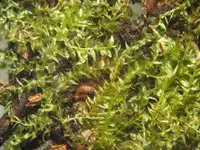
Swartz's Feather-moss
Oxyrrhynchium hians
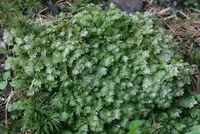
hookeria moss
Hookeria lucens
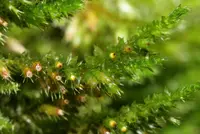
Lateral Cryphaea
Cryphaea heteromalla
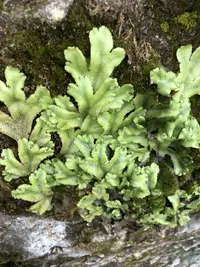
Snakewort
Conocephalum salebrosum
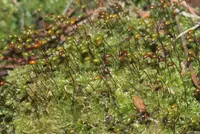
velvet feather-moss
Brachytheciastrum velutinum
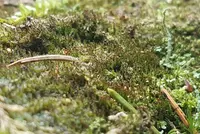
Heller's Notchwort
Crossocalyx hellerianus
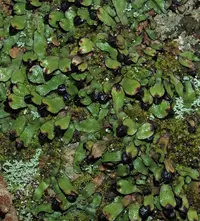
Orobus-seed Liverwort
Targionia hypophylla
schistidium moss
Schistidium apocarpum