Shaded microhabitat setup
Arrange flat stones or broken terracotta pieces to create overhangs and narrow crevices, then place colonies tucked under these edges to mimic the plant’s natural rock-face shelter and reduce desiccation from wind and sun.

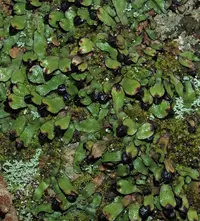
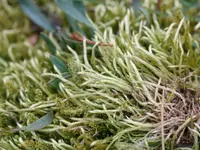
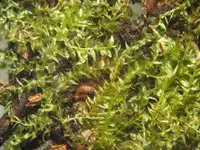
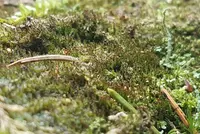
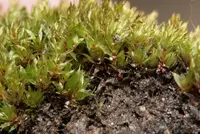
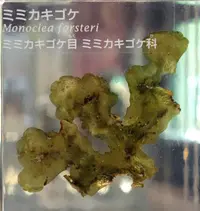
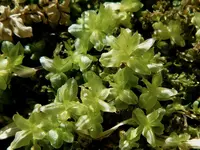
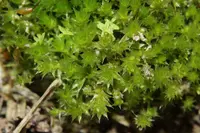
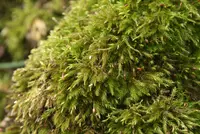
Orobus-seed liverwort (Targionia hypophylla) is a small, thallose liverwort, a simple non-vascular plant related to mosses. It forms flat, green to olive mats close to the substrate. The plant typically grows on shallow soils over rock, compacted ground, or disturbed banks, often in Mediterranean-type climates and other seasonally dry regions. Its growth is low and creeping, with small reproductive structures that may be overlooked at a casual glance. This species tolerates drought by drying and then rehydrating quickly when moisture returns, which makes it adaptable but sensitive to long-term shade changes or soil disturbance. Understanding how to care for Orobus-seed Liverwort starts with providing stable moisture cycles and minimal physical disruption.

Care Difficulty
Moderate Care

Light Preference
Partial Shade

Water Requirements
Keep Soil Moist

Temperature Preference
Warm Climate

Hardiness Zone
Unknown

Soil Texture
Loamy, Silty, Organic-rich

Soil pH
Acidic (5.5–6.5), Slightly acidic (6.5–7.0)

Soil Drainage
Moist but well-drained

Fertilization
Minimal (feed rarely)
Scan your plant to receive care tips personalized for your specific plant
Available on iOS and Android
This small liverwort prefers gentle, indirect light similar to shaded rock or soil surfaces in nature.
This bryophyte has no true roots and depends on consistently moist, not stagnant, conditions.
This species prefers mild conditions and is sensitive to both hard frost and intense heat.
This species needs consistently moist, high-humidity conditions to stay healthy.
This liverwort prefers a thin, consistently moist, mineral-poor substrate rather than conventional potting soil.
This species can be grown in shallow containers that mimic a moist rock or soil surface.
This small liverwort grows on nutrient-poor substrates and usually needs no fertilizer under normal conditions.
Pruning needs for Targionia hypophylla are minimal and mainly hygienic.
Transplanting is rare, as this liverwort is usually grown on rocks or shallow trays rather than in deep pots.
Propagation of this species is usually done by division of existing mats rather than by spores in home culture.
Outdoor colonies of Targionia hypophylla are generally cold tolerant and need little specific winter care in mild climates.

Plant Health Check
Not sure what's wrong with your plant? Check your plant's health inside the app.
This liverwort often grows tightly pressed in shallow rock crevices on sunny calcareous or neutral substrates, forming low, adpressed mats that tolerate high surface temperatures and strong light compared with many other liverworts.
Its sporophytes develop on the underside of the thallus near the margins, a feature reflected in the name hypophylla, meaning roughly under the leaf, which helps protect the reproductive structures from direct exposure and desiccation.
The species is especially characteristic of Mediterranean-type climates, where it persists in a dormant state through hot, dry summers and resumes active growth with the return of cooler, wetter conditions.

This species is considered an early colonizer of disturbed or freshly exposed rocky surfaces in some regions, stabilizing microhabitats and creating small patches of organic matter that can later be used by other bryophytes and tiny vascular plants.
This species performs better outdoors in cool, humid, shaded microhabitats such as rock crevices or moist soil banks. Indoors it is difficult to maintain stable moisture and airflow, so long-term success inside is limited even with careful attention.
Keep your plants happy and healthy with plant identification, disease detection, and easy care guidance.