

Use Shaded Trays
Grow colonies in shallow trays placed under benches or beneath a slatted cover so the plant receives diffuse, indirect light and stable moisture without direct exposure to overhead air currents.

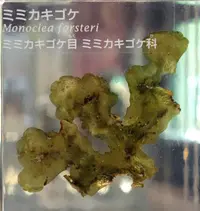
Monoclea forsteri is a large thalloid liverwort, a non-vascular plant that forms flat, green mats instead of upright stems and leaves. It is usually found on damp soil or rotting wood.
This species occurs mainly in very humid, shaded habitats such as stream banks and forest floors in parts of the Southern Hemisphere. It needs constant moisture and clean, cool air, which makes it challenging to maintain outside specialized setups.
It suits terrariums or controlled humidity chambers better than typical indoor pots. Anyone wanting to learn how to care for Monoclea forsteri should focus on stable moisture, gentle airflow, and low to moderate light.

Care Difficulty
Hard Care

Light Preference
Shade

Water Requirements
Aquatic

Temperature Preference
Warm Climate

Hardiness Zone
Unknown

Soil Texture
Peaty, Organic-rich

Soil pH
Acidic (5.5–6.5)

Soil Drainage
Waterlogged tolerant

Fertilization
Minimal (feed rarely)
Scan your plant to receive care tips personalized for your specific plant
Available on iOS and Android
This liverwort prefers low, cool light similar to shaded stream banks and wet rock faces in nature.
This species needs consistently saturated conditions and does not tolerate drying out.
This plant thrives in cool, stable conditions typical of shaded, humid stream margins.
This liverwort demands very high, constantly moist air to thrive.
This species prefers saturated, organic-rich substrates rather than conventional potting soil.
This species can be grown in shallow containers under carefully controlled moisture.
This liverwort naturally grows in nutrient-poor, wet habitats and usually needs no fertilizer in cultivation.
Monoclea forsteri needs almost no structural pruning, only light hygiene care in culture.
In cultivation, this species is usually managed by refreshing its substrate rather than frequent repotting.
Propagation of Monoclea forsteri is possible but generally specialized and slow.
This liverwort prefers mild, frost-free, constantly moist environments and benefits from targeted winter care under cultivation.

Plant Health Check
Not sure what's wrong with your plant? Check your plant's health inside the app.
This species forms broad, thick, strap-like thalli that can reach several centimeters across, making it unusually large compared with most liverworts, which are typically much smaller and more delicate.
Monoclea forsteri is dioicous, meaning male and female reproductive organs grow on separate plants, which promotes outcrossing and increases genetic variation in its populations.
It commonly grows on saturated soil, stream banks, and seepage zones in shaded temperate rainforests, where constant high moisture and low light allow its broad thallus to stay active and photosynthetic for long periods.
This liverwort forms low, creeping mats that expand gradually where conditions stay constantly moist and shaded. It can cover small areas of soil, rocks, or wood, but is not considered aggressively spreading in managed settings.
Keep your plants happy and healthy with plant identification, disease detection, and easy care guidance.

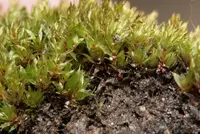
bryum moss
Rosulabryum rubens
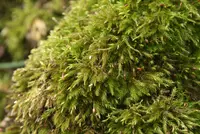
Matted feather-moss
Sciuro-hypnum populeum
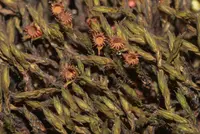
Thickpoint Bloom Moss
Schistidium crassipilum
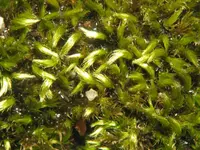
silken homalothecium moss
Homalothecium sericeum
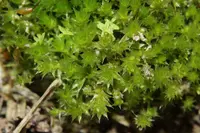
bryum moss
Gemmabryum barnesii
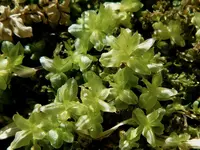
plagiomnium moss
Plagiomnium ciliare
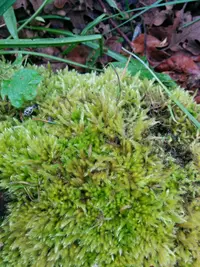
tree mat homalothecium moss
Homalothecium fulgescens
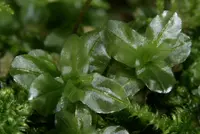
plagiomnium moss
Plagiomnium rostratum