

Substrate anchoring
Press small pieces of moss firmly onto rough bark, rocks, or aged wood using a mesh or biodegradable thread for 4–6 weeks to help it anchor securely before the rhizoids fully grip the surface.

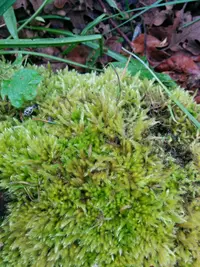
Tree mat homalothecium moss, Homalothecium fulgescens, is a small, mat-forming moss that creates dense, low cushions over bark, rocks, or soil. Its fine, overlapping stems give a soft, carpet-like look, often in yellow-green to deep green tones.
This moss is found mainly in temperate regions, especially on tree trunks and shaded rocky slopes. It is generally hardy and adaptable, but long-term success depends on steady moisture, shade, and clean, low-pollution air. For anyone learning how to care for tree mat homalothecium moss, the main challenges are keeping it evenly damp without waterlogging and protecting it from strong sun and drying winds.

Care Difficulty
Moderate Care

Light Preference
Partial Shade

Water Requirements
Keep Soil Moist

Temperature Preference
Cool Climate

Hardiness Zone
5–9

Soil Texture
Loamy, Silty, Organic-rich

Soil pH
Acidic (5.5–6.5), Slightly acidic (6.5–7.0)

Soil Drainage
Moist but well-drained

Fertilization
Minimal (feed rarely)
Scan your plant to receive care tips personalized for your specific plant
Available on iOS and Android
This moss prefers cool, dappled light that mimics the lower trunk and forest floor environment.
This species prefers consistently moist conditions but deteriorates in waterlogged or bone-dry sites.
This moss is naturally cold-hardy but still benefits from stable, moderate temperatures for best growth.
This moss prefers consistently moist air but adapts to a moderate humidity range.
This species prefers a moist, airy, organic substrate rather than dense mineral soil.
This moss can be grown successfully in shallow containers if moisture is controlled carefully.
This moss usually grows well without feeding, but light nutrition can support growth in lean, artificial substrates.
Pruning needs for Homalothecium fulgescens are minimal and focus on cleanliness and appearance rather than shaping.
This moss is usually transplanted rather than repotted, and it adapts well when handled gently.
Propagation of Homalothecium fulgescens is straightforward through division of existing mats.
In most temperate climates this moss is naturally cold hardy and usually needs no special winter care.

Plant Health Check
Not sure what's wrong with your plant? Check your plant's health inside the app.
This moss most often grows as dense mats on the bark of living trees, especially in temperate woodlands, rather than on soil or rock like many other mosses.
Its creeping stems form flattened, feather-like sprays with a distinctive yellow‑green to golden sheen when moist, which helps distinguish it from similar pleurocarpous mosses.
Populations are typically found in long‑established, relatively humid forests, so their presence can indicate continuity of woodland habitat and moderate air quality.
This species forms low, creeping mats that expand gradually through short stems and fragmentation. It can cover bark or soil over time but is not considered aggressive. Regular trimming edges keeps patches contained in smaller garden or container settings.
Keep your plants happy and healthy with plant identification, disease detection, and easy care guidance.

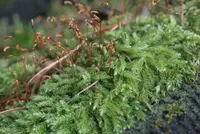
Seliger's herzogiella moss
Herzogiella seligeri
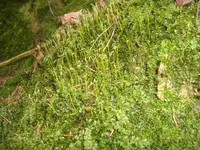
toothed plagiomnium moss
Plagiomnium cuspidatum
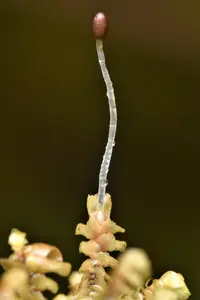
Yellow-ladle Liverwort
Scapania bolanderi
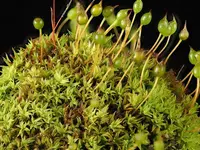
zygodon moss
Zygodon viridissimus
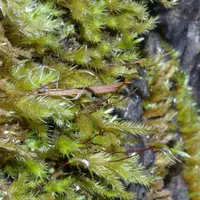
Nuttall's homalothecium moss
Homalothecium nuttallii
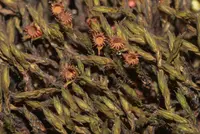
Thickpoint Bloom Moss
Schistidium crassipilum
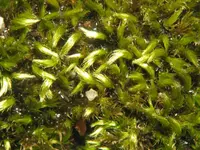
silken homalothecium moss
Homalothecium sericeum
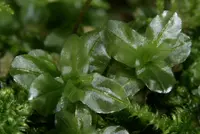
plagiomnium moss
Plagiomnium rostratum