Rock crevice mounting
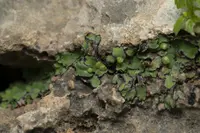
Press small clumps firmly into shallow crevices of porous rocks or broken concrete slabs, which helps anchor the thallus, keeps the base consistently moist, and reduces mechanical damage from water flow or handling.

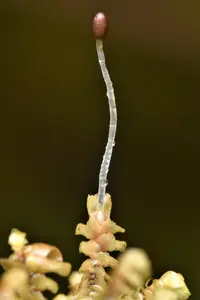
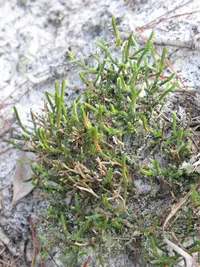
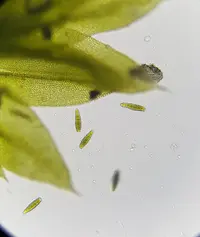
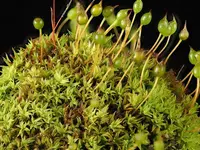
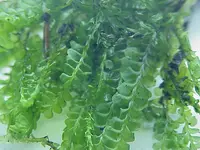
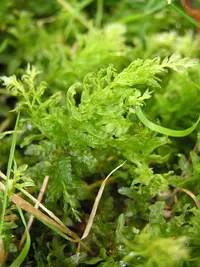
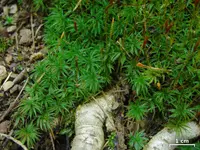
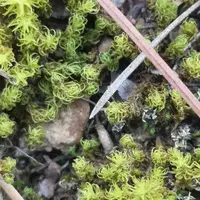
Yellow-ladle liverwort, Scapania bolanderi, is a small non-vascular plant that forms dense, flat mats on rocks or soil in cool, moist habitats. Its fan-shaped, overlapping leaf-like structures give it a textured, moss-like appearance.
This species occurs mainly in shaded stream banks, seeps, and wet forested areas in parts of western North America. It prefers constant moisture, clean water, and good air circulation, so it can be sensitive to drying out or pollution.
Because of these needs, many growers find it challenging to keep alive indoors or in dry climates. Those who want to learn how to care for Yellow-ladle Liverwort should focus on stable moisture, cool temperatures, and low to medium light levels.

Care Difficulty
Hard Care

Light Preference
Shade

Water Requirements
Aquatic

Temperature Preference
Cool Climate

Hardiness Zone
6–9

Soil Texture
Silty, Peaty, Organic-rich

Soil pH
Strongly acidic (4.5–5.5)

Soil Drainage
Waterlogged tolerant

Fertilization
Minimal (feed rarely)
Scan your plant to receive care tips personalized for your specific plant
Available on iOS and Android
This small liverwort prefers cool, shaded conditions with very limited direct sun exposure.
This species needs constantly moist surroundings that never dry out but also should not sit in stagnant water.
This cool-adapted liverwort thrives in mild, humid conditions and declines in strong heat or hard frost.
This species needs persistently high humidity to stay hydrated and photosynthesize effectively.
This liverwort prefers constantly moist, fine-textured, organic-rich substrates rather than standard potting soil.
This species can be grown in shallow containers or trays when high moisture and humidity are maintained.
Scapania bolanderi, or Yellow-ladle Liverwort, typically grows on nutrient-poor substrates and needs little or no added fertilizer in cultivation.
Pruning Scapania bolanderi is minimal and mainly hygienic, aimed at keeping mats healthy and tidy rather than shaping.
Transplanting this liverwort focuses on moving small mats to suitable, consistently moist substrates rather than classic repotting.
Propagation is usually done vegetatively, using small fragments of the leafy mats rather than spores.
Scapania bolanderi is generally cold hardy in its native range and often needs little specific winter care outdoors.

Plant Health Check
Not sure what's wrong with your plant? Check your plant's health inside the app.
This Yellow-ladle Liverwort is native to the Pacific Northwest of North America, where it occurs mainly in cool, moist mountain regions from northern California into parts of Oregon and Washington.
The species typically grows on shaded, periodically wet rocks and soil along streams and waterfalls, forming low mats that tolerate regular splashing but not complete submersion for long periods.
Because it favors cool, unpolluted, well-oxygenated stream margins, its presence is often associated with relatively undisturbed, high-quality freshwater habitats.
This species forms low, creeping mats but is not considered aggressively spreading. It enlarges slowly by branching and short shoots. In cultivation, simple edging or container boundaries are usually enough to confine it where desired.
Keep your plants happy and healthy with plant identification, disease detection, and easy care guidance.