

Rock crevice anchoring
Press small fragments of the moss gently into rough rock crevices or gaps between paving stones so rhizoids can anchor firmly and resist being washed away by rain or misting.

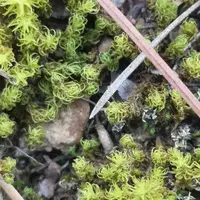
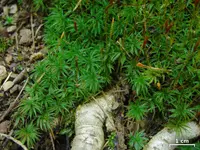
Trichostomum squarrosum is a small, cushion-forming moss often found on soil, rocks, and old walls. It forms dense, green to yellow-green tufts with fine, upright shoots. Leaves tend to bend outward when dry, giving the cushions a rough, somewhat spiky look. This structure helps the moss cope with short dry periods and quickly rehydrate when moisture returns.
In nature it occurs widely in temperate regions, especially in disturbed or open sites with some light and regular moisture. It is generally considered hardy and adaptable, but sensitive to long dry spells and heavy trampling. Gardeners who want to care for Trichostomum squarrosum should provide consistent moisture, soft light, and a stable, undisturbed surface.

Care Difficulty
Moderate Care

Light Preference
Partial Shade

Water Requirements
Keep Soil Moist

Temperature Preference
Cold Hardy

Hardiness Zone
Unknown

Soil Texture
Loamy, Silty, Organic-rich

Soil pH
Strongly acidic (4.5–5.5), Acidic (5.5–6.5)

Soil Drainage
Moist but well-drained

Fertilization
Minimal (feed rarely)
Scan your plant to receive care tips personalized for your specific plant
Available on iOS and Android
This moss prefers cool, moist sites with low to moderate light rather than direct sun exposure.
This moss requires consistently moist conditions but suffers if the substrate stays waterlogged for long periods.
This species is adapted to cool to mild climates and tolerates a wide temperature range when moisture is stable.
This moss prefers consistently moist air and benefits from elevated humidity.
This moss thrives on thin, mineral-based, moist but not stagnant substrates rather than typical potting mixes.
This moss can adapt to shallow container culture when moisture and stability are carefully managed.
This moss species usually grows well on nutrient-poor substrates and needs little or no added fertilizer in typical culture.
Pruning needs for Trichostomum squarrosum are minimal and mainly hygienic rather than shaping.
When grown in culture, this moss is best handled by gentle transplanting rather than frequent repotting.
Propagation of this moss is straightforward when entire patches are divided and re-established on fresh substrate.
This moss is naturally cold hardy in much of its range and generally needs no special winter care outdoors.

Plant Health Check
Not sure what's wrong with your plant? Check your plant's health inside the app.
This species has narrow, lance-shaped leaves that twist and spread outward when dry, giving cushions a distinctly spiky, squarrose appearance that helps distinguish it from related mosses.
It typically colonizes lime-rich, calcareous substrates such as limestone walls, mortar, and basic rock outcrops, so its presence can indicate underlying alkaline conditions in walls or natural cliffs.
In many regions it occurs frequently on old brickwork, stone bridges, and mortar joints, making it one of the more characteristic small mosses of historic buildings and other human-made structures.
This moss spreads slowly to moderately by short creeping stems and spores. It usually forms tight patches rather than large carpets. In most garden or terrarium setups it is not considered aggressive or difficult to contain.
Keep your plants happy and healthy with plant identification, disease detection, and easy care guidance.

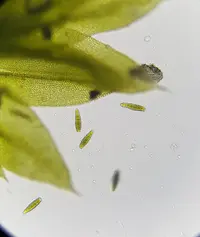
zygodon moss
Zygodon conoideus
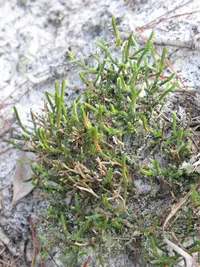
sand spikemoss
Selaginella arenicola
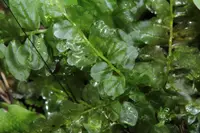
elliptic plagiomnium moss
Plagiomnium ellipticum
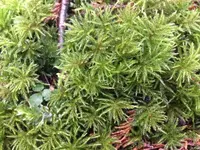
Leucolepis umbrella moss
Leucolepis acanthoneura
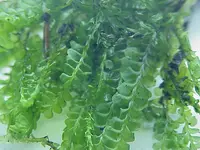
Greater Featherwort
Plagiochila asplenioides
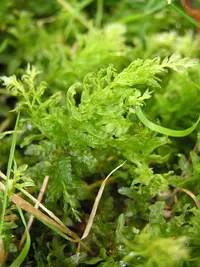
Palm-tree Moss
Plagiomnium undulatum
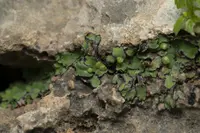
Cliff Waxwort
Plagiochasma rupestre
atrichum moss
Atrichum altecristatum