Greater Featherwort Care (Plagiochila asplenioides)

Greater Featherwort

About Greater Featherwort

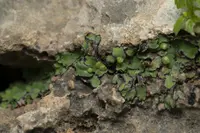
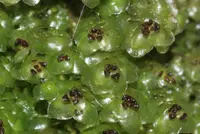
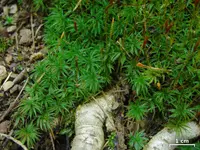
Greater featherwort, Plagiochila asplenioides, is a leafy liverwort, a simple non-vascular plant that spreads as soft, overlapping mats. Its small, flattened shoots with neatly layered leaves create a dense, moss-like carpet on damp rocks, rotting wood, and shaded soil. It is native to humid, cool regions across parts of Europe and North America, most often found in woodlands and along stream banks. This species prefers constant moisture, high humidity, shade, and clean, softly moving air, which makes indoor cultivation more challenging than typical houseplants. Enthusiasts who care for Greater Featherwort usually rely on terrariums or specialized setups that can maintain stable moisture and low light.

Main Plant Requirements

Care Difficulty

Hard Care

Light Preference

Shade

Water Requirements

Keep Soil Moist

Temperature Preference

Cool Climate

Hardiness Zone

7–9

Soil Texture

Peaty, Organic-rich, Loamy

Soil pH

Strongly acidic (4.5–5.5), Acidic (5.5–6.5)

Soil Drainage

Waterlogged tolerant

Fertilization

Minimal (feed rarely)

Get Personalized Care Plan

Scan your plant to receive care tips personalized for your specific plant

Available on iOS and Android

How to Care for the Greater Featherwort

This species prefers low to moderate light that mimics a shaded woodland floor.

  • Provide bright, filtered light or full shade with brief, gentle morning sun; avoid direct midday or afternoon sun that can scorch delicate shoots.
  • Aim for 1–3 hours of very soft sun plus 4–6 hours of open shade or dappled light, similar to conditions Greater Featherwort experiences under forest canopies.
  • In summer, increase shade or move to deeper cover; in winter, allow slightly more indirect light but still protect from harsh, low-angle sun.

This liverwort needs consistently moist conditions without prolonged flooding.

  • Maintain an evenly damp substrate; the surface should feel moist to the touch but never slimy or foul-smelling, which suggests waterlogging.
  • Increase watering or misting when the top moss or substrate lightens in color or feels just starting to dry, especially during warm, windy, or indoor-heated periods.
  • Reduce watering slightly in cooler seasons but prevent complete drying; pale, crisp fronds indicate underwatering, while soft, dark, or rotten patches indicate overwatering.

This plant thrives in cool, stable temperatures similar to a sheltered forest floor.

  • Aim for an optimal range of 50–68°F (10–20°C) for steady growth, with cooler nights helping maintain compact, healthy mats.
  • Protect Plagiochila asplenioides from frost; growth slows below 41°F (5°C), and hard freezes can kill exposed tissue, especially in shallow substrates.
  • Avoid hot, stagnant conditions above 77–82°F (25–28°C); provide extra shade and humidity and increase air movement during heat waves to prevent desiccation.

This liverwort needs very high, stable humidity to grow well in cultivation.

  • Aim for 80–95% humidity; it declines quickly if kept below 70% for extended periods.
  • Crisping, curling fronds and dull, grayish-green color indicate humidity stress and desiccation.
  • Use a closed terrarium, covered propagation box, or frequently misted mossy slab to maintain high ambient moisture.

This species prefers a loose, moisture-retentive but aerated, organic substrate rather than true garden soil.

  • Use a mix of fine-grade sphagnum moss, leaf mold, and a small amount of fine bark to mimic decaying wood or forest-floor litter.
  • Keep structure open and spongy so water drains slowly yet does not stagnate; avoid compacted or clay-based media.
  • A slightly acidic reaction around pH 5.0–6.0 supports Plagiochila asplenioides and discourages many competing plants.
  • Improve aeration by gently fluffing the substrate and avoiding heavy top-dressing with dense sand or gravel.

This species can be grown in shallow containers or terraria if humidity and moisture are tightly controlled.

  • Choose a broad, shallow container so the creeping mats can spread without deep substrate that turns waterlogged.
  • Select inert, non-porous materials like glass or glazed ceramic to reduce moisture loss and maintain a stable microclimate.
  • Angle the substrate surface slightly toward a drainage point so excess water can collect away from the main colony.

This moss-like liverwort is adapted to nutrient-poor forest habitats and usually needs no fertilizer in cultivation.

Plagiochila asplenioides benefits from light grooming to keep cushions dense and healthy.

  • Trim back dead, desiccated, or decaying fronds at any time using fine scissors or small pruning snips.
  • Remove overcrowded or straggling shoots to improve air movement and maintain a compact mat-like form.
  • Make small, shallow cuts only; avoid cutting into the underlying substrate or thick, healthy patches.
  • Discard all removed material to reduce fungal growth and maintain hygiene in humid conditions.

This species is usually grown on stones, bark, or shallow trays and is disturbed only when its patch clearly outgrows the surface.

  • Transplant when growth reaches container edges, overhangs substrate, or shows slow extension despite good moisture.
  • Plan moves for cool, moist periods in spring or early fall to reduce desiccation stress.
  • Lift thin mats gently with a spatula or knife, keeping attached substrate intact wherever possible.
  • Set onto fresh, clean, moisture-retentive but free-draining substrate, then mist thoroughly and shade for 1–2 weeks.

Plagiochila asplenioides is commonly propagated by vegetative division rather than by spores in home culture.

  • Carry out division in spring or early fall when ambient humidity is high and temperatures are mild.
  • Gently separate small patches or strands, ensuring each division has several healthy shoots attached to substrate.
  • Press divisions onto fresh, moist, acidic medium such as fine bark, peat mix, or rock with a mossy surface.
  • Maintain constant surface moisture, high humidity, and low to medium light until growth resumes and mats thicken.

Greater Featherwort is generally hardy in cool, moist climates but can suffer from desiccation and severe freeze-thaw cycles.

  • In the ground, retain surrounding leaf litter as a natural mulch to stabilize moisture and temperature around the mats.
  • Avoid sites exposed to drying winter wind or direct low sun that can thaw and dry tissues while roots remain frozen.
  • For container-grown patches, move trays into a cold, bright, frost-free space or an unheated greenhouse during severe cold.

Care Tips

Substrate anchoring

Press small pieces of the plant gently onto porous rock, bark, or coarse foam with plastic plant clips or fine nylon thread so new rhizoids can attach firmly and form a stable mat instead of lifting or washing away.

Moisture gradient zones

Arrange the planting area so part of the mat sits closer to the water source and part slightly higher and drier, allowing you to shift fragments between zones if tips desiccate or if sections become too waterlogged.

Gentle cleaning routine

Every 4–6 weeks, rinse the colony lightly with soft, cool water and use tweezers to remove dead, brown segments and trapped debris so light can reach the leafy shoots and fungal issues are reduced.

Air movement control

Provide very mild, indirect air movement with a fan on low and deflected off a wall or lid to limit fungal growth while avoiding direct drafts that cause fronds to curl and dry at the edges.

Fragment-based propagation

Use sharp scissors to cut healthy, 1–2 cm shoot fragments and press them onto fresh substrate in several small patches, which establishes multiple growth points and speeds up growing Greater Featherwort into a dense carpet.

Common Pests and Diseases

Liverwort blight

This disease causes brown, water-soaked patches on the leafy shoots that quickly collapse and turn mushy, especially in warm, stagnant conditions. Symptoms include rapid dieback of affected mats while nearby areas may still look green.

Solution

Remove and discard all blighted tissue, trimming back to firm, healthy growth, and lower overall moisture on the surface while keeping the substrate just evenly damp. Improve airflow, avoid overhead misting directly onto the fronds, and if the problem persists, use a copper-free biological fungicide labeled safe for bryophytes, applied at low strength to a small test area first.

Filamentous algae overgrowth

This disease-like overgrowth appears as green, slimy threads or films across the mat surface, smothering the delicate shoots. Symptoms include slowed growth, yellowing, and eventual decay of shaded areas.

Solution

Gently lift and rinse affected patches in clean, cool, chlorine-free water, physically removing as much algae as possible with fingers or soft tweezers. Reduce light intensity, avoid nutrient-rich fertilizers, increase water changes or flushing if grown in a terrarium or paludarium, and improve water movement and airflow to prevent stagnant, nutrient-rich conditions that favor algae.

Mite infestation

These insects are microscopic or barely visible and may cause dull, roughened fronds with fine speckling, distortion, or very slow decline, especially in warm, dry pockets. This pest often goes unnoticed until mats thin out and lose their lush texture.

Solution

Increase ambient humidity to 60–80% while maintaining good air exchange, then rinse the plant gently under a soft stream of water to dislodge mites. If needed, apply a mild insecticidal soap or horticultural oil at very low concentration to a small test area, repeating light applications over several days rather than using a strong single treatment.

Slugs and snails

These pests feed on tender shoots, leaving irregular holes, shredded patches, and silvery slime trails across the mat, particularly at night or in very humid setups. Symptoms include sudden gaps in the carpet and chewed edges on the leafy stems.

Solution

Inspect during evening or early morning and hand-remove slugs and snails from the planting area, including under pots and decor. Use physical barriers such as copper tape, shallow yeast traps, or rough mineral mulches around the colony, and avoid leaving decaying plant material or excess food that attracts them.

Interesting Facts

Distinctive leaf lobes

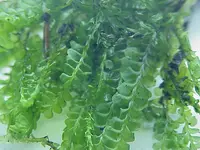
This species has obliquely inserted, strongly asymmetrical leaves with a finely toothed outer margin, which helps distinguish it in the field from many other Greater Featherworts with smoother or more symmetrical foliage.

Preference for humid woods

It is strongly associated with cool, shaded, humid broadleaf woodlands, often forming loose mats on rotting logs, shaded banks, and tree bases where air humidity stays high year-round.

Indicator of clean air

In several European regions, this species is considered sensitive to air pollution and acidification, so stable populations can indicate relatively clean, unpolluted woodland habitats.

FAQs about Greater Featherwort

This bryophyte generally performs better outdoors or in covered, cool, shady setups such as terrariums or shaded cold frames. Stable humidity and gentle air movement are more important than location, so conditions should guide placement.

Grow Healthy Plants with Botan Care

Keep your plants happy and healthy with plant identification, disease detection, and easy care guidance.

Botan plant care app — identify plants on mobile

Explore More Plants