

Substrate anchoring
Press the moss gently but firmly onto rough, stable surfaces such as bark, porous rock, or old mortar so the rhizoids can attach quickly and form a dense, long-lasting mat.

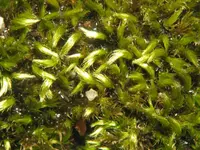
Silken homalothecium moss (Homalothecium sericeum) is a fine-textured, creeping moss that forms soft, low mats over rocks, bark, or compact soil. Its shoots often appear glossy or silky, especially when dry, giving the plant a distinctive, shimmering look.
This moss is naturally widespread across Europe and parts of North America, where it colonizes tree trunks, stone walls, and sheltered rock faces. It is relatively adaptable but prefers stable moisture, good air circulation, and cool to mild conditions.
For those learning how to care for silken homalothecium moss, its resilience to brief drying and low nutrient needs make it manageable, but it still requires protection from harsh sun and severe, prolonged drought.

Care Difficulty
Moderate Care

Light Preference
Partial Shade

Water Requirements
Keep Soil Moist

Temperature Preference
Cold Hardy

Hardiness Zone
3–9

Soil Texture
Loamy, Rocky, Organic-rich

Soil pH
Acidic (5.5–6.5), Slightly acidic (6.5–7.0)

Soil Drainage
Moist but well-drained

Fertilization
Minimal (feed rarely)
Scan your plant to receive care tips personalized for your specific plant
Available on iOS and Android
Homalothecium sericeum prefers soft, indirect light that mimics its natural woodland and rock-face habitats.
Watering for Homalothecium sericeum focuses on consistent surface moisture without prolonged saturation.
This moss is cold-tolerant and adapts to a broad temperature range when moisture is stable.
This moss prefers consistently moist air but tolerates brief drier spells if the substrate stays damp.
Homalothecium sericeum anchors to shallow, mineral-rich, well-drained substrates rather than deep conventional potting soil.
This species adapts well to shallow containers or trays when moisture and drainage are carefully controlled.
This moss typically thrives without added fertilizer, especially on nutrient-poor bark, rock, or old walls.
Homalothecium sericeum needs only light pruning to keep mats healthy and neat.
This moss is more often transplanted than repotted, as it usually grows on outdoor surfaces rather than in pots.
Homalothecium sericeum is commonly propagated by division of existing mats rather than by spores in home settings.
Silken homalothecium moss is naturally cold hardy and needs almost no special winter care in most climates.

Plant Health Check
Not sure what's wrong with your plant? Check your plant's health inside the app.
This species often curls and appears brown and dry during drought, then rapidly rehydrates and turns green again within hours after rain or mist, a typical poikilohydric response where its water content tracks the environment.
It shows a strong preference for base-rich, calcareous substrates such as limestone and mortar, and is commonly found on old stone walls, tombstones, and building facades in many European towns.
Because it tolerates moderate pollution but declines in heavily polluted areas, its presence on urban walls has been used in Europe as a rough bioindicator for improving air quality over recent decades.

This moss forms extensive, glossy, yellow-green mats that can create continuous carpets across rock faces for many decades, with individual clonal patches shown in studies to persist in the same location for over 50 years through slow, vegetative spread rather than short life cycles.
This moss grows more reliably outdoors on rocks, old walls, and tree bark where humidity and airflow stay natural. Indoors it is harder to keep stable moisture and fresh air, so growth is usually slower and less dense.
Keep your plants happy and healthy with plant identification, disease detection, and easy care guidance.

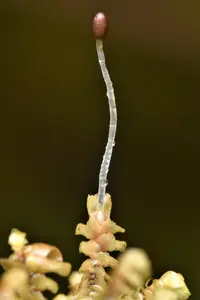
Yellow-ladle Liverwort
Scapania bolanderi
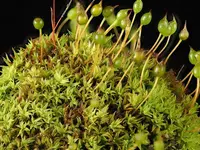
zygodon moss
Zygodon viridissimus
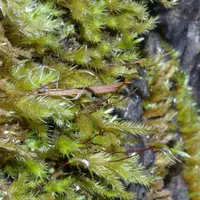
Nuttall's homalothecium moss
Homalothecium nuttallii
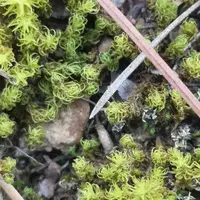
Trichostomum squarrosum
Trichostomum squarrosum
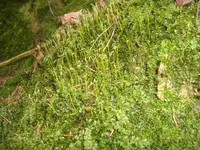
toothed plagiomnium moss
Plagiomnium cuspidatum

Greater Featherwort
Plagiochila asplenioides

Seliger's herzogiella moss
Herzogiella seligeri
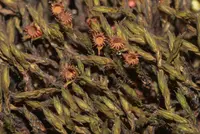
Thickpoint Bloom Moss
Schistidium crassipilum