

Prepare Mineral Substrate
Before planting, brush away loose organic debris and lightly roughen rock, brick, or concrete surfaces so rhizoids can anchor more securely and form a tighter cushion over time.

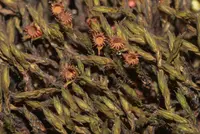
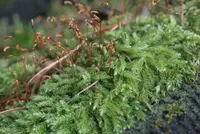
Thickpoint bloom moss, Schistidium crassipilum, is a compact, cushion-forming moss that often grows on rocks, walls, and concrete in urban and natural landscapes. It forms dense, dark green to almost black mounds with short, upright shoots that create a firm, textured surface.
This moss is highly tolerant of exposure, wind, and periods of dryness, which makes it easier to maintain than many more delicate moss species. It commonly occurs across temperate regions, especially in Europe and North America, on alkaline or slightly basic substrates.
To care for Thickpoint Bloom Moss, provide consistent moisture, some light, and a stable surface for attachment, but avoid heavy disturbance once it has established.

Care Difficulty
Easy Care

Light Preference
Full Sun

Water Requirements
Low Water

Temperature Preference
Cold Hardy

Hardiness Zone
3–8

Soil Texture
Rocky, Sandy, Loamy

Soil pH
Slightly acidic (6.5–7.0), Neutral (7.0)

Soil Drainage
Well-drained

Fertilization
Minimal (feed rarely)
Scan your plant to receive care tips personalized for your specific plant
Available on iOS and Android
This moss prefers bright, cool exposure with limited direct sun, similar to its natural rocky habitats.
Watering focuses on keeping the moss moist but not constantly saturated, mimicking intermittent rainfall.
This species is cold-hardy and tolerates a broad temperature range, reflecting its exposed rocky origins.
This moss prefers moderate humidity but survives in relatively dry air if not exposed to intense heat.
This moss anchors best on firm, mineral-based surfaces with only a thin, gritty substrate layer.
This species can be grown in shallow containers that mimic rock crevices or thin soil over stone.
Schistidium crassipilum typically needs little feeding, especially when grown on natural rock or bark.
Pruning Schistidium crassipilum is minimal and mainly cosmetic.
This moss is usually grown on rocks, walls, or bark, so care focuses on transplanting patches rather than classic repotting.
Propagation of Schistidium crassipilum is most practical through division of existing mats.
This moss is naturally cold hardy and usually needs no special winter care outdoors.

Plant Health Check
Not sure what's wrong with your plant? Check your plant's health inside the app.
This moss often colonizes mortar, brick, and concrete in towns and cities, taking advantage of the high calcium content and alkaline surface that many other mosses cannot tolerate.
It forms tight, dark green to blackish cushions whose dense leaf packing helps retain moisture and protect the shoots from desiccation on exposed rock and masonry surfaces.
The shoots can dry out completely and enter a dormant state, then quickly resume photosynthesis when rewetted, a common bryophyte trait but especially important for this species on sun-exposed substrates.
This moss spreads slowly by creeping stems and spores, typically forming tight cushions rather than large carpets. It can gradually colonize stone, roofs, or compact soil, but is not considered aggressively spreading or difficult to control.
Keep your plants happy and healthy with plant identification, disease detection, and easy care guidance.

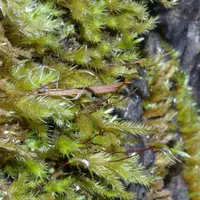
Nuttall's homalothecium moss
Homalothecium nuttallii
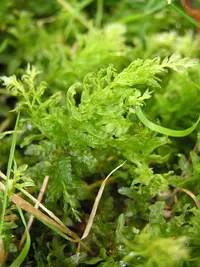
Palm-tree Moss
Plagiomnium undulatum
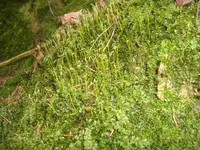
toothed plagiomnium moss
Plagiomnium cuspidatum
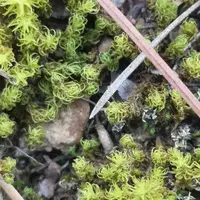
Trichostomum squarrosum
Trichostomum squarrosum
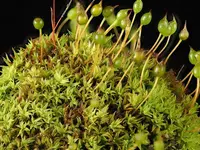
zygodon moss
Zygodon viridissimus
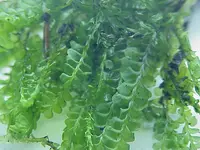
Greater Featherwort
Plagiochila asplenioides
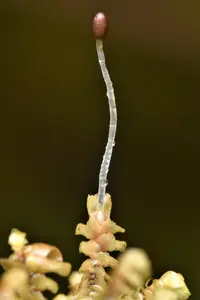
Yellow-ladle Liverwort
Scapania bolanderi
Seliger's herzogiella moss
Herzogiella seligeri