Nuttall's homalothecium moss Care (Homalothecium nuttallii)

Nuttall's homalothecium moss

About Nuttall's homalothecium moss

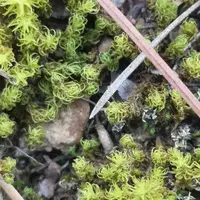
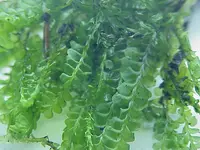
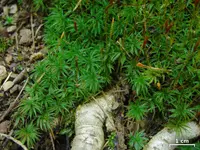
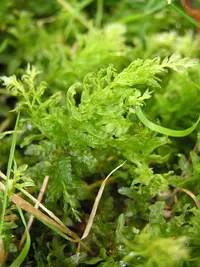
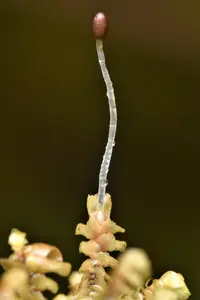
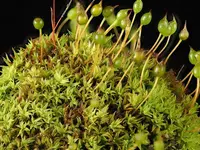
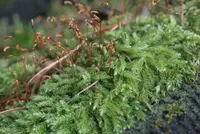
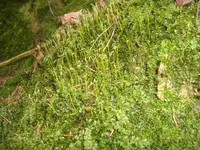
Nuttall's homalothecium moss (Homalothecium nuttallii) is a small, mat-forming moss that creates dense, feathery carpets on rocks, soil, and tree bases. Its stems are typically creeping and branched, with overlapping, narrow leaves that give it a fine-textured, tidy look.

This species occurs mainly in western North America, often in woodland, rocky, or coastal habitats where conditions are cool to mild. It is generally resilient once established, but sensitive to drying out completely, which influences how to care for Nuttall's homalothecium moss.

It usually prefers bright, indirect light or light shade, steady moisture, and a stable, undisturbed surface with good air circulation but not strong wind exposure.

Main Plant Requirements

Care Difficulty

Easy Care

Light Preference

Partial Shade

Water Requirements

Keep Soil Moist

Temperature Preference

Cold Hardy

Hardiness Zone

5–9

Soil Texture

Loamy, Rocky, Organic-rich

Soil pH

Acidic (5.5–6.5), Slightly acidic (6.5–7.0)

Soil Drainage

Moist but well-drained

Fertilization

Minimal (feed rarely)

Get Personalized Care Plan

Scan your plant to receive care tips personalized for your specific plant

Available on iOS and Android

How to Care for the Nuttall's homalothecium moss

This moss thrives in cool, moist sites with soft, filtered light rather than intense direct sun.

  • Provide bright shade or dappled forest light, such as beneath shrubs or open trees, with 1–3 hours of gentle morning sun and no harsh afternoon sun.
  • In coastal or cool climates, Nuttall's homalothecium moss can handle more open exposure, but fronds bleach and dry if exposed to strong midday sun for several hours.
  • In summer, protect from reflected heat and direct sun; in winter, slightly increased light from bare branches is beneficial if the substrate stays moist.

This moss prefers consistently moist conditions but declines in stagnant or waterlogged sites.

  • Aim for a substrate that stays evenly damp to the touch; allow only the upper surface to feel just barely less wet before the next watering or natural rainfall.
  • Increase moisture in hot, dry, or windy periods using fine misting or gentle soaks, and reduce supplemental water during cool, rainy seasons to avoid soggy, anaerobic conditions.
  • Signs of underwatering include crisp, pale, and brittle shoots; signs of overwatering or poor drainage include slimy patches, foul odor, and dark, decaying mats in Homalothecium nuttallii.

This species is adapted to mild, temperate climates and tolerates a broad but not extreme temperature range.

  • Optimal growth occurs around 50–70°F (10–21°C), especially in cool, humid conditions with low direct sun exposure.
  • It tolerates brief dips to about 20°F (-6°C) if the moss is moist and somewhat sheltered, but repeated hard freezes with drying winds can cause browning and dieback.
  • Heat tolerance is moderate; at 80–90°F (27–32°C), growth slows and desiccation risk rises, so increased humidity, shade, and moisture are important in hot, dry periods.

This moss prefers consistently moist, cool air but tolerates a moderate humidity range.

  • Aim for 50–80% humidity, using a shallow tray with damp pebbles nearby if indoor air is dry.
  • In very dry air, Nuttall's homalothecium moss may dull in color, curl, or become brittle at the tips.
  • Increase local humidity by grouping moisture-loving plants, misting lightly around (not directly on) the moss, or covering with a ventilated humidity dome.

This species prefers a loose, moist, and organic-rich substrate that mimics decaying woodland material.

  • Use a mix of fine bark, leaf mold or compost, and a small amount of sharp sand to create a soft, fibrous mat for Homalothecium nuttallii.
  • Ensure very high drainage, with water moving through quickly but the surface staying lightly damp, not saturated.
  • Keep pH slightly acidic to neutral, around 5.5–7.0, avoiding strongly alkaline substrates like heavy lime-rich mixes.
  • Improve aeration by avoiding compaction; spread the moss on a rough, uneven surface rather than pressing it into a dense, uniform layer.

This moss can adapt to shallow containers if moisture and drainage are carefully controlled.

  • Choose a wide, shallow tray with many drainage holes to spread the mat thinly and prevent water pooling under the moss layer.
  • Line the bottom with coarse gravel or broken pottery to stabilize the substrate and avoid waterlogged pockets.
  • Select heavier ceramic or clay trays outdoors so the spreading mat is not disturbed or tipped by wind or light handling.

This moss usually thrives without feeding, but light supplementation can support growth in very poor substrates when caring for Nuttall's homalothecium moss.

  • If growth is weak on sterile rock or wood, use a very dilute balanced liquid fertilizer (around 1/8 strength).
  • Apply only during active growth in spring–early fall, no more than every 6–8 weeks.
  • Avoid slow-release pellets that can concentrate salts around the fine rhizoids.
  • Do not fertilize in winter or when the moss is dry or heat-stressed, as this increases burn risk.

Pruning needs for Homalothecium nuttallii are minimal and mainly hygiene-focused.

  • Best time for light grooming is late winter to early spring before strong new growth.
  • Gently remove dead, browned, or decaying patches to maintain a clean, even mat.
  • Lift and trim only the upper layer of crowded, loose tufts to preserve the underlying moss.
  • Use clean fingers or soft tweezers rather than blades to avoid tearing the delicate shoots.

This moss is usually grown on outdoor substrates, so care focuses on transplanting mats rather than frequent repotting.

  • Transplant when the colony has formed a stable mat but shows slow spread or when the substrate deteriorates.
  • Best timing is in cool, moist weather in spring or early fall to limit moisture stress.
  • Lift thin sheets of moss with some attached soil, bark, or rock particles to keep rhizoids intact.
  • Firm gently onto the new surface, mist thoroughly, and keep shaded and evenly moist for several weeks.

Propagation of Homalothecium nuttallii is typically done vegetatively rather than from spores for predictable results.

  • Use simple division by tearing or cutting small mats or tufts with attached substrate.
  • Perform divisions in spring or early fall when conditions are cool and consistently moist.
  • Press fragments onto a rough, stable surface and mist to ensure close contact.
  • Maintain high humidity, gentle shade, and low air movement until new green tips show expansion.

Outdoor colonies are quite cold hardy and generally need little special winter care once established.

  • Tolerates typical freezes in USDA zones where it is native, though prolonged exposure to drying winds can desiccate mats.
  • On exposed rocks or containers, provide wind shelter or light leaf litter rather than heavy mulch.
  • Container-grown patches in very cold climates can be overwintered in a cold frame or unheated but frost-free space.

Care Tips

Use stable substrates

Attach the moss to long-lasting, slightly rough materials like aged hardwood, lava rock, or unglazed brick so the rhizoids can anchor firmly and the mat does not break apart when moved or rinsed.

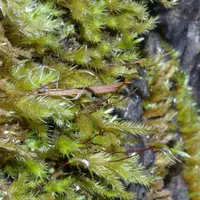
Encourage lateral spread

Gently press small, flat fragments of the moss into close contact with the surface, overlapping edges slightly, to speed up the formation of an even carpet and reduce patchy growth over time.

Seasonal moisture adjustment

In outdoor culture, allow the surface to dry slightly more between waterings in the warm, dry season, but keep it just damp in cool seasons to reduce rot risk while still supporting active growth.

Minimize physical disturbance

Limit brushing, stepping, or frequent handling of the moss mats, and when debris must be removed, use a soft brush or gentle water spray to avoid breaking stems and disrupting new shoots.

Support natural colonization

Place small starter patches in several nearby microhabitats with similar shade and moisture so they can gradually self-spread, creating a more resilient colony when caring for Nuttall's homalothecium moss.

Common Pests and Diseases

Slime molds

This disease appears as gray, white, or colorful slimy patches forming on dense, moist moss cushions, often after prolonged wet, still conditions. Symptoms include localized dieback or discoloration of the gametophyte tissue where the slime mass sits.

Solution

Gently rinse or mist the affected area to physically remove the slime mass, then thin the moss mat to reduce density and improve air movement. Reduce excess surface moisture and organic debris, and if needed, carefully trim out heavily damaged patches so healthy moss can recolonize.

Green algal overgrowth

This disease shows as a smooth, often brighter green or slightly glossy film that coats the moss surface, especially in nutrient-enriched runoff zones. Symptoms include reduced moss vigor, thinning shoots, and areas where the algal layer outcompetes the moss for light.

Solution

Lower nutrient input by avoiding fertilizer drift and runoff, and increase shade or diffuse light if surfaces are overheating. Gently brush or rinse the surface film from the moss and encourage better airflow and intermittent drying of the substrate to favor moss regrowth over algae.

Fungus gnat larvae

This pest occurs where moss grows on consistently saturated, organic-rich substrates, with adults seen as tiny dark flies hovering over the surface. These insects can have larvae that graze on delicate rhizoids and young shoots, leading to patchy thinning and poor establishment in trays or green walls.

Solution

Allow the substrate beneath the moss to partially dry between waterings while still keeping the moss surface just moist, and remove excess decomposing organic material. Use yellow sticky traps to reduce adult populations and, if needed, apply a biological control such as Bacillus thuringiensis israelensis (Bti) to the substrate according to label directions to target larvae.

Springtail grazing

This pest is common in cool, moist moss cultures, where small jumping insects move rapidly across the surface. These insects usually feed on decaying material but can abrade new growth tips under crowded, very wet conditions, causing fine-textured patches to look ragged or slow to spread.

Solution

Improve drainage and avoid constant waterlogging so the surface cycles between moist and slightly less wet, which keeps populations in check without drying the moss completely. Rinse the surface occasionally with clean water to dislodge excess springtails, and reduce accumulations of dead leaves or other detritus that provide food and shelter.

Interesting Facts

Western North America specialist

This moss is native to western North America, where it commonly carpets dry to moderately moist coniferous forests, rocky slopes, and coastal bluffs from California north into British Columbia.

Branching mat growth

It forms dense, yellow‑green to olive mats with regularly pinnate, feather‑like branching, which helps it intercept light efficiently while clinging tightly to bark, soil, or rock surfaces.

Tolerant of dry spells

This species tolerates periodic drying by entering a dormant, desiccated state and then quickly rehydrating and resuming photosynthesis when moisture returns, an adaptation to its often seasonally dry habitats.

Botan icon

Did you know?

This moss is frequently associated with Douglas-fir and other coniferous forest communities in the Pacific Northwest, where its mats help stabilize thin soils and create microhabitats for small invertebrates and germinating seedlings.

FAQs about Nuttall's homalothecium moss

This species performs better outdoors in cool, moist, shaded to partially shaded sites, often on soil, rocks, or tree bases. Indoors it is difficult to maintain stable humidity and airflow, so long‑term success is limited.

Grow Healthy Plants with Botan Care

Keep your plants happy and healthy with plant identification, disease detection, and easy care guidance.

Botan plant care app — identify plants on mobile

Explore More Plants