bryum moss Care (Gemmabryum barnesii)

Also known as: Bicoloured Bryum
bryum moss

About bryum moss

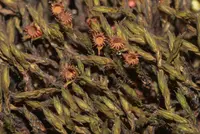
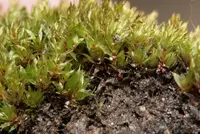
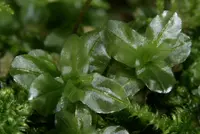
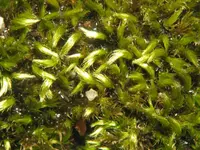
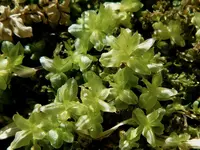
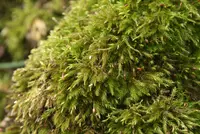
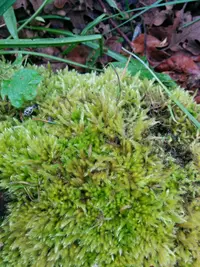
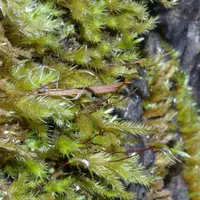
Bryum moss (Gemmabryum barnesii) is a small, cushion-forming moss often found on soil, rock, or disturbed ground. It forms dense, green to yellow-green mats with fine, upright stems.

This species occurs in many temperate regions, including urban areas, where it quickly colonizes bare or compacted substrates. It reproduces and spreads easily, which makes it a resilient choice for moss gardens and terrariums.

It generally prefers consistent moisture, shaded to lightly lit spots, and stable, undisturbed surfaces. Understanding how to care for bryum moss is mainly about keeping conditions gently humid and avoiding heavy foot traffic or frequent disturbance.

Main Plant Requirements

Care Difficulty

Moderate Care

Light Preference

Partial Shade

Water Requirements

Keep Soil Moist

Temperature Preference

Cool Climate

Hardiness Zone

Unknown

Soil Texture

Loamy, Silty, Organic-rich

Soil pH

Acidic (5.5–6.5), Slightly acidic (6.5–7.0)

Soil Drainage

Moist but well-drained

Fertilization

Minimal (feed rarely)

Get Personalized Care Plan

Scan your plant to receive care tips personalized for your specific plant

Available on iOS and Android

How to Care for the bryum moss

Gemmabryum barnesii thrives in low to moderate light that mimics shaded, damp ground in nature.

  • Provide bright shade or dappled light, such as under shrubs or trees, with 1–3 hours of soft morning sun and no harsh afternoon sun.
  • Tolerates deep shade but growth becomes looser and slower if it receives less than 1 hour of indirect daylight-type light.
  • Avoid intense midday sun, which can bleach and dry bryum moss; give extra shade or use taller plants for protection in summer.

Watering for Gemmabryum barnesii focuses on constant surface moisture without long periods of saturation.

  • Keep the substrate consistently damp to the touch; do not allow the top 0.5–1 cm to dry out completely between waterings.
  • Increase misting or gentle watering during hot, windy weather, and reduce slightly in cool, overcast periods while never letting it fully dry.
  • Watch for dull, crisping tips as a sign of underwatering, and for slimy, dark patches or a sour smell as early signs of overwatering and poor drainage.

Stable, cool to mild temperatures support steady growth and recovery for this moss species.

  • Aim for 50–70°F (10–21°C) for best growth, with consistently moist conditions to prevent stress.
  • Tolerates brief dips to around 25–30°F (-4 to -1°C) but repeated hard frosts can damage fresh green tips, so protect exposed patches in severe cold.
  • In hot spells above 80°F (27°C), provide extra shade and humidity, since combined heat and drying winds can cause browning and thinning.

This moss prefers consistently moist air and benefits from relatively high humidity.

  • Aim for 60–90% humidity, mimicking sheltered, damp ground or rock habitats.
  • Tolerates brief dips to 40–50%, but fronds become dull, crisp at the tips, and growth stalls if kept dry for long.
  • Increase humidity by using a closed terrarium, humidity dome, or regular fine misting, while ensuring surfaces are not left waterlogged.

This species favors a fine-textured, moisture-retentive but aerated substrate that stays evenly damp.

  • Use a mix of 60–70% sifted peat or coco fiber with 30–40% fine sand or very fine bark to provide structure and air spaces.
  • Keep drainage moderate: the substrate should drain slowly, holding moisture without forming standing water or a soggy layer.
  • Slightly acidic conditions around pH 5.0–6.0 suit Gemmabryum barnesii and help maintain stable nutrient availability.
  • Avoid dense clay, unmodified garden soil, or any mix that compacts easily, since poor aeration quickly leads to dieback from the base.

This compact moss is very suitable for shallow container or terrarium culture.

  • Select low, wide containers 3–6 cm deep to keep the substrate evenly moist while matching the shallow rhizoid zone.
  • Use containers with a controlled drainage layer (such as gravel beneath the substrate) so excess water can settle away from the moss surface.
  • Choose glass or glazed ceramic for slower moisture loss, especially in heated rooms, to reduce how often the substrate dries between misting or watering cycles.

Gemmabryum barnesii is a small moss that usually needs only minimal fertilization when grown in controlled conditions.

  • Use a very dilute balanced NPK liquid fertilizer at 1/8–1/4 strength if growth is pale or weak.
  • Feed lightly during the main growing season, about every 4–6 weeks, and only on moist substrate.
  • Avoid slow-release granules; a fine mist of diluted liquid or weak compost extract is safer for bryum moss.
  • Stop feeding in winter or dormancy periods to prevent salt buildup and tissue damage.

Pruning Gemmabryum barnesii is limited to light grooming rather than structural cutting.

  • Trim away brown, dead, or contaminated patches with fine scissors or tweezers at any time of year.
  • Remove crowded or overly thick tufts to maintain even coverage and airflow across the colony.
  • Use gentle pinching or surface trimming to encourage fresh, dense new growth without disturbing the substrate.
  • Clean tools with alcohol before use to reduce spread of fungi, algae, or pests between cultures.

Gemmabryum barnesii is usually managed by transplanting small mats rather than traditional repotting.

  • Transplant when growth forms very dense cushions, shows patchy decline, or when the substrate compacts and drains poorly.
  • Best timing is in mild conditions, typically spring or early fall, avoiding temperature extremes and strong sun.
  • Plan on renewing or moving patches every 1–3 years in containers or terraria to refresh substrate and layout.
  • Lift thin surface layers with a spatula, place on fresh, moist, low-nutrient substrate, then mist gently to settle without crushing rhizoids.

Propagation of Gemmabryum barnesii is straightforward and is commonly done by division of mats.

  • Divide healthy cushions into small plugs or fragments and lay them on moist, low-nutrient substrate.
  • Carry out division in spring or early fall when temperature and humidity are stable.
  • Press fragments gently onto the surface rather than burying them, ensuring consistent moisture and bright, indirect light.
  • For spore propagation, sow spores on sterile, finely textured medium and keep covered to maintain high humidity until establishment.

Gemmabryum barnesii is generally cold tolerant and usually needs little specific winter care outdoors.

  • In very exposed sites, a light, breathable mulch around the substrate can buffer freeze–thaw cycles.
  • For container or terrarium cultures, move to a frost-free spot if temperatures drop below the species’ known tolerance.
  • Reduce watering in cold conditions but prevent the substrate from drying out completely, especially in windy locations.

Care Tips

Use mineral-poor water

Collect rainwater or use distilled water to avoid mineral buildup, which can form a white crust on the substrate and slowly weaken the moss colony over time.

Create shallow micro-terraces

Arrange small rocks or broken slate pieces into low steps so water slows and spreads rather than running off, allowing the moss cushions to stay evenly moist and anchor more securely.

Encourage dense carpeting

After the moss establishes, gently press loose fragments into thin, bare patches and mist them in place, which speeds lateral spread and helps form an even, closed carpet.

Manage competing algae

Increase air movement and slightly reduce surface wetness duration if green biofilm appears, and physically dab algae off with a damp cotton swab instead of using chemical treatments.

Seasonal light adjustment

Shift containers or trays a little farther from bright windows or grow lights in summer and slightly closer in winter to maintain consistent light exposure without overheating the delicate shoots when growing bryum moss.

Common Pests and Diseases

Springtail grazing

This pest can occur in very moist moss cultures and may rasp away young moss shoots and protonema. Symptoms include thinning patches, uneven growth, and tiny white insects moving when the surface is disturbed.

Solution

Reduce excess moisture and improve air exchange so the surface is moist but not waterlogged, then manually flush the area with clean water to dislodge insects. In closed terrariums, briefly drying the surface slightly and using yellow sticky traps around the container usually brings populations down without harming the moss, which supports stable Gemmabryum barnesii care instructions in captivity.

Algal overgrowth

This problem appears as slick green films or bright green, almost paint-like patches covering the moss surface in very wet, nutrient-rich conditions. Symptoms include smothered cushions, reduced new moss growth, and slippery surfaces.

Solution

Reduce fertilizer or nutrient input, increase light and airflow, and allow the substrate surface to dry slightly between mistings while keeping the moss hydrated. Physically wipe or gently brush off heavy algal films from hardscape and glass, and shorten lighting duration if growth remains excessive.

Fungal damping-off

This disease affects young moss protonema and newly forming shoots in very stagnant, humid setups. Symptoms include sudden collapse or melting of fresh growth and brown, water-soaked patches that spread across the colony.

Solution

Increase ventilation, avoid completely closed lids, and reduce constant surface wetness so the moss is moist rather than dripping. Remove severely affected patches, rinse the area with clean water, and if the problem persists, briefly expose the container to brighter light and drier air each day to discourage fungal spores.

Slime mold bloom

This organism can appear as yellow, white, or translucent creeping patches or small cushions that move slowly across the substrate in very humid, organic-rich environments. Symptoms include temporary coverage and shading of the moss surface, causing localized decline where the slime mold sits.

Solution

Physically remove visible slime mold with tweezers or a soft brush and reduce organic debris such as decaying leaves or excess wood. Improve air movement and slightly reduce humidity or misting frequency; short periods of increased airflow and light typically prevent new blooms without harming the moss.

Mite feeding damage

These insects are tiny arthropods that may graze on delicate moss tissues in enclosed cultures, especially where there is decaying material. Symptoms include fine speckling, very short or ragged shoots, and slowed expansion of the moss patch.

Solution

Rinse the moss gently under a soft stream of water to wash off mites, then remove any decaying plant material that might sustain them. Improve ventilation and avoid overfeeding nearby plants; in persistent cases, temporarily moving the culture to slightly cooler, drier, but still moss-safe conditions can reduce mite pressure.

Interesting Facts

Urban soil specialist

This species is frequently recorded in compacted, nutrient-poor urban and roadside soils, showing a strong tolerance for disturbance and trampling compared with many other bryophytes.

Tiny but prolific capsules

It produces very small cylindrical to ovoid spore capsules on delicate setae, and in suitable conditions these sporophytes can be abundant, allowing rapid colonization of open soil patches.

Cold-season growth pattern

In temperate climates, this moss often grows most actively in cool, moist seasons, remaining green and photosynthetically active at temperatures where many vascular plants are dormant.

FAQs about bryum moss

Growth is generally slow to moderate. In suitable moisture and cool conditions, it can spread a few millimeters per month, forming a noticeable patch over 6–12 months. Disturbance, low humidity, and irregular watering reduce growth speed.

Grow Healthy Plants with Botan Care

Keep your plants happy and healthy with plant identification, disease detection, and easy care guidance.

Botan plant care app — identify plants on mobile

Explore More Plants