

Substrate Preparation
Before planting, press a thin layer of milled sphagnum or finely sieved, low-nutrient sand–loam mix firmly onto the surface so the moss fragments have a compact, slightly rough surface to anchor to and spread over evenly.

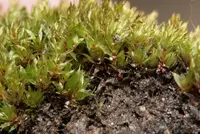
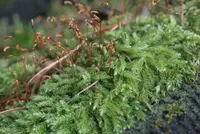
Bryum moss, Rosulabryum rubens, is a small, cushion-forming moss often found as soft green or reddish patches on soil, rocks, and shaded walls. It forms dense, low mats rather than tall shoots, which makes it suitable for terrariums, bonsai landscapes, and naturalistic ground covers in damp spots.
In nature it occurs across many temperate regions, especially in disturbed, moist, and partially shaded habitats. This wide distribution reflects its adaptability and generally makes it straightforward to care for bryum moss.
It prefers consistent moisture, moderate light, and a stable, undisturbed surface such as compact soil, rock, or wood, but can tolerate some variation once established.

Care Difficulty
Moderate Care

Light Preference
Partial Shade

Water Requirements
Keep Soil Moist

Temperature Preference
Cold Hardy

Hardiness Zone
3–9

Soil Texture
Loamy, Rocky, Organic-rich

Soil pH
Acidic (5.5–6.5), Slightly acidic (6.5–7.0)

Soil Drainage
Moist but well-drained

Fertilization
Minimal (feed rarely)
Scan your plant to receive care tips personalized for your specific plant
Available on iOS and Android
Rosulabryum rubens favors cool, consistently moist sites with soft, indirect light.
Rosulabryum rubens thrives in consistently moist but not waterlogged substrates.
This moss prefers cool to mild conditions and tolerates a broad outdoor temperature range.
This moss prefers consistently moist air and surface conditions to stay lush.
Rosulabryum rubens anchors to moist, organic, lightly acidic substrates rather than traditional potting soil.
This species adapts well to shallow container culture when moisture and stability are controlled.
Rosulabryum rubens grown in containers benefits from light feeding, while outdoor patches usually manage with minimal nutrients.
Rosulabryum rubens needs only light grooming rather than formal pruning.
This moss is usually transplanted rather than repotted and adapts well when disturbance is minimal.
Rosulabryum rubens is commonly propagated by division and small tissue fragments rather than from spores at home.
Rosulabryum rubens is cold hardy and usually needs little special winter care in temperate climates.

Plant Health Check
Not sure what's wrong with your plant? Check your plant's health inside the app.
This moss often colonizes compacted, disturbed soils in cities, such as roadside banks, gravel, and tram tracks, showing a strong tolerance for slightly polluted and nutrient-enriched habitats.
The shoots form neat, rose-like rosettes that build into dense cushions, which help retain moisture and protect the stem tips from drying and freezing.
Mature stems and older parts of the plant frequently turn a noticeable reddish color, a feature that helps distinguish it from many similar Bryum relatives in the field.

Rosulabryum rubens occurs on several continents and has become one of the most frequently recorded mosses in human-disturbed sites, making it a useful indicator of how some bryophytes adapt successfully to urbanization.
Growth is usually slow to moderate. Thin fragments can start greening within 1–2 weeks, then form a visible mat over 2–3 months. In ideal cool, moist conditions, it may thicken noticeably each season.
Keep your plants happy and healthy with plant identification, disease detection, and easy care guidance.

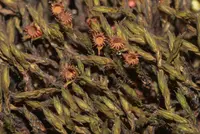
Thickpoint Bloom Moss
Schistidium crassipilum
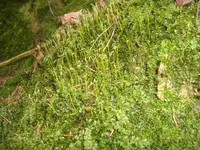
toothed plagiomnium moss
Plagiomnium cuspidatum
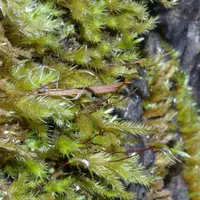
Nuttall's homalothecium moss
Homalothecium nuttallii
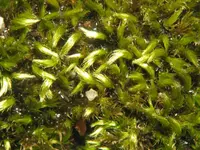
silken homalothecium moss
Homalothecium sericeum
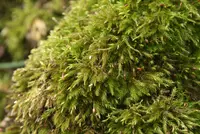
Matted feather-moss
Sciuro-hypnum populeum
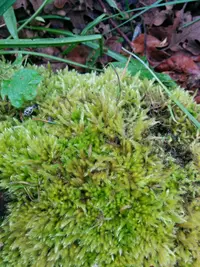
tree mat homalothecium moss
Homalothecium fulgescens
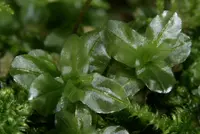
plagiomnium moss
Plagiomnium rostratum
Seliger's herzogiella moss
Herzogiella seligeri