

Substrate pre‑soaking
Before planting, soak the substrate (bark, stone, or wood) in clean, chlorine-free water for several hours so the surface is evenly hydrated and the moss anchors faster and suffers less transplant shock.

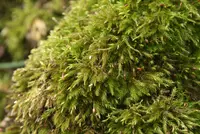
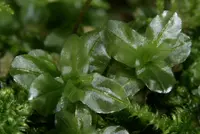
Matted feather-moss (Sciuro-hypnum populeum) is a low-growing, carpet-forming moss commonly found on rocks, logs, and soil in temperate regions. It forms dense, green to yellow-green mats with fine, feather-like stems.
This species often occurs in woodlands, shaded rocky slopes, and along stream banks where moisture is steady but not stagnant. It is relatively forgiving as long as it does not dry out completely for long periods.
Matted feather-moss suits terrariums, shaded stone gardens, and naturalistic plantings where constant high light is not required. Understanding how to care for Matted feather-moss mainly involves maintaining even moisture and gentle, indirect light without harsh disturbance of its mat structure.

Care Difficulty
Moderate Care

Light Preference
Partial Shade

Water Requirements
Keep Soil Moist

Temperature Preference
Cold Hardy

Hardiness Zone
3–9

Soil Texture
Loamy, Silty, Organic-rich

Soil pH
Strongly acidic (4.5–5.5), Acidic (5.5–6.5)

Soil Drainage
Moist but well-drained

Fertilization
Minimal (feed rarely)
Scan your plant to receive care tips personalized for your specific plant
Available on iOS and Android
This moss prefers cool, low to moderate light that mimics shaded forest floors.
This moss needs consistently moist conditions but not stagnant water.
This species is adapted to cool, temperate conditions with moderate seasonal variation.
This moss prefers consistently moist air to stay dense and green.
This species thrives on moist, fine-textured, organic substrates rather than traditional potting soil.
This moss is suitable for shallow, stable containers, trays, and terrariums.
This moss usually thrives without added fertilizer, especially when grown on logs, rocks, or soil rich in organic matter.
Sciuro-hypnum populeum needs minimal pruning, focused mainly on hygiene and appearance rather than growth control.
This species is usually transplanted rather than repotted, since it is often grown as a ground or feature moss.
Propagation of this moss is straightforward using small divisions of living mats rather than spores in most home settings.
This moss is cold hardy in most temperate climates and usually requires little special winter care outdoors.

Plant Health Check
Not sure what's wrong with your plant? Check your plant's health inside the app.
This moss commonly carpets rocks, boulders, and soil along streams and shaded banks in temperate regions, tolerating regular splashing and brief submersion without damage.
It forms dense, matted cushions or loose, trailing carpets depending on moisture and light, which helps it colonize both vertical rock faces and more level ground.
Under a microscope, its leaf cells show distinct papillae (small bump-like projections) and a characteristic cell pattern that bryologists use to distinguish it reliably from similar hypnid mosses.
This species forms low, creeping mats and can spread steadily by fragmentation, but it is not considered aggressively invasive. It usually stays where moisture and shade are suitable and is easy to contain by lifting excess patches.
Keep your plants happy and healthy with plant identification, disease detection, and easy care guidance.

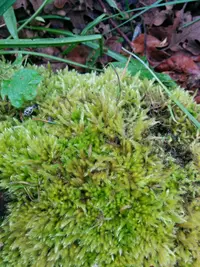
tree mat homalothecium moss
Homalothecium fulgescens
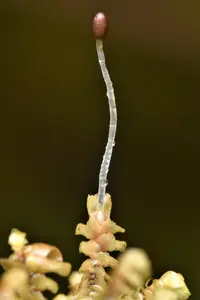
Yellow-ladle Liverwort
Scapania bolanderi
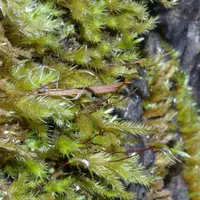
Nuttall's homalothecium moss
Homalothecium nuttallii
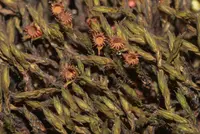
Thickpoint Bloom Moss
Schistidium crassipilum
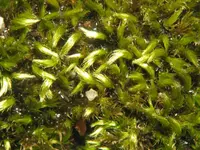
silken homalothecium moss
Homalothecium sericeum
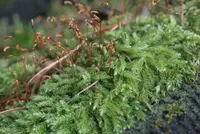
Seliger's herzogiella moss
Herzogiella seligeri
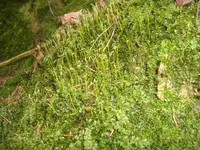
toothed plagiomnium moss
Plagiomnium cuspidatum
plagiomnium moss
Plagiomnium rostratum