leptobryum moss Care (Leptobryum pyriforme)

Also known as: Golden Thread-moss
leptobryum moss

About leptobryum moss

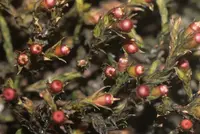
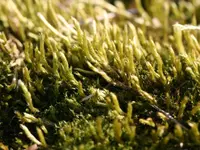
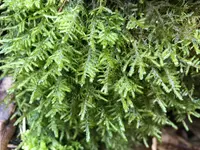
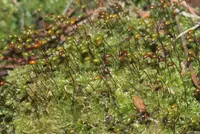
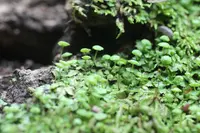
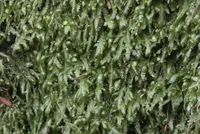
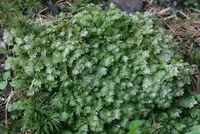
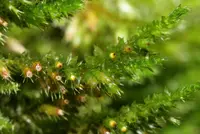
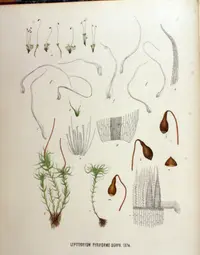
Leptobryum pyriforme, often called leptobryum moss, is a small, bright green moss that forms soft, cushion-like mats. It is a non-vascular plant, meaning it has no true roots or vessels and absorbs water through its leaves and stems.

This species commonly appears on damp soil, rocks, greenhouse benches, and shaded urban surfaces across many temperate regions. It spreads quickly by spores, so it can colonize new areas fast and often behaves like an easy pioneer moss.

Leptobryum pyriforme prefers cool, moist, shaded conditions and tolerates a range of substrates, which makes it relatively simple to care for leptobryum moss in controlled indoor or terrarium setups.

Main Plant Requirements

Care Difficulty

Moderate Care

Light Preference

Partial Shade

Water Requirements

Keep Soil Moist

Temperature Preference

Cool Climate

Hardiness Zone

3–9

Soil Texture

Loamy, Peaty, Organic-rich

Soil pH

Acidic (5.5–6.5), Slightly acidic (6.5–7.0)

Soil Drainage

Moist but well-drained

Fertilization

Minimal (feed rarely)

Get Personalized Care Plan

Scan your plant to receive care tips personalized for your specific plant

Available on iOS and Android

How to Care for the leptobryum moss

This moss prefers cool, moist sites with soft, indirect light rather than strong sun exposure.

  • Provide bright shade or dappled light, such as on the north or east side of rocks, logs, or walls, with no more than 1–2 hours of gentle morning sun.
  • Avoid direct midday or afternoon sun, which can scorch shoots and dry leptobryum moss within hours, especially in summer.
  • In summer, increase shade using overhanging plants or shade cloth; in winter, allow more open sky so it receives low-angle, filtered light.

Leptobryum pyriforme thrives in consistently moist, but not stagnant, conditions.

  • Aim for a surface that feels evenly damp; allow only the very top 1–2 mm to start feeling less slick before rewetting with a fine mist or gentle flow.
  • Watch the moss closely: curling, crisp tips and lighter green patches signal underwatering, while limp, brownish, slimy areas indicate prolonged saturation and poor aeration.
  • In hot, windy weather, expect to rewet daily or as soon as the surface looks dull and dry; in cool, humid seasons, reduce frequency but never let it stay bone-dry for more than a brief period.

This moss tolerates a wide temperature range but grows best in cool to mild conditions.

  • Optimal growth occurs around 50–70°F (10–21°C), especially in moist, shaded microhabitats with stable humidity.
  • It can survive brief drops near 20°F (-6°C) under snow or leaf cover, but repeated freeze–thaw on exposed, dry surfaces can cause desiccation and dieback.
  • Heat above 80°F (27°C), combined with strong sun and drying wind, stresses the plant, so increase shade and moisture during hot spells and rely on natural cooling at night when possible.

This moss prefers consistently moist air, similar to a damp woodland or terrarium environment.

  • Aim for 60–90% humidity to keep cushions dense and actively growing.
  • It tolerates brief dips to 40–50% but dries quickly in heated indoor air and may brown at the tips.
  • Humidity stress shows as pale, crispy patches; increase moisture with a covered container, pebble tray, or frequent fine misting.

This moss grows best on consistently moist, fine-textured, organic-rich substrates rather than standard potting mixes.

  • Use a shallow layer of finely milled peat or coco coir mixed with sifted compost to create a soft, moisture-retentive base.
  • Ensure slow, even drainage by placing this layer over sand or fine grit so water does not stagnate at the surface.
  • Keep pH slightly acidic to neutral (pH 5.0–7.0), avoiding lime-rich or strongly alkaline materials that can inhibit growth.
  • Avoid compacted, heavy clay or barky, chunky mixes; gently press the surface to stay firm but still airy for rhizoids.

This species adapts well to shallow containers, trays, and terrariums when moisture is carefully controlled.

  • Choose a broad, shallow tray that allows the moss to spread laterally while keeping the whole surface easy to hydrate evenly.
  • Line the base with a thin grit or sand layer so excess water drains below the growing surface yet still maintains a humid microclimate.
  • Use glazed ceramic, plastic, or glass containers to slow evaporation, preventing the thin substrate from drying between mistings when you grow Leptobryum pyriforme.

This moss thrives on low nutrients and usually needs no additional fertilizer in typical setups.

Leptobryum pyriforme needs only light grooming to keep mats dense and healthy.

  • Trim away brown, decayed, or algae-covered patches at any time using fine scissors or tweezers.
  • Remove loosely attached or lifting sections to maintain an even surface and encourage new side shoots.
  • Lift and thin crowded clumps to improve air flow and light penetration across the mat.

Transplanting is mainly needed when mats outgrow their space or substrate breaks down.

  • Move Leptobryum pyriforme in mild weather, avoiding temperature extremes and intense sun.
  • Transplant when growth becomes patchy, substrate compacts, or drainage declines rather than on a fixed schedule.
  • Gently lift thin sheets of moss with a spatula, keeping as much underlying substrate attached as possible.
  • Lay the moss onto fresh, moist, fine-textured substrate and press lightly to ensure close contact and low root stress.

This species is most often propagated by simple division and relocation of small patches.

  • Divide healthy, actively growing mats into small plugs by hand or with a clean blade in spring or fall.
  • Place each piece onto a moist, stable substrate with good contact and consistent humidity.
  • Keep light moderate and avoid drying winds or strong sun while new rhizoids anchor.
  • For long-term projects, growing leptobryum moss from spores is possible but slow and requires sterile, evenly moist conditions.

Leptobryum pyriforme is cold hardy and generally needs minimal winter care outdoors.

  • In-ground or on-rock colonies usually tolerate freezing, resuming growth in milder weather.
  • For containers, avoid waterlogging in freeze–thaw cycles by ensuring free drainage.
  • Indoor or terrarium cultures in winter do best at 40–65°F with steady moisture and gentle air movement.]},

Care Tips

Substrate Pre‑Pasteurization

Before establishing the moss, pour near-boiling water over the substrate or microwave moist sphagnum/soil for a few minutes to reduce competing algae, fungi, and weed seeds, then allow it to cool fully before planting fragments of Leptobryum pyriforme.

Fragment Pressing Technique

For even carpets, crumble healthy moss into small fragments and press them firmly into the moist surface with a flat board or gloved hand so rhizoids make close contact and do not dry out between mistings.

Clay Additive Layer

To improve moisture retention and anchoring, mix a thin layer of fine clay or unscented clay-based cat litter into the top 2–3 mm of the substrate before planting, then keep this layer consistently damp while the moss establishes.

Shaded Edge Management

If grown in trays or terrariums, place low, opaque borders or stones around the edges to shade side walls and reduce edge desiccation, which helps maintain an even, dense mat rather than dry, patchy margins.

Spore Capsule Harvesting

Once mature capsules turn brown and dry, gently collect and crumble them over fresh, prepared substrate to propagate new colonies, an efficient method for growing leptobryum moss across multiple containers or shaded outdoor spots.

Common Pests and Diseases

Mite infestations

This pest is favored by very dry, stagnant air and can cause fine webbing and pale, stippled patches on the moss cushions. Symptoms include slowed growth and a rough, dusty appearance on the moss surface.

Solution

Increase humidity to 60–80%, improve air movement, and gently rinse the moss with clean, lukewarm water to dislodge mites. In closed containers or terrariums, temporarily open lids more often, and if needed use a dilute insecticidal soap rinse, followed by thorough fresh-water rinsing to avoid residue buildup on the moss filaments.

Fungus gnat larvae

These insects thrive in constantly wet, organic-rich substrates and their larvae feed within the surface layer, disturbing the moss mat and causing thinning or patchy dieback. This pest is more common in indoor culture and propagation trays.

Solution

Allow the substrate surface to dry slightly between mistings while keeping the moss itself just moist, and use fine sand or small gravel as a top layer to discourage egg laying. Sticky traps remove flying adults, and targeted applications of Bacillus thuringiensis israelensis (BTI) to the water used for irrigation help reduce larvae without harming the moss when used at label rates.

Algal overgrowth

This condition develops under high light and nutrient-rich water, forming green, slimy films on the substrate and over the moss, which can smother small shoots. Symptoms include a glossy, slick surface and reduced new moss growth in affected areas.

Solution

Reduce dissolved nutrients by avoiding fertilizer and using low-mineral or rainwater, and slightly decrease light intensity or daily duration. Gently lift or siphon off algal mats, then improve air circulation and drainage so the moss surface is moist but not submerged for long periods, which supports stable Leptobryum pyriforme care.

Sooty mold

This disease appears as dark gray to black, powdery films on the moss surface, often developing on sticky deposits left by sap-feeding insects nearby. Symptoms include reduced photosynthesis and a dull, dirty look to the cushions.

Solution

First identify and control any nearby sap-feeding insects such as aphids or scale on companion plants, then gently rinse the moss with a soft spray of clean water to remove mold deposits. Improve airflow and avoid overhead watering that keeps the moss surface wet for long periods, since a drier surface layer slows mold regrowth while the lower cushion remains moist.

Bacterial leaf-like blight

This disease affects dense mats in constantly saturated conditions, causing localized yellowing that quickly turns brown and mushy within patches of the moss. Symptoms include a water-soaked look and a slight sour odor in affected areas.

Solution

Promptly remove and discard diseased patches with tweezers, taking a small margin of healthy moss, and reduce watering frequency so the surface is damp rather than waterlogged. Increase ventilation, avoid splashing water between sections, and, in propagation trays, thin overly dense mats to reduce prolonged surface wetness that favors bacterial spread.

Interesting Facts

Global greenhouse colonizer

This moss is one of the most frequently recorded mosses in heated greenhouses worldwide, thriving on constantly moist, nutrient-enriched substrates such as potting benches, paths, and the bases of containers.

Pioneer on disturbed ground

In the wild it often appears quickly on freshly disturbed, compacted, or nutrient-rich soils such as construction sites, paths, and urban waste ground, helping to stabilize bare substrates before other plants establish.

Spores built for travel

Its smooth, small spores are easily spread by air currents and human activity, which explains its scattered yet almost cosmopolitan distribution across temperate and some subtropical regions.

Botan icon

Did you know?

This species is so well adapted to artificial warm, humid environments that bryologists sometimes use its presence as an indicator of long-running heated greenhouse conditions, especially in botanical gardens and commercial propagation facilities.

FAQs about leptobryum moss

This species stays very low and compact, usually under 2–3 cm tall, forming dense, soft cushions. It spreads outward more than upward, which makes it suitable for terrariums, bonsai landscapes, and as a fine ground cover in moist areas.

Grow Healthy Plants with Botan Care

Keep your plants happy and healthy with plant identification, disease detection, and easy care guidance.

Botan plant care app — identify plants on mobile

Explore More Plants