Use acidic substrate
When mounting or planting, use long-fiber sphagnum, finely milled bark, or rotted conifer wood as the base so the moss stays anchored in a slightly acidic, low-nutrient environment that mimics its natural woodland habitat.

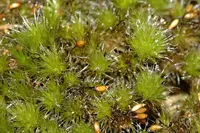
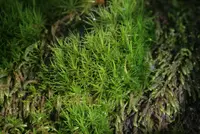
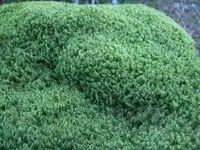
Dicranum majus, often called large fork moss, is a clump-forming moss that creates dense, soft cushions of upright, forked leaves. It has a tidy, architectural look that works well in naturalistic displays and terrariums.
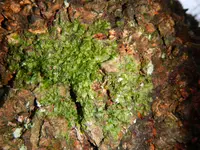
This species is native to cool, moist forests in Europe, parts of Asia, and North America, where it carpets shaded soil, rotting wood, and rocky slopes. Its preference for steady moisture, clean air, and mild light levels makes it moderately easy to keep, as long as drying out and harsh sun are avoided. For anyone learning how to care for dicranum moss, its slow, steady growth habit and clear response to good humidity are helpful traits.

Care Difficulty
Moderate Care

Light Preference
Partial Shade

Water Requirements
Keep Soil Moist

Temperature Preference
Cold Hardy

Hardiness Zone
3–8

Soil Texture
Loamy, Peaty, Organic-rich

Soil pH
Strongly acidic (4.5–5.5), Acidic (5.5–6.5)

Soil Drainage
Moist but well-drained

Fertilization
Minimal (feed rarely)
Scan your plant to receive care tips personalized for your specific plant
Available on iOS and Android
This moss prefers low, cool woodland-style light that mimics a shaded forest floor.
Moist but not stagnant conditions suit this moss best.
This species favors cool to mild conditions similar to shaded forest habitats.
This moss needs consistently moist air to maintain dense, healthy cushions.
This species prefers a loose, acidic, organic substrate that mimics decomposing forest litter.
This moss can adapt well to shallow containers when moisture and drainage are carefully balanced.
This moss relies on nutrient-poor, acidic substrates and generally does best without added fertilizer.
Dicranum majus needs only minimal pruning to keep cushions clean and healthy.
Transplanting Dicranum majus focuses on moving intact mats rather than disturbing individual roots.
Propagation of Dicranum majus is commonly done by division of existing cushions rather than by spores at home.
This moss is naturally cold hardy and usually needs no special winter care outdoors.

Plant Health Check
Not sure what's wrong with your plant? Check your plant's health inside the app.
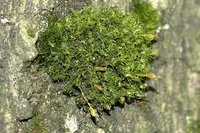
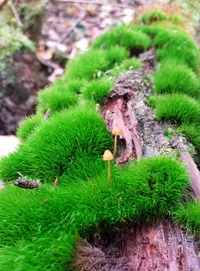
Dicranum majus forms unusually tall, dense cushions for a moss, with glossy, bright green shoots that can create soft, hummock-like mounds on forest floors and decaying wood in cool, humid climates.
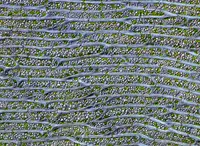
Its narrow leaves curve strongly to one side and often twist when dry, a diagnostic feature that helps bryologists distinguish it from related Dicranum species in the field.
Populations of Dicranum majus are frequently associated with relatively undisturbed, mature coniferous or mixed forests in Europe and parts of North America, so its presence can indicate long-term habitat continuity and stable, moist microclimates.

Dicranum majus can grow in such dense, elevated cushions that small invertebrates use the interior as a sheltered microhabitat, creating a miniature, humid ecosystem with different species living at different depths within the moss mound.
Growth is slow to moderate. In good moisture and shade, new cushions usually expand a few millimeters to 1–2 cm per year. Warmer temperatures, steady humidity, and minimal disturbance speed up establishment, especially when growing Dicranum majus on stable substrates.
Keep your plants happy and healthy with plant identification, disease detection, and easy care guidance.