

Salt-spray hardening
If grown near the coast or in windy balconies, gradually expose plants to stronger wind and light over 1–2 weeks to toughen foliage and reduce sun scorch or wind burn when moving them outdoors for summer display.


Meaty saladbush, Didelta carnosa, is a low, spreading succulent shrub from coastal areas of South Africa and Namibia. It naturally grows in sandy, windy, and salty conditions. The plant has thick, fleshy, grey-green leaves and daisy-like yellow flowers, giving it a compact, decorative look in rock gardens or coastal-style plantings. Its succulent leaves store water, so it tolerates drought and poor soils better than many ornamental shrubs. Growth is generally easy in bright conditions, provided the soil drains well and stays only lightly moist. Those learning how to care for Meaty Saladbush mainly need to focus on avoiding overwatering and heavy, waterlogged substrates.

Care Difficulty
Easy Care

Light Preference
Full Sun

Water Requirements
Low Water

Temperature Preference
Tropical / Frost Sensitive

Hardiness Zone
10–11

Soil Texture
Sandy, Loamy, Rocky

Soil pH
Slightly acidic (6.5–7.0), Slightly alkaline (7.0–7.5)

Soil Drainage
Well-drained

Fertilization
Minimal (feed rarely)
Scan your plant to receive care tips personalized for your specific plant
Available on iOS and Android
This coastal succulent prefers strong light that mimics its bright, open native habitat, so aim for several hours of direct sun daily for Meaty Saladbush.
This drought-adapted shrub stores moisture in its leaves and stems, so watering must be infrequent and focused on thorough soaking followed by drying.
This species comes from mild coastal climates and grows best in warm, frost-free conditions with good airflow.
This coastal succulent handles low humidity well and rarely needs special humidity care.
Didelta carnosa prefers fast-draining, lean soil that mimics sandy coastal habitats.
This species is well suited to container growing, especially in dry, sunny sites.
This drought-adapted succulent needs only light feeding to stay compact and healthy, so avoid rich soils for Meaty Saladbush.
Pruning Didelta carnosa is mainly used to keep a compact form and remove weak growth.
This succulent shrub prefers to stay slightly root-bound, so repot or transplant only when clearly needed.
This species is commonly multiplied from stem cuttings, which root reliably under warm, bright conditions.
Winter care matters in cooler climates because this coastal succulent is sensitive to hard frost.

Plant Health Check
Not sure what's wrong with your plant? Check your plant's health inside the app.
This species is a low, spreading succulent shrub native to coastal areas of South Africa and Namibia, where it helps stabilize sandy soils in dunes and strandline habitats.
Its thick, triangular, grey‑green leaves can accumulate salts and water, an adaptation that allows the plant to tolerate both drought and occasional sea‑spray salinity.
After flowering, it produces distinctive woolly fruiting bodies with flat, wing‑like structures that can aid wind dispersal and sometimes trap air, helping them move across sandy surfaces.
Brown leaf tips or patches usually come from underwatering, intense sun combined with dry wind, or a sudden cold snap. Check soil moisture, protect from harsh winds, remove damaged leaves, and adjust watering gradually rather than all at once.
Keep your plants happy and healthy with plant identification, disease detection, and easy care guidance.

Teneriffe houseleek
Sempervivum ciliosum
Aloe capitata
Aloe capitata
Aloe amudatensis
Aloe amudatensis
Japanese Woodland Stonecrop
Sedum makinoi 'Ogon'
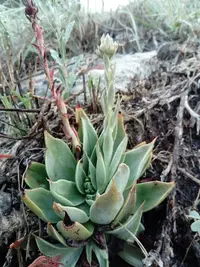
Echeveria mucronata
Echeveria mucronata

junior Tom Thumb cactus
Escobaria emskoetteriana
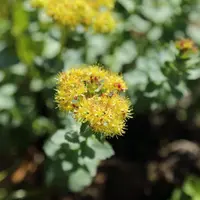
Phedimus stevenianus
Phedimus stevenianus
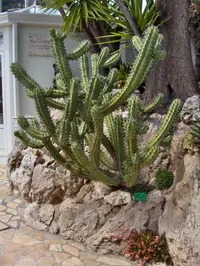
candelabra cactus
Myrtillocactus cochal