Phedimus stevenianus Care

Phedimus stevenianus

About Phedimus stevenianus

Phedimus stevenianus is a low-growing, herbaceous perennial succulent in the stonecrop group, valued for its dense mats of fleshy leaves. It typically forms compact cushions that can soften the edges of rocks or fill gaps between paving stones.

The plant is native to rocky slopes and dry, open habitats, where it tolerates poor, shallow soils. Its drought tolerance and modest nutrient needs make it relatively straightforward to care for Phedimus stevenianus in well-drained soil with good light.

In gardens and containers, it is often used as a groundcover or in rock gardens, troughs, and mixed succulent displays. It generally prefers bright conditions and moderate moisture, drying slightly between waterings.

Main Plant Requirements

Care Difficulty

Easy Care

Light Preference

Full Sun

Water Requirements

Low Water

Temperature Preference

Cold Hardy

Hardiness Zone

5–9

Soil Texture

Sandy, Loamy, Rocky

Soil pH

Slightly acidic (6.5–7.0), Neutral (7.0)

Soil Drainage

Well-drained

Fertilization

Minimal (feed rarely)

Get Personalized Care Plan

Scan your plant to receive care tips personalized for your specific plant

Available on iOS and Android

How to Care for the Phedimus stevenianus

This low-growing succulent prefers bright conditions with some protection from harsh summer extremes.

  • Provide 6–8 hours of sun daily, ideally with morning sun and light afternoon shade, especially in hot, dry climates.
  • Tolerates partial shade (around 3–4 hours of direct sun), though stems may stretch and color may be less intense in lower light.
  • In very hot regions, reduce exposure to intense midday sun to prevent leaf scorch, particularly in shallow or rocky planting sites.

This species stores moisture in its leaves and needs infrequent, light watering in well-drained soil.

  • Allow the top 3–5 cm of soil to dry fully before watering, then soak the root zone and let excess water drain away.
  • In spring and early summer, water when foliage looks slightly less firm; in cooler or rainy seasons, rely mostly on natural precipitation.
  • Watch for yellowing, mushy leaves as a sign of overwatering, and for shriveled, wrinkled leaves as a sign the plant is staying dry for too long.

This hardy succulent tolerates a wide range of outdoor temperatures once established.

  • Best active growth occurs around 60–75°F (16–24°C), especially during spring and early summer when soil is moist but well drained.
  • Mature plants typically survive down to about 0°F (-18°C) with good drainage; prolonged wet, freezing soil increases rot risk.
  • Handles summer heat up to 90–95°F (32–35°C) if soil does not stay soggy; provide light shade and extra airflow during extreme heat waves.

This drought-tolerant succulent handles 30–50% humidity and rarely needs special humidity care.

This species needs sharply draining, lean soil to prevent root rot and maintain compact growth.

  • Use sandy or gritty soil with low organic content, such as 50–70% mineral material (coarse sand, grit, or fine gravel).
  • Aim for a slightly acidic to neutral pH of about 6.0–7.2, similar to many rock garden succulents.
  • Improve drainage and aeration by blending standard cactus mix with extra pumice or perlite at about 1:1 by volume.
  • Avoid dense, clay-heavy, or peat-heavy mixes that stay wet longer than 1–2 days after watering.

This species is well suited to container growing, including shallow bowls and troughs.

  • Choose a wide, shallow pot to accommodate spreading stems while keeping the root zone fast drying.
  • Prefer unglazed terracotta if outdoor conditions are wet, as it allows faster evaporation from the root zone.
  • Lift or slightly tilt containers in rainy climates so water cannot pool under the pot and block drainage holes.

This drought-tolerant succulent needs only modest feeding for healthy growth.

  • During spring–summer, apply a balanced liquid fertilizer at 1/4–1/2 strength every 4–6 weeks if growth appears weak.
  • Use a low-nitrogen balanced NPK or dilute organic compost extract suited to succulents.
  • Skip feeding in late fall and winter when growth slows or stops.
  • Ensure soil is moist before fertilizing to prevent root burn in Phedimus stevenianus.

Light pruning maintains a compact, tidy mat and supports healthy regrowth.

  • Best time for structural pruning is early spring, before strong new growth starts.
  • Shear or pinch back long, straggly stems to keep edges neat and encourage denser foliage.
  • Remove dead, damaged, or diseased shoots promptly using clean scissors or small snips.
  • After flowering, trim spent flower stems to improve appearance and direct energy to vegetative growth in Phedimus stevenianus.

This groundcover succulent is usually transplanted outdoors and only occasionally repotted in containers.

  • Plan transplanting for spring or early fall, avoiding extreme heat or hard frost.
  • Move plants when clumps thicken, growth slows, or roots fill and circle a shallow pot.
  • Lift gently, keep soil around the roots, and replant at the same depth into well-drained gritty soil.
  • Water lightly after transplanting Phedimus stevenianus, then allow soil to dry slightly to reduce root stress.

This species is commonly multiplied to expand groundcover or share plants.

  • Stem cuttings in late spring–summer root well in sandy, free-draining mix kept barely moist.
  • Division of dense mats in spring is reliable; replant sections with intact roots and firm soil contact.
  • Short stem pieces often root where they touch soil, so layering along the surface is effective.
  • Seeds are less common; if used, sow in shallow trays with light, well-drained mix and bright light.

This hardy succulent usually needs minimal winter attention in the ground.

  • Established plants tolerate typical temperate frosts if soil drains well and does not stay waterlogged.
  • In colder areas, a thin gravel or leaf mulch around the crown helps stabilize soil temperature.
  • For containers, move pots to a sheltered, unheated spot to avoid freeze–thaw root damage in Phedimus stevenianus.

Care Tips

Rock-crevice planting

Tuck stems into shallow rock crevices or between pavers with 2–3 cm of gritty mix so roots anchor quickly and the mat stays dense and wind-resistant.

Segmented renewal

Every 2–3 years, lift and divide older, woody patches into small rooted segments, replant them slightly apart, and discard the bare, exhausted centers to keep growth compact and vigorous.

Summer stress testing

In late spring, gradually withhold some water and expose plants to a bit more direct sun to harden tissues so they tolerate heat and brief drought better through midsummer.

Targeted slug control

In damp climates, place low, rough barriers such as crushed gravel bands around the planting edge and spot-apply iron phosphate pellets at slug entry points to protect the fleshy foliage.

Container edge spill

When growing Phedimus stevenianus in pots, plant near the rim and allow stems to drape over the container edge so new nodes root along the spill and create a thicker, cascading cover.

Common Pests and Diseases

Aphids

This pest feeds on tender shoots and undersides of leaves, sucking sap and causing distortion of new growth. Symptoms include sticky honeydew on foliage and nearby surfaces, sometimes followed by sooty mold on this low, mat-forming succulent.

Solution

Rinse stems and foliage with a firm stream of water to dislodge colonies, repeating every few days as needed. For persistent infestations, use a ready-to-use insecticidal soap or neem oil spray, applied in the early morning or evening and kept off flowers to protect pollinators, as part of general Phedimus stevenianus care instructions.

Mealybugs

These insects appear as small white cottony clusters in leaf axils and along stems, where they extract sap and weaken plants. Symptoms include stunted growth, yellowing patches, and sticky honeydew on the foliage.

Solution

Dab visible insects with cotton swabs dipped in 70% isopropyl alcohol, then rinse the plant gently after treatment. In larger plantings, apply insecticidal soap or a light horticultural oil, ensuring good coverage of stem joints and repeating every 7–10 days until no new insects appear.

Spider mites

This pest thrives in hot, dry conditions and causes very fine stippling on leaves, which may turn dull, pale, or bronzed. Symptoms include delicate webbing between leaves and stems on dense, rock-garden style plantings.

Solution

Increase humidity around the plant surface by occasional hosing, then wash foliage thoroughly with water to remove mites and webbing. If damage continues, use insecticidal soap or a miticide labeled for ornamental succulents, treating both upper and lower leaf surfaces and improving air movement around the planting.

Powdery mildew

This disease appears as white, powder-like patches on leaves and stems, especially where air circulation is poor. Symptoms include dull, distorted foliage and reduced vigor, particularly in shaded or crowded plantings.

Solution

Remove and discard heavily affected leaves to reduce spore load, then thin or divide dense clumps to improve airflow and light exposure. If needed, apply a sulfur-based or potassium bicarbonate fungicide labeled for ornamentals, treating in dry weather and avoiding application in very high temperatures to prevent leaf burn.

Crown and stem rot

This disease complex, often caused by soil-borne fungi in overly wet conditions, leads to blackened, mushy crowns and stems at the soil line. Symptoms include sudden collapse of sections in an otherwise drought-tolerant mat, especially in poorly drained or overwatered sites.

Solution

Promptly remove and discard all soft, rotting tissue and any attached soil, then improve drainage by raising the planting area or using a gritty, fast-draining mix. Reduce irrigation frequency, avoid overhead watering, and replant only firm, healthy cuttings in well-drained soil, spacing plants to allow quicker drying after rain or watering.

Interesting Facts

Caucasus mountain specialist

This species is native to rocky slopes and outcrops in the Caucasus region, where it grows in crevices and shallow soils exposed to strong sun, wind, and temperature swings.

Mat-forming growth habit

The plant naturally develops low, dense mats from many short, branched stems, an adaptation that helps reduce water loss and protect its roots in thin, stony substrates.

Summer flowering pattern

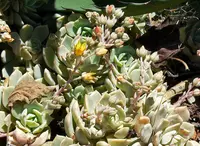
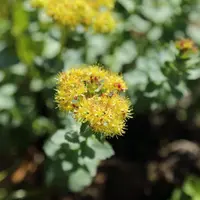
It produces clusters of small, star-shaped yellow flowers in summer, which are specialized to attract local pollinating insects such as bees and small flies in its native range.

FAQs about Phedimus stevenianus

This species spreads slowly to moderately by short stems and rooting segments, forming low mats over time. It usually stays well behaved in garden beds and rock gardens, and is not considered an aggressive spreader in typical conditions.

Grow Healthy Plants with Botan Care

Keep your plants happy and healthy with plant identification, disease detection, and easy care guidance.

Botan plant care app — identify plants on mobile

Explore More Plants