Rotate For Symmetry
Turn the pot 90° every 2–3 weeks so the stems receive light from all sides and the plant keeps a balanced, upright shape instead of leaning strongly in one direction.

Dieffenbachia 'Sterling', commonly called Dumbcane, is a tropical evergreen houseplant valued for its bold foliage and upright, bushy habit. It is part of the arum family and is typically grown indoors in cooler climates.
The leaves are large, deep green, and marked with a striking silvery-white midrib that gives the cultivar its name. Plants can form a strong central cane with lush foliage concentrated toward the top.
In nature, Dieffenbachia species grow on the shaded forest floor of tropical Central and South America. This background explains their preference for warm, stable conditions and indirect light.
Overall, it is a moderately easy plant when given consistent moisture, well-drained soil, and protection from cold drafts, which helps simplify how to care for Dumbcane indoors.

Care Difficulty
Moderate Care

Light Preference
Bright Indirect Light

Water Requirements
Moderate Water

Temperature Preference
Tropical / Frost Sensitive

Hardiness Zone
11–12

Soil Texture
Loamy, Peaty, Organic-rich

Soil pH
Acidic (5.5–6.5), Slightly acidic (6.5–7.0)

Soil Drainage
Moist but well-drained

Fertilization
Light (every 4–6 weeks)
Scan your plant to receive care tips personalized for your specific plant
Available on iOS and Android
Dieffenbachia 'Sterling' grows best in bright, indirect light that mimics dappled forest shade.
Dieffenbachia 'Sterling' prefers evenly moist but never waterlogged soil.
This plant thrives in stable, warm conditions with no sudden temperature swings.
This plant prefers consistently moderate to high humidity to keep foliage healthy and edges smooth.
Dieffenbachia 'Sterling' grows best in a loose, airy, organic-rich mix that drains quickly yet holds some moisture.
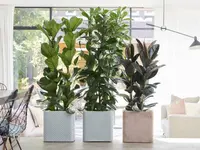
This species is well suited to container growing, both as a floor plant and on sturdy stands.
Balanced feeding supports steady, leafy growth for this Dumbcane without causing weak, overstretched stems.
Pruning helps Dieffenbachia 'Sterling' maintain a compact, well-lit canopy and removes weak or unhealthy tissue.
Repotting helps maintain healthy roots and stable growth by refreshing soil and providing adequate space.
New plants are most often produced from stem cuttings when managing height or rejuvenating older specimens.
This tropical houseplant is not frost tolerant and should remain indoors in stable, warm conditions during winter.

Plant Health Check
Not sure what's wrong with your plant? Check your plant's health inside the app.
This cultivar is recognized by a single, wide silvery midrib on each leaf with fine, parallel gray-green veining, a pattern that stays relatively consistent from juvenile to mature foliage compared with many other Dieffenbachia selections.
It was selected for a more upright, columnar habit and moderate height under indoor conditions, which makes it suitable for smaller interior spaces where older, sprawling Dieffenbachia types are less practical.
Sterling is a relatively recent, intentionally bred cultivar rather than an old horticultural selection, introduced through formal breeding and evaluation programs and protected under plant patenting, which has helped standardize its appearance in the trade.
Brown leaf edges usually result from low humidity, salt buildup from fertilizer, or chronic underwatering. Occasionally, direct hot air from vents or heaters scorches margins. Flush the pot occasionally, adjust watering, and keep it away from drying drafts.
Keep your plants happy and healthy with plant identification, disease detection, and easy care guidance.